
Summary
The Singapore Chamber of Maritime Arbitration has launched the Singapore Form for Methanol Bunkering at SIBCON 2026, the first standard contract designed for methanol bunker transactions in Singapore. Developed with shipowners, bunker suppliers, lawyers and regulators, it covers TR 129 compliance, fuel quality and sustainability, closed-system sampling, electronic delivery notes and SCMA arbitration.
Article
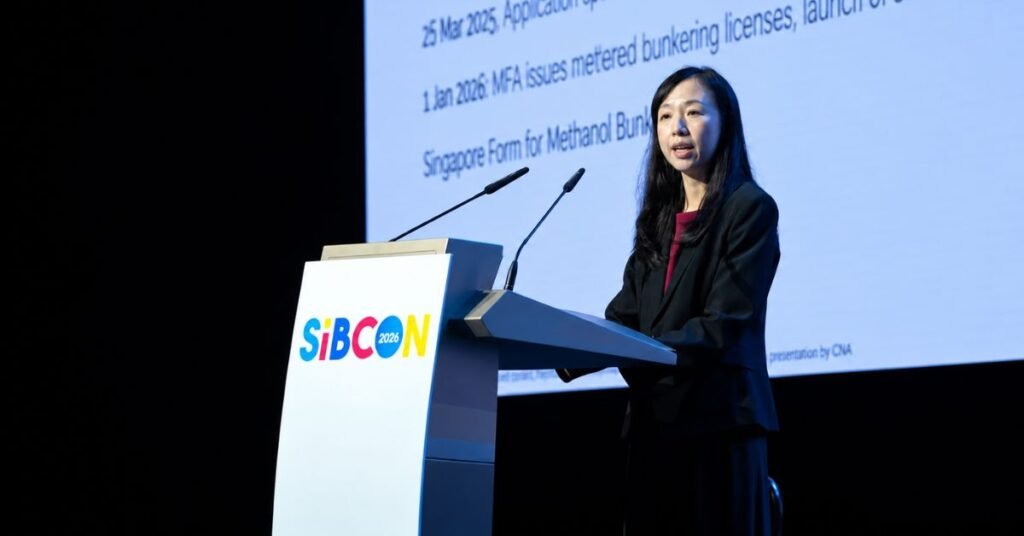
Singapore: The Singapore Chamber of Maritime Arbitration (SCMA) introduced the Singapore Form for Methanol Bunkering at the pre-conference symposium of SIBCON 2026 on October 13, 2026.
Who developed the form?
The form was developed by the SCMA Methanol Working Group, chaired by Kendall Tan, Partner in Rajah & Tann Singapore’s Shipping and International Trade Practice Group and SCMA Board Member representative. The working group included shipowners, bunker suppliers, lawyers and regulators.
Why is a new form needed?
Melissa Kor, Senior Assistant Registrar at SCMA, said existing bunker contracts were built for oil-based fuels, and the Singapore Form “fills a critical legal gap” while balancing safety, commercial practicality and the parties’ freedom to agree terms.
What are its key features?
Kor outlined five principal features:
- Compliance with TR 129, Singapore’s Technical Reference for methanol bunkering
- Fuel quality and sustainability requirements
- Specialised closed-system sampling procedures, reflecting methanol’s handling characteristics
- Electronic bunker delivery notes with clear deadlines for notifying disputes
- Arbitration under the SCMA Rules, offering cost-effective dispute resolution
SCMA operates under Singapore’s International Arbitration Act, and its awards are enforceable in more than 170 countries that are party to the New York Convention.
How has Singapore built its methanol bunkering ecosystem?
The form completes several years of groundwork:
- 2023: Singapore conducted the world’s first ship-to-containership methanol bunkering
- 2024: The SCMA Methanol Working Group was formed
- March 10, 2025: Singapore launched Technical Reference 129 on methanol bunkering
- March 26, 2025: MPA opened applications for methanol bunkering licences
- January 1, 2026: MPA issued methanol bunkering licences
Kor said Singapore’s regulatory, operational, contractual and dispute resolution frameworks together aim to create a stable, integrated methanol bunkering ecosystem.
Is there a similar form for ammonia?
Yes. SCMA is also developing the Singapore Ammonia Bunkering Form, which was released for public consultation at SIBCON 2026, with feedback open until January 14, 2027. It accompanies MPA’s new ammonia bunkering Technical Reference, TR 148.
Why does it matter?
Standard contract terms are essential for any fuel to move from trials to routine commercial supply. Without them, buyers and suppliers must negotiate bespoke terms for every transaction, which raises costs and legal risk. By aligning the contract with Singapore’s technical standard, sampling rules and digital delivery notes, the Singapore Form gives shipowners and suppliers a ready-made framework as methanol dual-fuel fleets grow.
The move also strengthens Singapore’s position against rival hubs racing to offer methanol, including Chinese ports such as Guangzhou and Ningbo-Zhoushan and European hubs such as Rotterdam. For Indian ports building methanol bunkering capability, including VOC Port’s planned green methanol bunkering facility, Singapore’s approach shows the contractual infrastructure needed alongside physical supply.
FAQs
What is the Singapore Form for Methanol Bunkering?
A standard contract for methanol bunker transactions in Singapore, launched by SCMA at SIBCON 2026.
Who developed it?
The SCMA Methanol Working Group, chaired by Kendall Tan of Rajah & Tann Singapore, with shipowners, suppliers, lawyers and regulators.
What are its main features?
TR 129 compliance, fuel quality and sustainability terms, closed-system sampling, electronic delivery notes and SCMA arbitration.
Why was a methanol-specific contract needed?
Existing bunker contracts were designed for oil-based fuels and do not address methanol’s specific handling and quality requirements.
Are SCMA arbitration awards enforceable internationally?
Yes. They are enforceable in more than 170 New York Convention countries.
Recent Posts
Marine
Singapore Unveils Ammonia Bunkering Standard, First Ethanol Bunkering and LNG Storage Plans
Ammonia
Singapore Launches TR 148 Ammonia Bunkering Standard and Model Contract to Prepare for Ammonia-Fuelled Ships
Policy
China Targets Doubling New Energy Inland Vessels by 2028 Under 2026-2030 Action Plan