
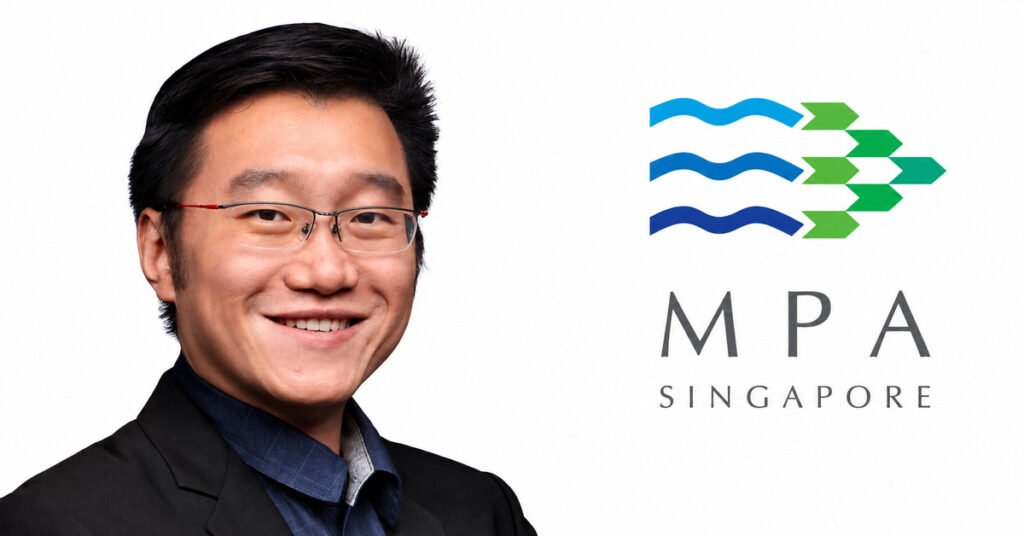
Addressing the International Association of Maritime Economists Conference 2026, Mr Chin Yi Zhuan, Deputy Chief Executive (Industry & Corporate) at the Maritime and Port Authority of Singapore, framed the industry’s decarbonisation push not as a technology problem, but as a classic game-theory standoff, one he likened to the “Stag Hunt.”
In the parable, two hunters can jointly bring down a stag for a big reward, or each settle separately for a smaller, guaranteed rabbit. Everyone prefers the stag, but no one wants to be the only one who shows up for it.
“This perfectly captures the green transition,” the speaker said. Shipowners won’t order vessels that run on new fuels until they’re sure the fuel will be there to bunker. Ports won’t build that bunkering infrastructure until ships are actually calling for it. Fuel producers won’t scale up production without assured demand. And cargo owners won’t pay a green premium unless their customers are willing to pay it too.
“Everyone wants the same outcome,” Mr. Chin said. “Everyone benefits if the ecosystem moves together. Yet everyone fears moving alone.”
The speaker drew a sharp distinction from geopolitical rivalry, which he described earlier in his address as a Prisoner’s Dilemma rooted in conflicting interests. Decarbonisation, he argued, involves no such conflict, every player shares the same goal. The obstacle is confidence, not incentive.
“In a Prisoner’s Dilemma, the solution is to align incentives,” he said. “In a Stag Hunt, the solution is to build confidence.”
That framing, he suggested, reshapes what leadership means in the transition: not picking winning fuels or technologies, but reducing uncertainty so that shipowners, ports, fuel producers and cargo owners have the confidence to move together.
He pointed to Singapore’s own efforts as an example, trialling alternative marine fuels, electrifying its harbour craft fleet, and partnering internationally on green and digital shipping corridors, describing the goal as manufacturing collective confidence rather than betting on a single technological outcome. “Our objective is not to predict which technology or which fuel will ultimately prevail,” Mr Chin said. “Our objective is to create the confidence that enables industry to invest. Because confidence is the catalyst that turns ambition into action.” With the shipping industry targeting net-zero emissions by around 2050, Mr Chin said the destination is no longer in doubt, but the pathway is still being negotiated, hunter by hunter.
Recent Posts
HYBRID
GRSE Signs ₹1,032-Crore ONGC Contract for Four Hybrid Offshore Supply Vessels
EV
Energy In Motion Opens ₹500-Crore Electric Truck Plant in Pune
Fuels
Aegis Logistics Commissions 35,000-Tonne LPG Bottling Plant at JNPA