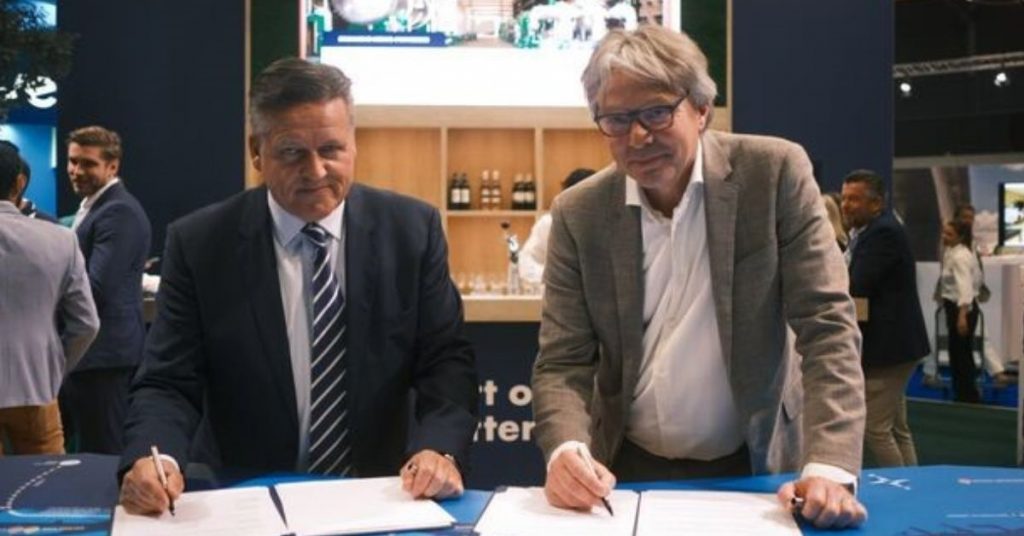
he Port of Rotterdam Authority and EDGE Navigation have signed a Letter of Intent (LoI) to collaborate on building infrastructure to support the use of liquid hydrogen (LH₂) in maritime transport. The agreement was formalized during the World Hydrogen Summit held in Rotterdam.
The partnership aims to position Rotterdam as a key hub for maritime decarbonisation by preparing for the integration of LH₂-powered vessels and associated bunkering systems. EDGE Navigation is currently developing a new fleet of commercial cargo vessels powered by liquid hydrogen, along with an LH₂ tanker designed for both import into Northwest Europe and ship-to-ship fuel delivery.
As part of the collaboration, the Port Authority and EDGE Navigation will work together to examine the regulatory, procedural, and operational requirements needed to accommodate LH₂ imports and distribution. This includes developing policies for both ship-to-shore unloading and ship-to-ship refueling operations. The first EDGE LH₂ vessels are expected to enter service by 2028.
Rotterdam is already emerging as a central player in the hydrogen economy, with existing infrastructure supporting carriers like ammonia and liquid organic hydrogen carriers (LOHC). The addition of liquid hydrogen capabilities is expected to further strengthen the port’s role in the global energy transition.
Recent Posts
Ammonia
AM Green wins H2Global auction for €585 million renewable ammonia supply to Germany
Ports & Harbours
JNPA secures ₹671 crore IFC financing for shore power expansion
HYBRID
IMO study finds hybrid and electric ferries could cut Sea of Marmara emissions by 63%