

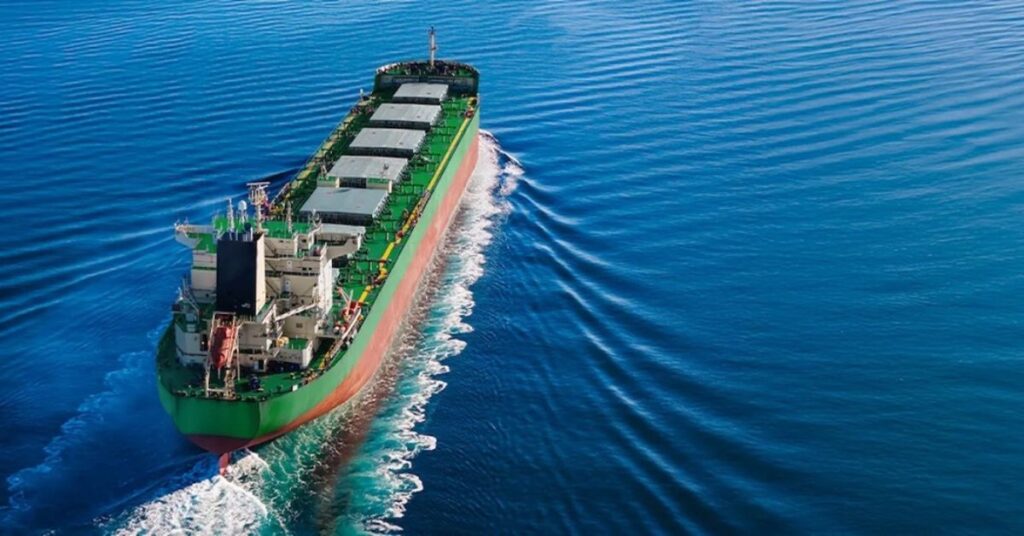
The maritime sector is undergoing a period of rapid regulatory and commercial change as global efforts to curb greenhouse gas (GHG) emissions intensify. To support shipowners in managing these shifts, DNV and the World Maritime Merchants Forum (WMMF) ESG team have released a new guide outlining practical pathways toward decarbonization. The initiative is backed by industry bodies in Hong Kong and other global maritime hubs.
Titled “Net-Zero Guide: Practical Approaches for Global Shipping Companies,” the publication offers a structured framework designed to help companies align operational and investment decisions with emerging international and regional requirements. The guide combines data-driven analysis with insights from vessel operators to highlight realistic steps that shipping companies can take as regulations evolve.
Knut Ørbeck-Nilssen, CEO of DNV Maritime, said: “Shipping’s decarbonization journey continues despite the postponement at the IMO. The reality is that energy efficiency and fuel flexibility or readiness are still considered and implemented on vessels. Continuing on this course will maintain competitiveness and contribute to the sector’s long-term decarbonization goals. The collaboration with World Maritime Merchants Forum (WMMF) on this guide is itself a testament to the importance of working together to pave the way for successful decarbonization.”
Wang Yong Xin, President of China Merchants Energy Shipping (CMES), added: “The Net-Zero Guide offers the industry a wealth of practical reference cases in a complex transition environment, helping shipping companies strike a balance between short-term operations and long-term emissions reduction.”
Focus on Compliance, Cost Management, and Fleet Strategy
The guide highlights increasing compliance complexity, particularly for small and medium-sized enterprises, and outlines approaches to manage regulatory costs. It emphasizes measures such as incremental energy-efficiency upgrades, phased adoption of alternative fuels, and targeted vessel renewal or retrofit programmes to reduce financial exposure and limit the risk of stranded assets.
According to the publication, aligning fleet investments with regulatory expectations and operational improvements can help shipowners safeguard commercial performance amid tightening standards.
Integrating Decarbonization into Core Business Planning
The document encourages companies to embed decarbonization across governance, investment planning, and fleet lifecycle management. This includes linking compliance strategies with financing decisions and balancing newbuilds, retrofits, and operational optimization.
Strengthening workforce capabilities and applying structured change management are identified as critical elements for long-term resilience. The guide also highlights the role of digitalization, data governance, and broader industry collaboration in enabling transparency, supporting regulatory reporting, and generating operational efficiencies.
Link to the guide: https://bit.ly/4i5fgbv
Recent Posts
Fuels
Lloyd’s Register and MARIC unveil tri-fuel-ready tanker concept designed to navigate fuel uncertainty
Ammonia Power & Propulsion
Fraunhofer IMM develops system solution for ammonia propulsion in inland shipping
Ports & Harbours
V.O. Chidambaranar Port identified as potential green shipping corridor node on India-Europe route