
Summary
UECC has signed a commercial agreement with vessel-performance specialist Oversea following a trial aboard Auto Advance. The work identified opportunities to improve hull and propeller maintenance timing and optimise vessel trim. The agreement adds data analysis and expert support to UECC’s wider programme for reducing fuel consumption and emissions.
Auto Advance trial leads to commercial agreement
The UECC fuel efficiency programme is expanding through an agreement with Oversea, a vessel-performance management business formed by ABB and Wallenius.
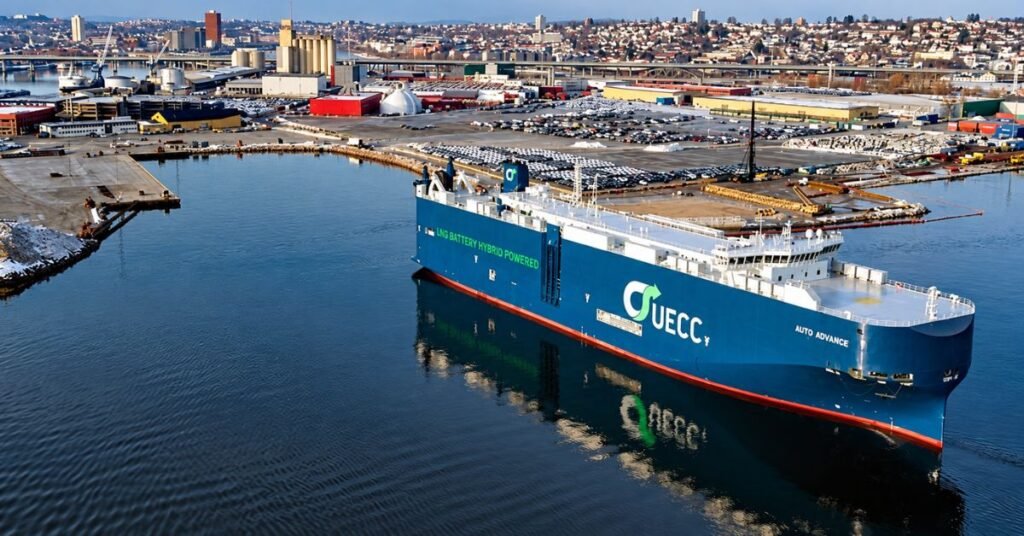
The arrangement follows a trial aboard the car carrier Auto Advance, where analysis identified opportunities to refine hull and propeller maintenance schedules and improve trim.
The companies reported measurable fuel savings before the vessel’s scheduled dry-docking, although no percentage reduction or financial value was disclosed.
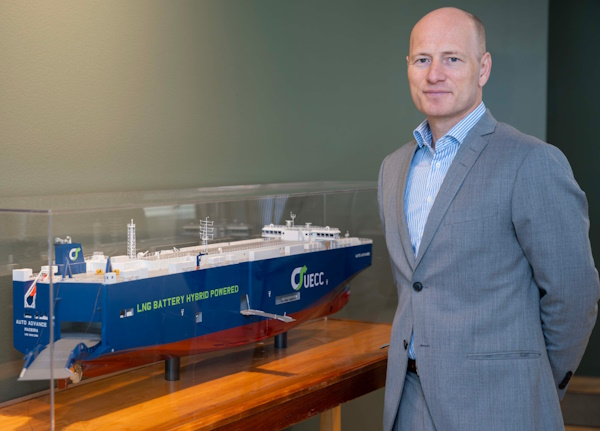
Oversea combines vessel operating data with maritime expertise to identify performance improvements. UECC Chief Financial Officer Thomas Thue said greater use of digitalisation would support the company’s efforts to reduce costs and emissions.
The commercial agreement moves the relationship beyond the initial trial. Its significance lies in turning performance analysis into actions that vessel and shore teams can implement and evaluate during regular operations.

Maintenance timing becomes a commercial decision
Hull and propeller condition influence the energy needed to move a vessel through the water. Identifying deterioration early can help operators assess when maintenance is justified.
The commercial question involves balancing the expected fuel benefit against intervention costs and any interruption to service. Performance data can support that assessment by showing how a vessel behaves over time and under comparable conditions.
Trim optimisation addresses another operational variable: the vessel’s fore-and-aft balance. The most efficient arrangement can vary with loading and operating conditions.
The trial’s findings therefore concern decisions that can be adjusted during a vessel’s working life, alongside investments in propulsion systems and alternative fuels.
Trial vessel already uses hybrid technology
Auto Advance provides an established platform for this operational work.
UECC took delivery of the vessel from China’s Jiangnan Shipyard in November 2021. The pure car and truck carrier measures 169 metres in length and 28 metres in breadth, with capacity for approximately 3,600 vehicles across ten cargo decks.
It was the first of a three-vessel series combining dual-fuel LNG propulsion with a battery-hybrid arrangement.
The ship’s existing technology makes the trial relevant beyond conventional vessels. Newer propulsion arrangements still require attention to maintenance, loading and day-to-day operating performance.
Fuel choice and energy efficiency address related but different questions. One concerns the emissions associated with the energy used; the other concerns how much energy is required to perform the transport task.
Efficiency complements alternative-fuel strategy
UECC’s published strategy places operational improvements alongside a broader shift in fuels.
Its anniversary reporting stated that alternative fuels, including liquefied biomethane, biofuels and LNG, represented around 42% of fuel consumption in 2024, compared with 34% in 2023.
The company also identified technical upgrades and lower-carbon retrofits as part of its programme. Measures under consideration included waste-heat recovery, air lubrication and high-efficiency anti-fouling coatings.
Data-led voyage planning, speed management and route optimisation were also included in its approach.
The Oversea agreement fits within that operating strategy by adding analytical support to decisions about vessel condition and performance.
For customers, the practical value depends on whether improvements can be sustained while maintaining reliable transport schedules and cargo service.
Measurement remains central to verification
UECC’s earlier environmental reporting distinguished between several efficiency indicators.
The Annual Efficiency Ratio provides a carbon-intensity measure linked to vessel capacity and distance, while the Energy Efficiency Operational Indicator relates emissions to actual cargo transported. The Energy Efficiency Design Index addresses the theoretical efficiency of newer vessels.
These measures serve different purposes. A performance programme needs to identify the appropriate comparison and account for changes in weather, loading and operating conditions before attributing savings to a particular action.
The next test for the commercial partnership is consistent execution. Identifying an opportunity is the starting point; scheduling maintenance, applying recommendations and measuring the subsequent result determine the benefit delivered.
The agreement illustrates how digital services can complement fleet investment by improving the operation of ships already in service.
FAQs
What has UECC agreed with Oversea?
A commercial arrangement for vessel-performance analysis and expert support.
Which vessel was used for the trial?
Auto Advance, UECC’s LNG battery-hybrid car carrier.
What opportunities were identified?
Improvements to hull and propeller maintenance timing and vessel trim.
Were fuel savings quantified publicly?
The announcement reported measurable savings but did not disclose a percentage or monetary value.
Does this replace UECC’s alternative-fuel programme?
It complements the company’s work on fuels, fleet technology and operational efficiency.
Recent Posts
Power & Propulsion
WinGD Signs First Engine Licensing Agreement with HD Hyundai Marine Engine
LNG
LNG Carrier Surplus Forecast Raises Questions Over New Ship Orders
Policy
UK ETS Site Visits: DNV Urges Early Action Before First Reporting Deadline