
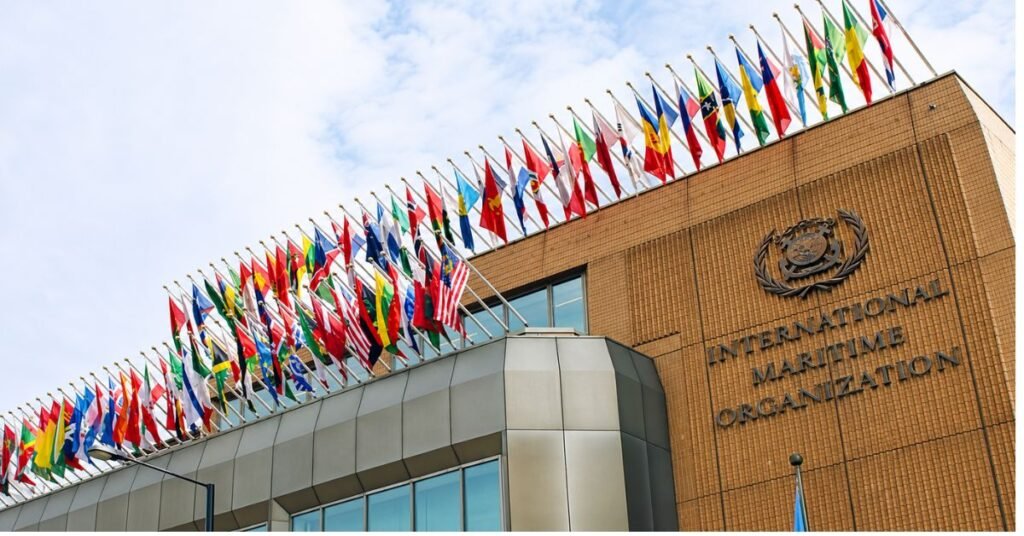
Environmental groups and an academic expert have urged International Maritime Organization (IMO) member states to adopt the proposed Net-Zero Framework, arguing that political developments following the US midterm elections offer an opportunity to advance shipping decarbonisation.
The appeal, issued on 4 November 2026, comes before renewed negotiations over global marine-fuel standards and greenhouse gas emissions pricing. Representatives of Pacific Environment, Opportunity Green and the University of Melbourne called on governments to overcome opposition and move the framework towards adoption.
What are the groups asking governments to do?
Jamie Yates, Climate and Renewable Energy Manager at Pacific Environment, criticised the Trump administration’s efforts to delay shipping climate measures and urged IMO members to proceed.
“The world has already lost a year in climate action from shipping; it cannot afford another,” he said.
Opportunity Green Chief Executive Aoife O’Leary argued that the political environment had changed since the October 2025 negotiations and called for renewed cooperation.
University of Melbourne researcher Christiaan De Beukelaer identified China, Brazil and the European Union as important participants in the next negotiating phase. He argued that governments should act on their existing shipping climate commitments. These comments represent the speakers’ assessments of the political opportunity for agreement.
What would the IMO Net-Zero Framework introduce?
The framework combines two linked measures. A global fuel standard would progressively reduce the greenhouse gas intensity of energy used by ships, while an emissions-pricing mechanism would encourage compliance and lower-emission operations.
The proposed rules assess fuels across their lifecycle, covering extraction or production through to use onboard. This approach includes carbon dioxide, methane and nitrous oxide, allowing different fuels to be compared by their overall climate impact.
The draft framework covers large ocean-going ships above 5,000 gross tonnage. Fuel emissions and sustainability information would require independent verification through certification arrangements recognised by the IMO.
The Marine Environment Protection Committee (MEPC) approved the draft amendments in April 2025. Formal adoption remains a separate step in making the measures legally binding. The extraordinary session convened in October 2025 adjourned its discussions until 2026.
When will negotiations resume?
The next intersessional working group on reducing greenhouse gas emissions from ships is scheduled for 23–27 November 2026.
MEPC’s 85th session will follow from 30 November to 3 December. The adjourned extraordinary session is scheduled to resume on 4 December, subject to confirmation by MEPC 85.
At its April–May 2026 meeting, the committee established further intersessional discussions to address concerns and build wider agreement. Member states were permitted to propose changes to the previously approved draft.
That process leaves the forthcoming meetings responsible for resolving outstanding positions and determining how the framework proceeds.
What technical issues remain under discussion?
September’s working-group meeting examined proposals addressing concerns over the draft amendments. Its chair reported willingness among delegations to seek further progress, while countries were encouraged to develop concrete proposals capable of attracting broader support.
Detailed implementation guidelines were deferred to the November working group because of time constraints. Discussions on the IMO’s lifecycle greenhouse gas assessment framework were also carried forward.
These technical arrangements matter to the eventual application of fuel standards, including how emissions are assessed and documented across fuel supply chains.
The next negotiating round will therefore combine political decisions over the framework with work on the rules needed to implement it consistently. The groups’ appeal adds pressure for adoption as member states prepare for that process.
Recent Posts
Marine
Petrobras advances Tupi Field redevelopment with LR approval for FPSO concept
Power & Propulsion
Wärtsilä secures engine and propulsion order for Delfin LNG’s first FLNG vessels
Marine
StormGeo and CCS link emissions platforms to support digital verification in China