
Summary
Höegh Autoliners has received a 40.5-metre IMO Type C bilobe ammonia fuel tank for installation aboard its ninth Aurora-class pure car and truck carrier (PCTC), being built at China Merchants Heavy Industry (CMHI) in Jiangsu, China. The 9,100-CEU vessel will be equipped with an Everllence B&W 7S60ME-LGIA ammonia dual-fuel engine and is expected to enter service in 2027. The shipowner plans to operate the vessel on green ammonia from its maiden voyage to Norway.
Article
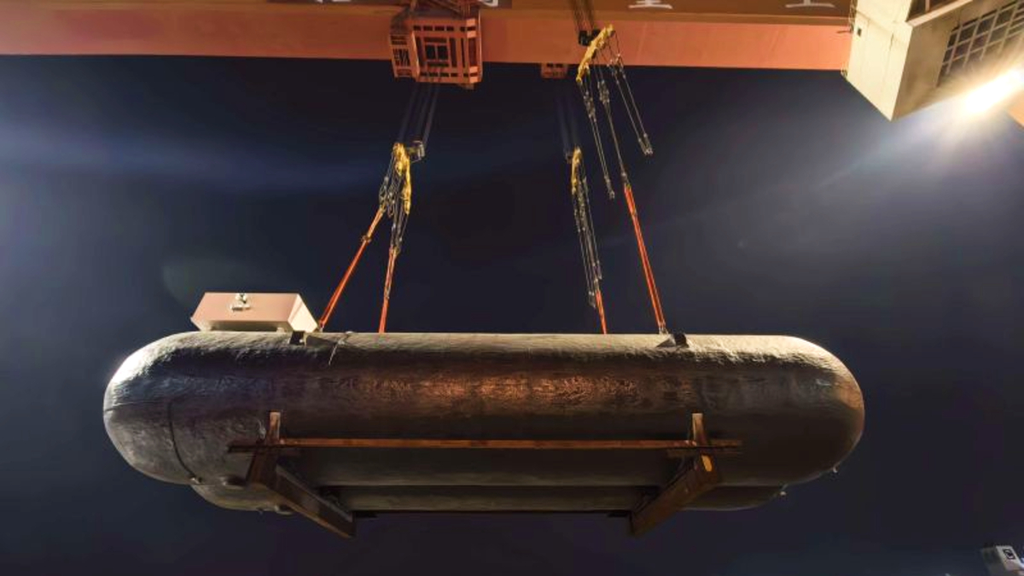
Höegh Autoliners has received a new bilobe ammonia fuel tank for its ninth Aurora-class pure car and truck carrier (PCTC), marking another development in the construction of its first vessel designed to operate on ammonia from delivery.
The IMO Type C fuel tank was delivered on 11 November 2026 to China Merchants Heavy Industry (CMHI) in Jiangsu, China, where the 9,100-CEU vessel is under construction. According to the shipowner, the stainless-steel tank measures 40.5 metres in length, 13 metres in width and 8 metres in height.
The vessel is the ninth in Höegh Autoliners’ Aurora-class series and the first to be designed for green ammonia operation from the outset. TGE Marine Gas Engineering is supplying the ammonia fuel gas supply systems (AFGSS) for the Aurora-class newbuildings. Its stainless-steel fuel tank technology is designed to accommodate ammonia, methanol and LNG.
The first eight vessels in the series have received ammonia-ready notations from DNV and will initially operate on LNG. Their tank arrangements allow for subsequent conversion to ammonia or methanol without requiring changes to the tank design.
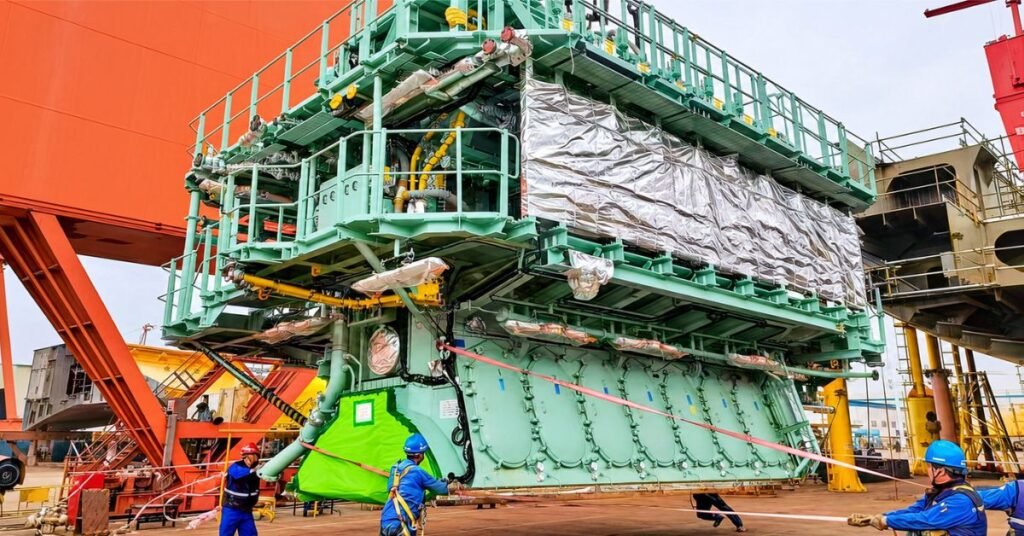
The delivery of the bilobe fuel tank follows the successful Factory Acceptance Testing (FAT) of the vessel’s Everllence B&W ME-LGIA ammonia dual-fuel engine at HD Hyundai Heavy Industries (HHI) in South Korea in September 2026.
The two-stroke, slow-speed engine has since been delivered to the CMHI shipyard and installed aboard the vessel. It is an Everllence B&W 7S60ME-LGIA (Liquid Gas Injection Ammonia) engine, forming part of an order for four Aurora-class PCTCs for Höegh Autoliners.
“This vessel will be the first PCTC in the world capable of running on ammonia straight from the yard when it is ready next year,” declared Höegh Autoliners.
“From there, its maiden voyage will take it all the way to Norway, sailing up the Oslo Fjord for its naming ceremony with zero emissions from the vessel’s propulsion,” added the shipowner.
BYD battery agreement for 12th Aurora-class vessel
Separately, Höegh Autoliners has entered into an agreement with battery manufacturer BYD to equip its 12th Aurora-class PCTC with a containerised battery solution.
The agreement was signed at the China Pavilion during COP 31 as part of the company’s efforts to achieve net-zero emissions by 2040.
The battery system will be integrated with ammonia propulsion, a shaft generator, solar panels and other emission-reduction features incorporated into the Aurora-class design.
The vessel is scheduled for delivery and commencement of commercial operations in May 2028.
“We are combining every green technology available on one vessel capable of running on ammonia from day one. Nobody has done that on a deep-sea car carrier before,” said company chief executive Andreas Enger.
FAQs
What is the fuel capacity system being installed on Höegh Autoliners’ ninth Aurora-class vessel?
The vessel will be equipped with a 40.5-metre-long IMO Type C bilobe stainless-steel ammonia fuel tank, delivered to China Merchants Heavy Industry on 11 November 2026.
Which engine will power the ammonia-fuelled car carrier?
The vessel will use an Everllence B&W 7S60ME-LGIA (Liquid Gas Injection Ammonia) two-stroke, slow-speed ammonia dual-fuel engine.
When will Höegh Autoliners’ ammonia-powered PCTC enter service?
The 9,100-CEU vessel is expected to be delivered in 2027. Höegh Autoliners plans to operate it on green ammonia from its maiden voyage to Norway.
What is the difference between the ninth Aurora-class vessel and the first eight ships?
The first eight vessels are ammonia-ready and will initially operate on LNG, with provisions for conversion to ammonia or methanol. The ninth vessel is being built to operate on ammonia from delivery.
What is the BYD agreement for Höegh Autoliners’ 12th Aurora-class vessel?
The agreement provides for a containerised battery solution from BYD. The battery system will complement ammonia propulsion, a shaft generator and solar panels. The vessel is scheduled to enter commercial operations in May 2028.
Recent Posts
Bunkering
CMA CGM considers ethanol and bio-LNG bunkering trials in Singapore
Policy
Odisha outlines plans for new port, shipbuilding cluster and green fuel infrastructure
Power & Propulsion Methanol
Greenpeace launches 75-metre sailing flagship at Spain’s Freire Shipyard