
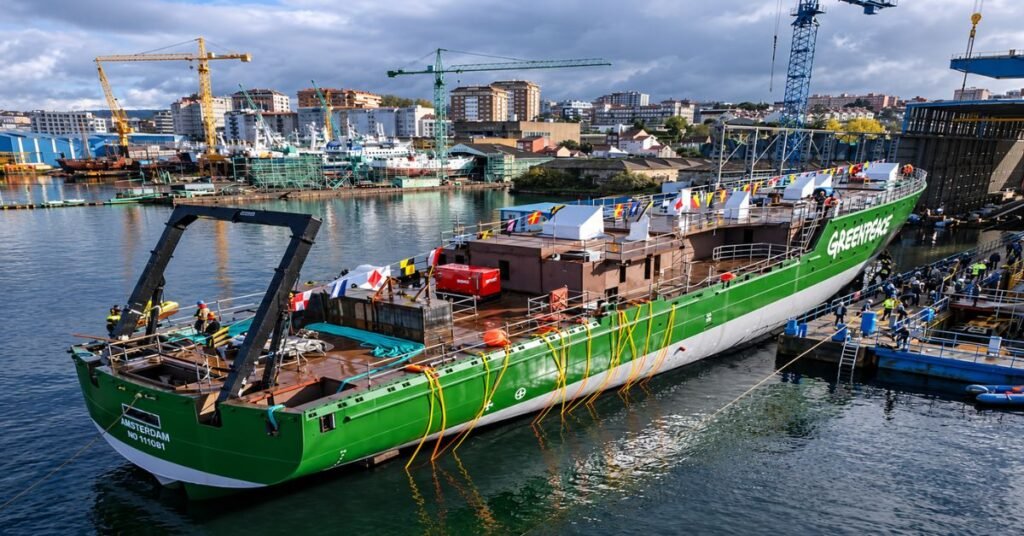
Greenpeace International’s new 75-metre flagship was launched at Freire Shipyard in Vigo, Spain, on 25 November 2026. Designed for environmental campaigns and scientific research, including in polar waters, the vessel will use wind as its primary means of propulsion. Greenpeace expects it to enter service by the end of 2027.
How will wind power the Greenpeace flagship?
The vessel’s automated DynaRig sailing system has two rotating masts carrying a combined 1,746 square metres of sail. Rotating the masts allows the crew to adjust the sails to the wind. The shipyard says the vessel is designed to circumnavigate the globe under sail alone in favourable weather conditions.
The ship’s propellers will also be able to generate electricity while the vessel is under sail. This allows the ship to recover energy from its movement through the water and feed it into an onboard system that also includes solar panels, battery storage and hydrogen fuel cells.
What roles will hydrogen and methanol play on board?
The design includes four dual-fuel generator sets intended to run primarily on green methanol. The generators will use a small quantity of marine gas oil as pilot fuel to initiate combustion. Hydrogen fuel cells and solar panels provide additional sources of electricity, while the batteries allow energy to be stored for later use.
Greenpeace says it aims to eliminate fossil fuel use as the necessary fuel supplies and infrastructure become available. For a ship intended to operate worldwide, the availability of those fuels at ports along its route will help determine how it uses the different onboard power sources.
What research can the new flagship support?
Dykstra Naval Architects designed the vessel to carry onboard laboratories and equipment for deploying remotely operated and autonomous underwater vehicles. It will also have a helideck and four auxiliary boats. These facilities will allow teams to conduct research aboard the ship and deploy personnel and equipment away from it during missions, including in polar waters.
The flagship will join a fleet that includes Rainbow Warrior III, Arctic Sunrise and Witness. Its launch is a construction milestone ahead of the planned handover and entry into service in late 2027.
FAQs
Where was Greenpeace’s new sailing flagship built?
Freire Shipyard in Vigo, Spain, is building the vessel and launched it on 25 November 2026.
What is the ship’s primary means of propulsion?
Wind is the primary source of propulsion. The automated DynaRig system carries 1,746 square metres of sail across two rotating masts.
When will the flagship enter service?
Greenpeace expects the vessel to enter service by the end of 2027.
Recent Posts
Bunkering
CMA CGM considers ethanol and bio-LNG bunkering trials in Singapore
Policy
Odisha outlines plans for new port, shipbuilding cluster and green fuel infrastructure
Power & Propulsion Methanol
Greenpeace launches 75-metre sailing flagship at Spain’s Freire Shipyard