
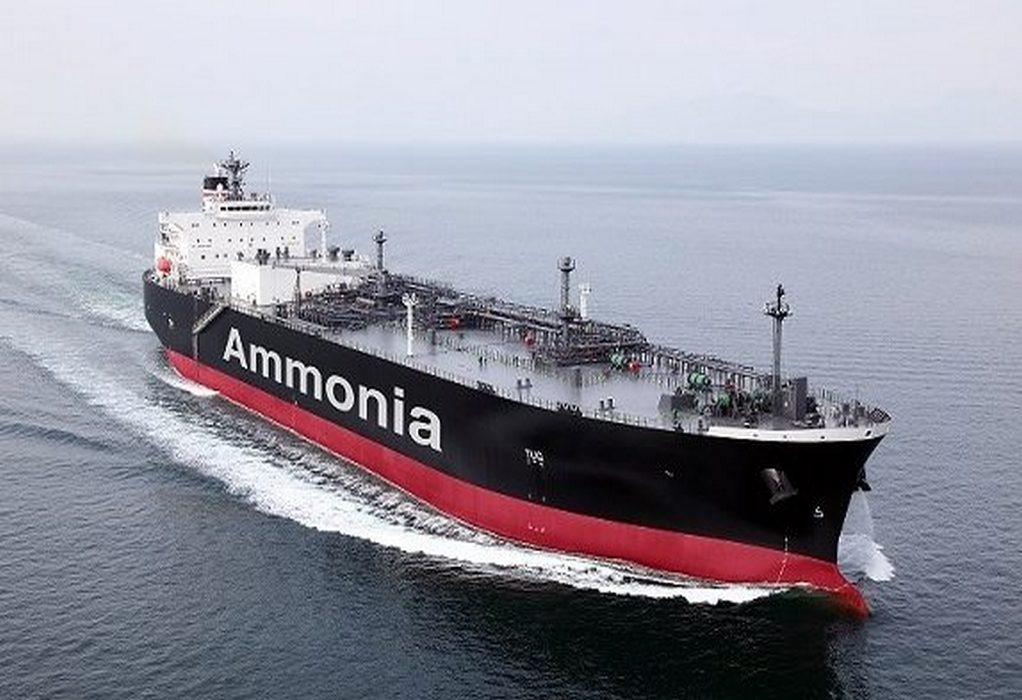
In a pioneering safety development, ABS is using advanced modeling and simulation technologies to develop emergency response methods to assist ports and crew in responding to ammonia leaks or spills.
It is the first step towards a comprehensive and fast ammonia release response system, capable of predicting the behavior of an ammonia plume and directing emergency mitigation services accordingly.
Thanks to its potential for zero-carbon emissions, ammonia is widely viewed as a promising fuel solution for a more sustainable industry but its high toxicity presents significant operational challenges on board and ashore.
An industry leader in modeling and simulation, ABS combined those techniques with Computational Fluid Dynamics (CFD) to create a high-fidelity model designed to replicate ammonia dispersion patterns in the engine room. Using this new model, ABS specialists studied the impact of various ventilation approaches on the behavior of ammonia plumes resulting from leakages from the fuel lines, revealing optimum methods to vent the ammonia plume.
Leveraging this industry-leading approach, a dynamic model will be able to swiftly predict the response of an ammonia plume to a range of parameters such as wind speed and direction, humidity, cubic meters per second and relationship of the vessel to port. In addition to dispersion analysis, agent-based discrete event simulations to study the response of crew, port authorities, and emergency services after dispersion will be conducted.
Recent Posts
HYBRID
GRSE Signs ₹1,032-Crore ONGC Contract for Four Hybrid Offshore Supply Vessels
EV
Energy In Motion Opens ₹500-Crore Electric Truck Plant in Pune
Fuels
Aegis Logistics Commissions 35,000-Tonne LPG Bottling Plant at JNPA