
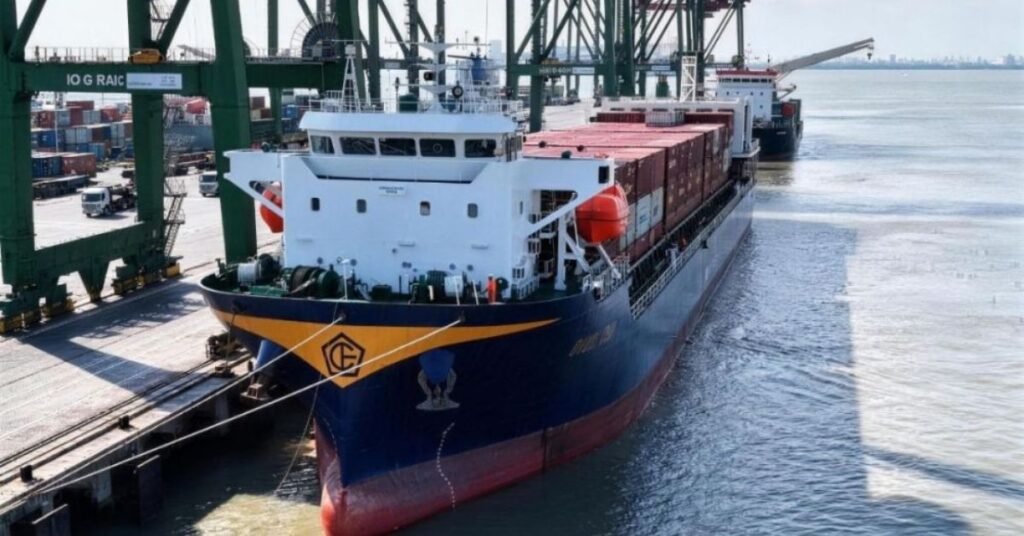
Clean energy equipment provider CIMC Enric has confirmed that the LNG-powered container vessel Digul Mas, owned by Indonesian listed shipping company TEMAS Group, has successfully completed its commercial maiden voyage using an innovative tank-swapping refuelling model that bypasses the need for large-scale bunkering infrastructure.
What route is Digul Mas operating?
The vessel has begun commercial operations on an inter-island route connecting Surabaya, Kendari, and Gorontalo in Indonesia, an archipelagic network where conventional LNG bunkering infrastructure remains limited.
How does the tank-swapping model work?
Rather than relying on fixed bunkering terminals, Digul Mas uses standardised, swappable LNG fuel tanks that allow for flexible and efficient refuelling. CIMC Enric supplied the specialised marine LNG fuel tanks for the project and delivered TEMAS Group’s 5 MMSCFD skid-mounted LNG liquefaction plant, combining to form what the company describes as an integrated LNG value chain covering liquefaction, storage, transportation, and marine fuel utilisation.
Why does this matter for Indonesia’s shipping market?
CIMC Enric said the model offers a practical alternative in a market where natural gas pipeline infrastructure is limited and building large-scale LNG bunkering terminals can be difficult. By pairing skid-mounted liquefaction plants with standardised fuel tanks, the company’s so-called virtual pipeline solution allows LNG to be produced, transported, stored, and supplied to vessels independently and flexibly, reducing the need for extensive modification to existing port infrastructure.
What’s the broader significance for the region?
CIMC Enric framed the successful operation of Digul Mas as an important milestone for its virtual pipeline solution in overseas marine transportation, positioning it as a practical and replicable pathway for low-carbon shipping transformation across Indonesia and Southeast Asia. For archipelagic and inter-island shipping markets facing similar infrastructure constraints, the model offers a template for LNG adoption that doesn’t depend on heavy upfront investment in fixed bunkering terminals, potentially accelerating alternative fuel uptake in regions where conventional bunkering infrastructure has lagged.
Recent Posts
Ammonia
Aegis Tristar acquisition to expand Indian group’s global energy logistics reach
Power & Propulsion
Everllence and MITSUI E&S Mark 100 Years of Two-Stroke Engine Partnership
Ammonia
NTPC Targets Japan, South Korea and Germany for Green Ammonia Exports from Andhra Pradesh Hub