
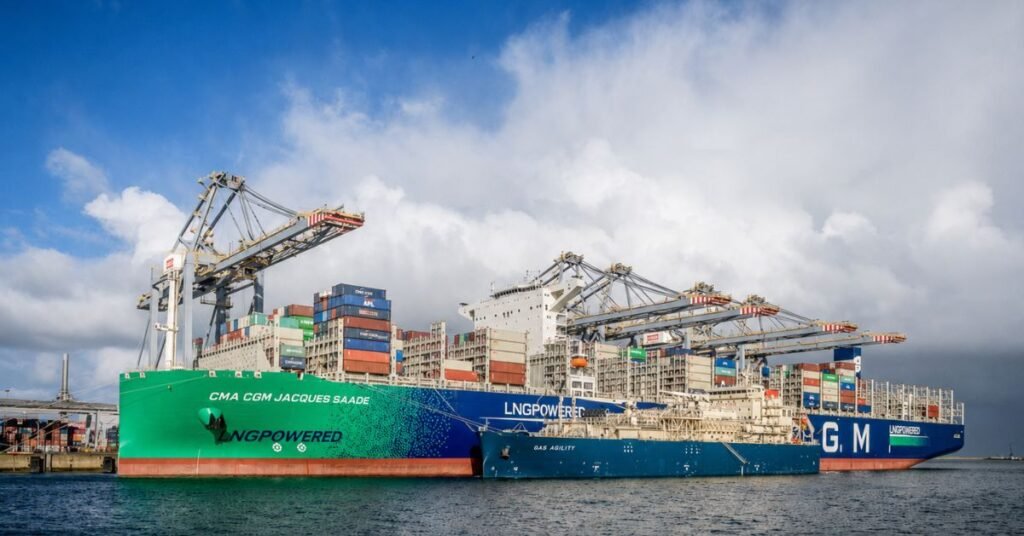
CMA CGM and Capital Clean Energy Carriers (CCEC) have established a 50-50 joint venture to expand LNG bunkering infrastructure and support the growing use of LNG as a marine fuel.
The newly formed company will oversee the construction, ownership, chartering, and operation of a 20,000-cubic-metre dual-fuel LNG bunkering vessel. As part of the agreement, the joint venture has signed a shipbuilding contract with China’s Nantong CIMC Sinopacific Offshore & Engineering Co.
The vessel will be built at a contract value of approximately $82.8 million and is scheduled for delivery in the third quarter of 2028.
LNG Bunkering Capacity Expansion
According to the partners, the LNG bunkering vessel will be designed to perform ship-to-ship LNG fuel transfers under a range of operating conditions. The vessel will incorporate dual-fuel propulsion technology and emissions reduction systems intended to meet evolving environmental requirements in the maritime sector.
The project supports the continued expansion of LNG bunkering infrastructure as shipping companies increase deployment of LNG-fuelled vessels in response to tightening emissions regulations and decarbonisation targets.
Long-Term Charter Agreement Planned
Following delivery, the vessel is expected to enter a 12-year time charter agreement with a separate joint venture established between CMA CGM and TotalEnergies.
The long-term charter is intended to support LNG fuel supply operations for vessels operating within CMA CGM’s expanding LNG-powered fleet.
Capital Clean Energy Enters LNG Bunkering Segment
The project marks Capital Clean Energy Carriers’ entry into the LNG bunkering market, expanding its involvement in the gas value chain beyond transportation.
“This joint venture marks CCEC’s entry into LNG bunkering — a natural extension of our gas platform from carriage into marine fuel supply,” said Jerry Kalogiratos, CEO of Capital Clean Energy Carriers.
“Working alongside counterparties of the caliber of CMA CGM and TotalEnergies, we can help build the infrastructure that allows LNG to deliver a cleaner emissions profile, alongside security and diversity of supply, while opening a new, long-term contracted revenue stream for the company through the Joint Venture.”
The development reflects continued investment in LNG bunkering capacity globally as shipowners and fuel suppliers work to support demand from an expanding fleet of LNG-fuelled vessels.
Recent Posts
Biofuels
WinGD Ethanol-Fuelled Engine Completes First In-Service Voyage on Maersk Vessel
Power & Propulsion
Norsepower Rotor Sails Installed on Airbus Cargo Ship Spirit of Toulouse
EV
Estonia Electric Ferry to Combine Steerprop Propulsion with Battery Power