
Summary
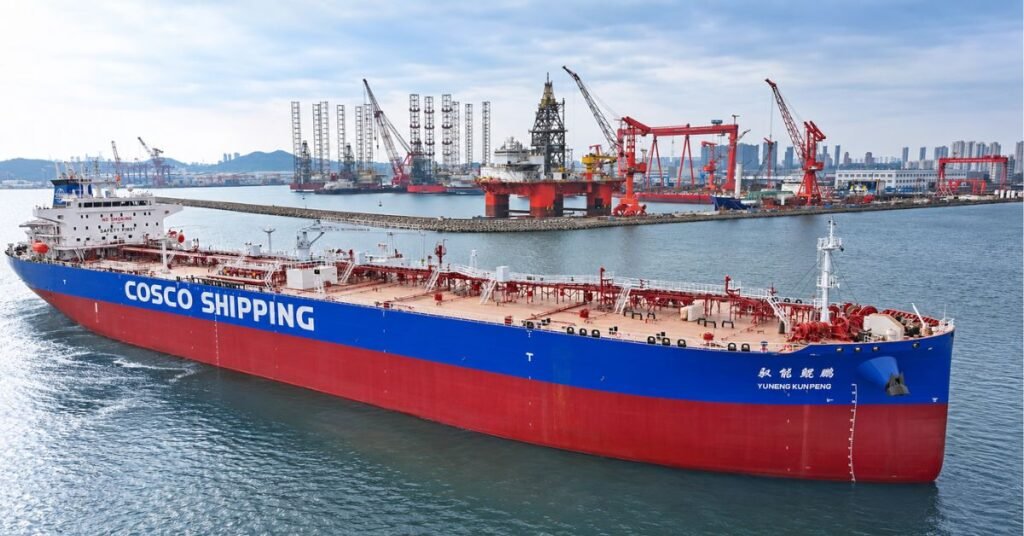
COSCO SHIPPING Energy Transportation has approved a 9,000-cubic-metre ethylene carrier project with a construction price of RMB335 million, including tax. The proposed vessel will use LNG dual-fuel propulsion and be built at an affiliated Dalian shipyard, supporting the company’s expansion in domestic and international ethylene transportation.
Board approves specialised gas-carrier project
The COSCO ethylene carrier investment was approved on 28 October 2026, with subsidiary Hainan Zhaogang Shipping planning to enter a construction contract with COSCO SHIPPING Heavy Industry’s Dalian yard.
Total project investment is estimated at RMB341 million, including construction-period interest, supervision and other capitalised expenses. Funding will combine internal resources and external financing, with the vessel price payable in five instalments linked to construction progress.
Delivery is expected within 18 months of the contract becoming effective. The agreement takes effect after signature and completion of the parties’ approval procedures.
The distinction between board approval and contract effectiveness matters to the delivery schedule. The construction period is tied to the agreement taking effect, rather than automatically running from the approval date.
Expansion targets ethylene transportation
COSCO SHIPPING Energy said the investment responds to growing ethylene transportation demand and limited availability of suitable carrying capacity.
The proposed vessel will incorporate energy-saving equipment and intelligent onboard systems alongside its dual-fuel propulsion arrangement. The company expects the addition to improve fleet capability and customer service across domestic and international markets.
For cargo owners, investment in specialised vessels can broaden the transport options available between production and consumption centres. For the shipowner, the commercial outcome will depend on securing employment, maintaining utilisation and managing operating costs once the vessel enters service.
The announcement concerns future carrying capacity. Its contribution to transport activity and earnings will follow construction, delivery and commercial deployment.
Earlier order establishes a continuing investment pattern
The latest approval follows a separate ethylene-carrier commitment disclosed in COSCO SHIPPING Energy’s 2025 annual report.
On 12 December 2025, the group entered contracts for 19 vessels with COSCO SHIPPING Heavy Industry shipyards, carrying an aggregate tax-inclusive value of RMB7.882 billion.
That programme included one 9,000-cubic-metre ethylene carrier at the Dalian yard, priced at RMB327.98 million including tax. The earlier package also covered several categories of oil tankers.
The annual report identified the ethylene vessel as LNG dual-fuel and described continued expansion into ethylene and liquid-ammonia transportation markets.
This earlier commitment provides context for the October 2026 proposal: ethylene shipping is part of an ongoing diversification effort within a business whose principal activities include oil and LNG transportation.
The two projects have the same stated cargo capacity, but the published prices alone do not establish a directly comparable change in shipbuilding costs. Contract scope, equipment and commercial terms would also need consideration.
Fuel choice requires a lifecycle assessment
LNG dual-fuel propulsion adds another dimension to the investment, linking fleet development with decisions about fuel availability, operating flexibility and environmental performance.
The International Maritime Organization’s lifecycle framework assesses marine-fuel emissions from production through to use aboard a ship. This combines upstream emissions associated with fuel supply with those generated during onboard consumption.
The framework covers carbon dioxide, methane and nitrous oxide. Consequently, an LNG propulsion specification alone does not establish a vessel’s overall greenhouse-gas performance; the assessment also depends on the fuel pathway and emissions associated with its use.
For owners investing in long-lived assets, this creates a requirement to evaluate propulsion alongside fuel sourcing and operational efficiency. The planned energy-saving systems are therefore relevant to the vessel’s commercial proposition as well as its technical specification.
Delivery and employment will determine returns
The project combines a specialised cargo-market strategy with investment in a newer propulsion configuration. Its commercial significance lies in adding capacity suited to the company’s chosen market while renewing the assets available to serve customers.
During construction, progress-linked payments will distribute expenditure across the build programme. After delivery, the emphasis will shift to employment, reliability, fuel expenditure and the vessel’s ability to meet customer requirements.
The latest approval strengthens COSCO SHIPPING Energy’s planned presence in ethylene transportation. Turning that commitment into returns will depend on disciplined construction execution and sustained demand when the ship becomes available.
FAQs
What vessel has COSCO SHIPPING Energy approved?
A 9,000-cubic-metre multipurpose ethylene carrier with LNG dual-fuel propulsion.
What is the investment value?
The construction price is RMB335 million including tax, with total investment estimated at RMB341 million.
Which shipyard will build it?
COSCO SHIPPING Heavy Industry’s Dalian yard.
When is delivery expected?
Within 18 months of the construction contract becoming effective.
Has the group ordered a similar vessel previously?
Its 2025 annual report records a separate 9,000-cubic-metre ethylene-carrier contract signed in December 2025.
Recent Posts
Fuels
ONE Symphony Joins 14,000-TEU Fleet as ONE Expands Alternative-Fuel-Ready Newbuildings
Dual-Fuel
COSCO Ethylene Carrier Investment Adds LNG Dual-Fuel Capacity to Fleet Plans
Ammonia
MOL Ammonia-Fuelled Bulkers Named as 2027 Delivery Programme Advances