
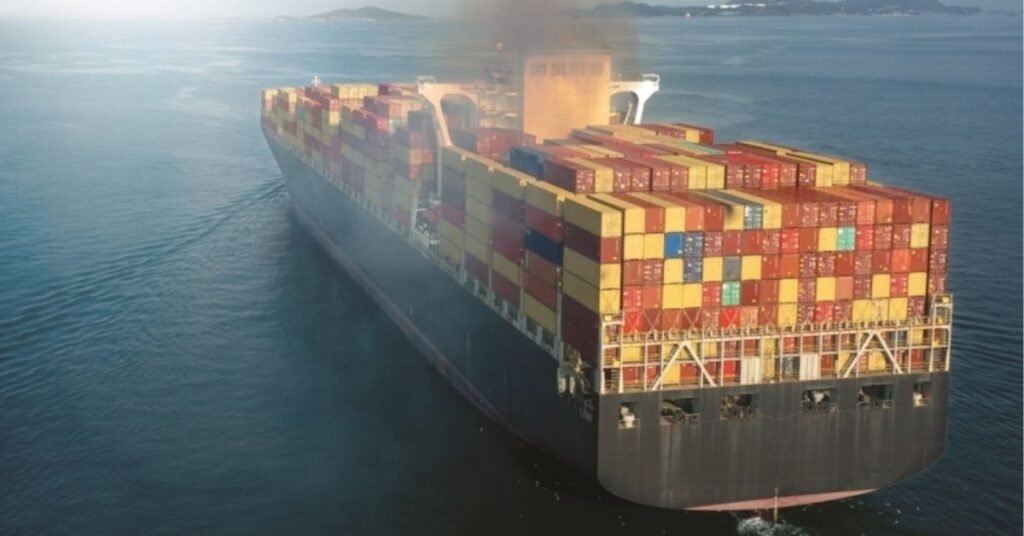
Efficiency improvements and slower steaming could reduce global maritime energy consumption by as much as 16% by 2030 compared with a business-as-usual scenario, according to DNV’s Maritime Forecast to 2050 – 2026 edition, even as alternative-fuel capable vessels account for a shrinking share of new orders.
How much fuel and cost savings does this represent?
DNV estimates the projected 2030 savings at roughly 40 million tonnes of fuel and 120 million tonnes of CO2 equivalent. Based on a fuel price of $580 per tonne, that translates to annual savings of approximately $23 billion. By 2050, the projected reduction in energy consumption widens further, reaching between 25% and 28%.
Is the alternative-fuel capable fleet still growing?
Yes, but the pace of growth in new orders is slowing. The share of the global fleet capable of running on alternative fuels rose from 0.4% in 2020 to 5.2% in August 2026, with the number of such vessels increasing from 213 to 1,329, excluding LNG tankers. However, the proportion of ordered capacity capable of using alternative fuels fell to 39.4% in August 2026, down from 49.5% a year earlier.
DNV attributes the pullback partly to regulatory uncertainty and a shift in order composition toward tankers and dry bulk carriers, segments where alternative-fuel adoption has historically lagged. Car carriers currently lead in adoption, with 26% of the roughly 940 vessels in operation capable of using alternative fuels, including 149 LNG-capable ships and three methanol-ready vessels. The orderbook includes a further 109 LNG-prepared vessels, 15 for methanol, and four for ammonia, a trend DNV links to automotive industry pressure to decarbonise logistics supply chains.
Will enough low-emission fuel be available?
Fuel supply remains a key uncertainty. DNV estimates theoretical production potential of up to 270 million tonnes of oil equivalent (Mtoe) by 2030, though actual output is expected to fall short given projects that haven’t reached final investment decisions and the risk of delays or cancellations. Of that potential volume, only around 62 Mtoe would have competitive abatement costs relative to the $380 per tonne CO2-equivalent reference price initially considered under the IMO’s Net-Zero Framework.
Projected maritime demand for these fuels spans a wide range depending on regulatory scenarios, from 4 to 22 Mtoe in 2030 and 33 to 185 Mtoe in 2050. Shipping will also be competing with other sectors for the same fuel pool: under DNV’s Energy Transition Outlook scenario, non-maritime fuel demand could reach approximately 830 Mtoe by 2040 and 1,300 Mtoe by 2050, rising to 1,600 and 2,100 Mtoe respectively under a net-zero pathway.
Will green fuel prices converge globally?
DNV does not expect a single global price benchmark to emerge for green fuels. Even in developed markets, prices are likely to remain regionally differentiated and partially decoupled, shaped by factors including the specific fuel molecule, feedstock availability, electricity costs, infrastructure maturity, and local production conditions.
What does this mean for shipping’s transition trajectory?
The findings suggest the near-term energy transition will be driven as much by operational efficiency and vessel speed management as by fuel switching, with alternative fuel adoption progressing steadily but unevenly across vessel segments. For shipowners and charterers, the combination of efficiency-driven savings and persistent fuel price uncertainty underscores why near-term decarbonisation strategies increasingly hinge on operational levers alongside longer-term newbuild and retrofit decisions.
Recent Posts
Ammonia
Aegis Tristar acquisition to expand Indian group’s global energy logistics reach
Power & Propulsion
Everllence and MITSUI E&S Mark 100 Years of Two-Stroke Engine Partnership
Ammonia
NTPC Targets Japan, South Korea and Germany for Green Ammonia Exports from Andhra Pradesh Hub