
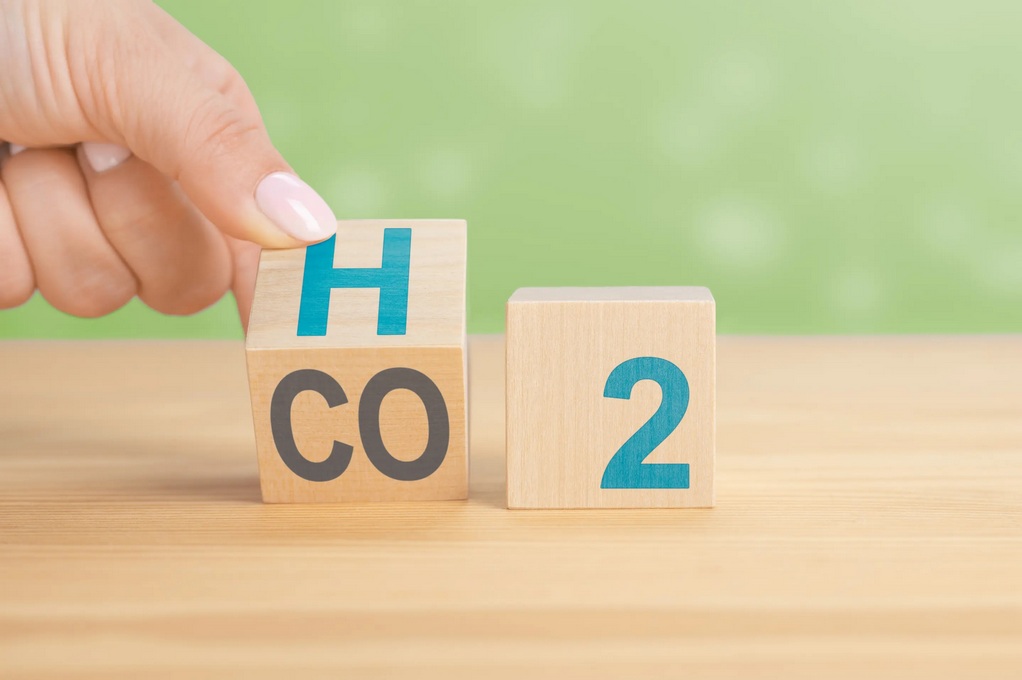
A study led by Norwegian climate center CICERO has found that the global warming effect of leaked hydrogen is almost 12 times stronger than that of CO2.
Unlike exhaust from burning coal and gas that contains CO2, burning hydrogen emits only water vapor and oxygen. Rather, it is the leaking of hydrogen from production, transportation and usage that adds to global warming.
Hydrogen is not a greenhouse gas, but its chemical reactions in the atmosphere affect greenhouse gases such as methane, ozone, and stratospheric water vapor. In this way, emissions of hydrogen can cause global warming, despite its lack of direct radiative properties.
The main changes in the radiative forcing due to 1 Tg flux of hydrogen; methane (green bars), ozone (yellow), stratospheric water vapor (purple), and aerosols (red). Sand et al.
The study was led by Dr Maria Sand, a senior scientist at CICERO, and her colleagues with collaborators from the UK, France, and the US, and was funded by the Research Council of Norway with contributions from five hydrogen industry partners. The open-access paper is published in Nature Communications Earth & Environment.
Recent Posts
HYBRID
GRSE Signs ₹1,032-Crore ONGC Contract for Four Hybrid Offshore Supply Vessels
EV
Energy In Motion Opens ₹500-Crore Electric Truck Plant in Pune
Fuels
Aegis Logistics Commissions 35,000-Tonne LPG Bottling Plant at JNPA