
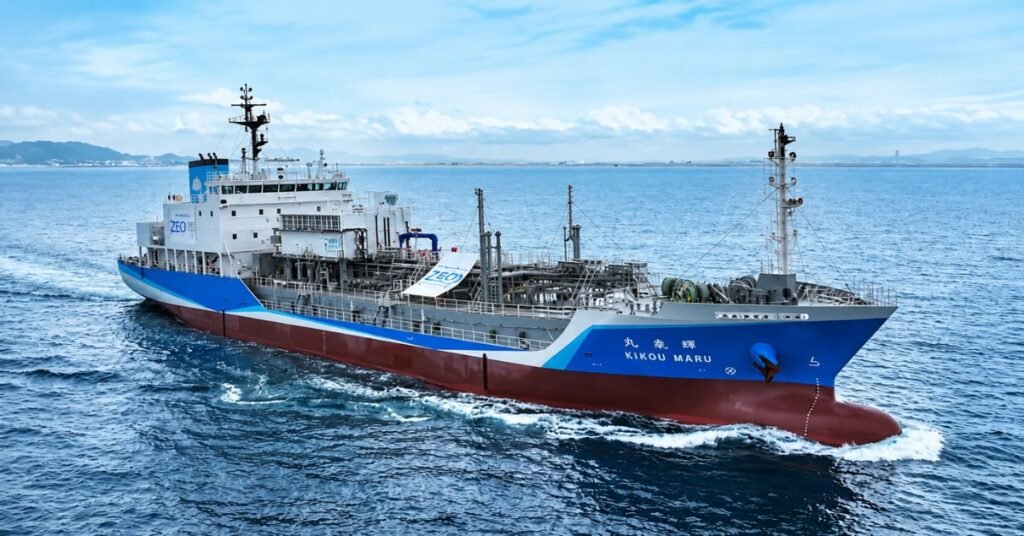
A Japanese coastal tanker has completed a demonstration voyage using a hydrogen-fired engine, in a trial that the Nippon Foundation describes as the first demonstration of a vessel powered by a hydrogen-only engine using pilot ignition.
The 4,500 GT Kikou Maru sailed approximately 33 km in Osaka Bay on September 25, operating its hydrogen-fired engine for about two hours. The Nippon Foundation announced the results on September 30 and said the voyage reduced CO2 emissions by approximately 1.2 tonnes compared with operation on conventional fossil fuels.
Hydrogen engine powers electric propulsion system
Yanmar Power Solutions developed the four-stroke, high-speed hydrogen engine and associated equipment used in the demonstration.
Ueno TransTech, which owns and operates Kikou Maru, was responsible for the vessel retrofit and crew training related to hydrogen fuel. The tanker was built by Fukuoka Shipbuilding at its Nagasaki yard and delivered in 2025 before being modified for the demonstration programme.
The hydrogen engine uses a pilot-ignition system, with hydrogen serving as the primary fuel. Installed inside a container on the vessel’s deck, the engine generates electricity that powers the ship’s electric propulsion motors.
A lithium-ion battery system supports the propulsion arrangement by managing changes in engine load and helping optimise fuel consumption.
The project also plans to test hydrotreated vegetable oil (HVO) as the pilot-ignition fuel in subsequent trials.
Demonstration forms part of Japan’s zero-emission shipping programme
The Kikou Maru voyage is part of the Nippon Foundation’s Zero Emission Ship Project, which aims to support carbon-neutral coastal shipping in Japan by 2050.
The programme includes several alternative-fuel and zero-emission vessel demonstrations. These include a hydrogen fuel-cell trial on the passenger vessel Hanaria in April 2024, a hydrogen engine project involving the 38-metre tug Ten’o and a fuel-cell demonstration on an offshore wind work vessel.
The programme is also working on hydrogen supply infrastructure, including the development of hydrogen stations to support vessel operations.
Hydrogen shipping faces infrastructure and cost challenges
The demonstration provides an operational test of hydrogen combustion technology in coastal shipping, but wider adoption will depend on several commercial and technical factors.
Hydrogen fuel costs, onboard storage requirements, bunkering infrastructure, retrofit and vessel-conversion costs, and operational safety will influence the feasibility of deploying hydrogen-powered vessels at scale.
For coastal shipping, the development of reliable hydrogen supply and bunkering networks will also be important as operators assess the suitability of hydrogen engines and fuel-cell systems for regular commercial operations.
Recent Posts
Fuels
UK Chamber of Shipping Publishes Safety Evidence Report on Alternative Marine Fuels
Hydrogen
Lhyfe and Perpetual Next Explore Renewable Hydrogen Supply for Delfzijl Biomethanol Plant
Power & Propulsion
ClassNK Certifies Accelleron’s Engine Diagnostics and Emissions Reporting Tools