
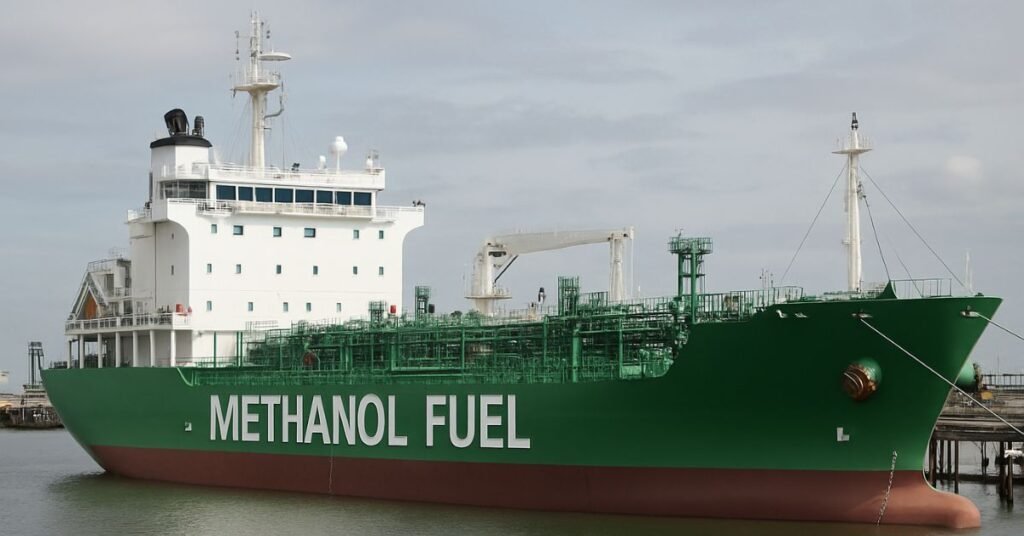
The Maritime Technologies Forum (MTF) has released new guidelines to help shipping companies develop and adapt Safety Management Systems (SMS) for methanol-fuelled vessels, supporting the safe adoption of one of the maritime industry’s fastest-growing alternative fuels.
Developed in collaboration with BIMCO and other industry stakeholders, the guidance translates methanol-specific risks into practical recommendations aligned with the International Safety Management (ISM) Code, providing a structured framework for both shipboard and shore-based safety management.
Guidance Builds on Alternative Fuel Safety Framework
The publication expands MTF’s ongoing work on the safe implementation of alternative marine fuels and follows its earlier guidance on Safety Management Systems for alternative fuels, including dedicated recommendations for ammonia-fuelled ships.
While the ISM Code provides the foundation for safe ship operations regardless of fuel type, MTF notes that every alternative fuel introduces unique operational hazards, system requirements and competency needs. The new guidance explains how established safety management principles should be applied specifically to methanol-powered vessels.
Addressing Methanol-Specific Hazards
Methanol is increasingly being adopted as a marine fuel because it can be stored as a liquid under ambient conditions and handled using infrastructure similar to conventional liquid fuels. However, its environmental benefits depend on the production pathway, while its physical properties introduce distinct safety challenges.
The guidance highlights key risks associated with methanol, including:
- Toxicity
- Low flashpoint
- Vapour and flames that are difficult to detect without specialised detection equipment
To mitigate these risks, the document recommends robust procedural controls, comprehensive risk assessments and well-developed emergency response measures.
The guidelines cover all major elements of an SMS, including:
- Operational procedures
- Emergency preparedness
- Maintenance planning
- Competency and training
- Management of change
- Incident reporting
- Auditing
- Continuous improvement
Recognising that ship designs and fuel systems differ, the recommendations are designed to be risk-based and adaptable rather than prescriptive.
Human Element Takes Centre Stage
MTF places significant emphasis on the human element in the transition to alternative fuels.
The guidance encourages companies to assess the competence, training and familiarisation requirements of both onboard crews and shore-based personnel, particularly during the early stages of methanol adoption when vessels may be operating with both conventional fuels and methanol.
Developing flexible Safety Management Systems capable of supporting mixed-fuel operations is seen as essential to maintaining clear responsibilities and consistent operational procedures.
Continuous Learning Critical to Safe Operations
The publication also stresses the importance of learning from operational experience as methanol-fuelled shipping expands.
Companies are encouraged to establish strong reporting cultures by capturing and analysing:
- Near misses
- Hazardous occurrences
- Equipment failures
- Operational incidents and accidents
The lessons learned should be incorporated into updated risk assessments, operating procedures and training programmes, helping improve safety across the wider industry.
Preparing for a Multi-Fuel Future
According to MTF, the guidance is intended not only for operators of methanol-powered vessels but also for organisations evaluating future fuel strategies.
By encouraging early planning for crew competence, emergency preparedness, management of change and shore-side support, the guidelines aim to help companies identify organisational requirements before methanol-fuelled vessels enter service.
MTF and BIMCO said they will continue working with industry stakeholders and the International Maritime Organization (IMO) to support the safe and practical transition to alternative marine fuels.
Recent Posts
Biofuels
WinGD Ethanol-Fuelled Engine Completes First In-Service Voyage on Maersk Vessel
Power & Propulsion
Norsepower Rotor Sails Installed on Airbus Cargo Ship Spirit of Toulouse
EV
Estonia Electric Ferry to Combine Steerprop Propulsion with Battery Power