
Summary
Lloyd’s Register (LR) Advisory has launched a Supply Chain Resilience service to help ports, governments and logistics operators manage cargo disruptions caused by geopolitical tensions, congestion, extreme weather and infrastructure failures. The service focuses on identifying alternative trade routes, assessing transport capacity, prioritising critical cargo and developing short- and long-term supply chain resilience strategies.
Article
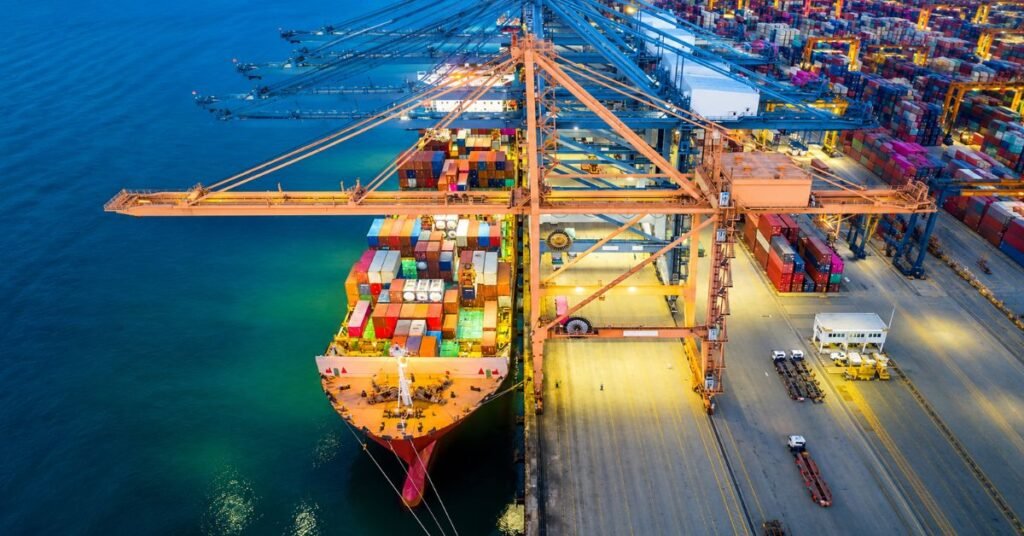
Lloyd’s Register (LR) Advisory has introduced a new Supply Chain Resilience service to help ports, governments and logistics operators maintain critical cargo movements when disruptions affect established trade routes.
The service addresses supply chain vulnerabilities arising from geopolitical developments, port congestion, extreme weather events and infrastructure failures. It aims to help organisations identify alternative transport routes, assess available capacity and manage the operational and financial implications of diverting cargo.
The service was launched at the IAPH 2026 World Ports Conference in London. It covers dependencies across ports, airports, road borders and rail connections, recognising that disruption at one transport node can create bottlenecks across the wider logistics network.
LR Advisory will assess alternative gateways and combinations of sea, air and land transport based on factors including cost, capacity, transit delays, service availability and operational risks. The assessments are intended to help clients determine viable alternatives and establish when contingency arrangements should be activated.
For disruptions requiring an immediate response, LR can conduct assessments covering the first 0–90 days and develop a 30–60–90 day response plan. The proposed measures include alternative routing arrangements, cargo prioritisation, diversion triggers, surge-capacity planning and operational procedures to help organisations respond as conditions evolve.
The service also addresses the movement of essential and time-sensitive cargo, including food, medicines, energy supplies, industrial inputs and exports. LR Advisory can help clients determine shipment priorities and allocate available transport capacity. Potential alternatives include sea, sea-air, sea-land and air-land routes, as well as bonded and cross-border transport options where feasible.
Kamran Ul Haq, Senior Vice President, LR Ports Advisory, said: “The worst time to discover that an alternative route cannot handle the cargo you need to move is after your main gateway has already been disrupted.
“Diverting cargo is rarely as simple as choosing another port. Capacity, inland connections, border processes, cost and availability all matter. Our role is to give clients a clear view of those trade-offs, identify workable alternatives and establish the triggers for action before disruption spreads further through the network.”
Beyond immediate disruption management, the service includes longer-term assessments of supply chain diversification and infrastructure requirements, covering planning horizons from three months to five years.
These assessments will examine opportunities to reduce dependence on individual ports, gateways and transport chokepoints. They will also cover resilience planning across port, airport, road and rail interfaces, alongside feasibility studies and investment planning for infrastructure such as dry ports, inland logistics hubs and rail-connected freight nodes.
Kamran added: “Resilience is not about trying to predict where the next disruption will come from. It is about understanding where a supply chain is vulnerable and having credible alternatives ready before they are needed.
“That means looking beyond the immediate diversion. The decisions made during a disruption can reveal where future investment, additional capacity or greater corridor diversity could make the whole network more resilient.”
FAQs
What is Lloyd’s Register’s new Supply Chain Resilience service?
It is an LR Advisory service designed to help ports, governments and logistics operators manage cargo disruptions, identify alternative transport routes and strengthen supply chain resilience.
What types of disruptions does the service address?
The service addresses disruptions caused by geopolitical shocks, port congestion, extreme weather and infrastructure failures affecting ports, airports, road borders and rail connections.
How does LR Advisory help organisations during the first 90 days of disruption?
LR Advisory can assess affected routes and develop a 30–60–90 day response plan covering alternative routing, cargo prioritisation, diversion triggers, surge capacity and operational procedures.
Which types of cargo are covered by the service?
The service can support the prioritisation and movement of essential and time-sensitive cargo, including food, medicines, energy supplies, industrial inputs and exports.
Does the service include long-term infrastructure planning?
Yes. LR Advisory can assess corridor diversification and infrastructure development over a three-month to five-year period, including potential investments in dry ports, inland logistics hubs and rail-connected freight facilities.
Recent Posts
Technology
KONGSBERG introduces two sonar systems to expand underwater surveillance capabilities
EV
NITI Aayog and GIZ partner to accelerate electric truck adoption in India
Marine
New LR service targets cargo disruption when trade routes fail