
Summary
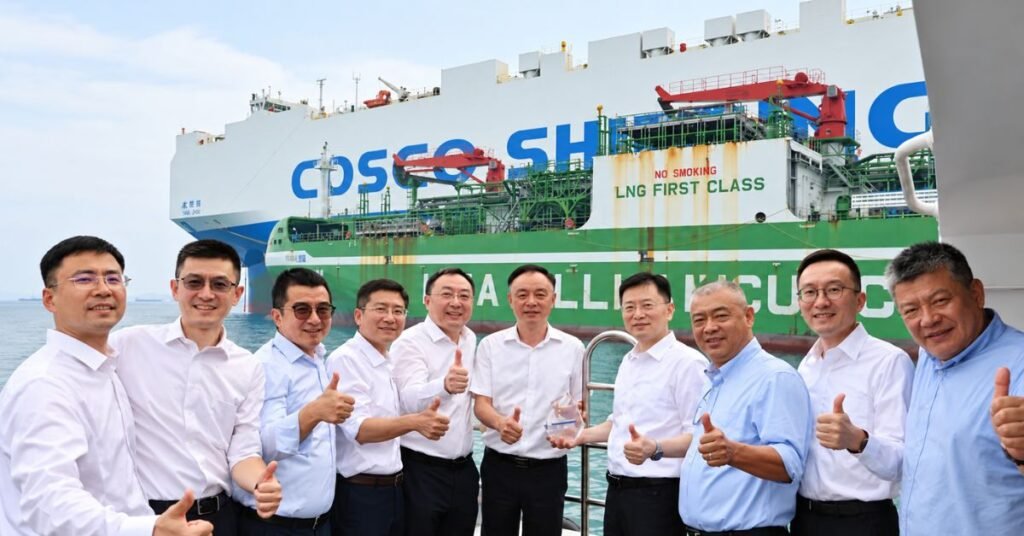
PetroChina International (Singapore) has begun commercial LNG bunkering with deliveries to two COSCO Shipping vessels on 15 October 2026. The operation follows its new supplier licence taking effect in September and forms part of a broader expansion across LNG, methanol and conventional marine fuels in Singapore.
First operation serves two vessels
PetroChina LNG bunkering operations in Singapore commenced when the chartered bunker vessel Paolina Cosulich supplied Zhen Guan Kou and Han Jiang Kou.
Preparations covered vessel chartering, LNG procurement, storage, transportation and delivery scheduling. PetroChina coordinated with COSCO Shipping under the Maritime and Port Authority of Singapore’s guidance to prepare the operation.
The company described the deliveries as practical experience for developing regular services. It intends to strengthen customer relationships and expand its marine LNG business in Singapore and neighbouring markets.
The announcement did not disclose the quantity delivered, transaction value or frequency of subsequent operations.
Licence creates the operating framework
PetroChina was among eight applicants selected for new Singapore LNG bunker supplier licences announced in July 2026.
The licences run from 1 September 2026 to 31 August 2031, subject to continued compliance with their conditions. Licensees must provide services covering fuel supply, storage, cargo transfer and delivery to vessels.
MPA assessed applicants’ supply capabilities, commercial plans, operational experience and safety standards. Its evaluation also considered their ability to monitor and mitigate methane slip and support lower-lifecycle-emission methane alternatives, including liquefied biomethane and e-methane.
The framework therefore places responsibility on suppliers for the complete delivery chain, rather than the final transfer alone.
Charter provides access to delivery capacity
Using a chartered vessel gives PetroChina an operating platform for supplying LNG without establishing ownership of the bunker ship itself.
Paolina Cosulich was delivered in 2024 and has LNG cargo capacity of approximately 8,200 cubic metres. Its earlier deployment arrangements included a charter to PETCO Trading Labuan Company, a Petronas trading subsidiary. That historical arrangement is separate from PetroChina’s current operation.
For shipping customers, the commercial relevance lies in access to an additional supplier and delivery capability. Service availability will depend on vessel scheduling, LNG sourcing and the supplier’s ability to coordinate deliveries with customers’ port calls.
The first completed operation demonstrates execution, while repeat transactions will establish the regular service offering.
Methanol-capable acquisition broadens the fleet
PetroChina’s LNG launch coincides with a separate investment in its owned bunkering fleet.
Its wholly owned subsidiary SPC Shipping acquired Vanda Pioneer, a newly built methanol dual-fuel bunker vessel, from Fratelli Cosulich Group. The acquisition agreement was signed on 14 October, followed by the vessel’s naming in Singapore on 16 October.
The IMO Type II chemical tanker measures 114.99 metres and has deadweight of 7,999 tonnes. It can transport and deliver methanol, biodiesel and conventional marine fuels.
The acquisition takes PetroChina International’s owned Singapore bunker fleet to three vessels. This investment is distinct from the chartered LNG operation, but both support its expansion across different marine fuels.
Singapore prepares additional storage options
The market entry comes as Singapore develops infrastructure to support a broader LNG supplier base.
At SIBCON on 14 October, MPA announced plans to invite applications for licences to operate LNG floating storage units in Singapore anchorages by the end of 2026, subject to regulatory approvals.
The proposed units are intended to expand storage capacity and strengthen supply-chain resilience following the additional supplier licences.
MPA, CMA CGM and Singapore LNG Corporation also signed a memorandum to explore liquefied biomethane as a marine fuel, including the use of existing gas infrastructure. These initiatives remain separate from PetroChina’s first delivery.
Repeat business will determine scale
For PetroChina, the immediate milestone is the transition from licensing and preparation to commercial delivery.
The wider opportunity involves coordinating several linked activities: securing fuel, arranging storage, deploying suitable delivery vessels and matching customer schedules. Competitive pricing must be supported by dependable execution across that chain.
Its combination of chartered LNG capacity and owned vessels for other fuels provides different tools for serving shipping customers.
The next indicators will be repeat deliveries, additional customer commitments and confirmed supply arrangements. Those developments will show how the initial operation contributes to PetroChina’s longer-term marine fuel business.
FAQs
When did PetroChina complete its first Singapore LNG operation?
On 15 October 2026.
Which ships received LNG?
COSCO Shipping’s Zhen Guan Kou and Han Jiang Kou.
Which bunker vessel performed the deliveries?
The chartered Paolina Cosulich.
When did PetroChina’s LNG supplier licence take effect?
On 1 September 2026.
Was the delivery quantity disclosed?
No quantity was provided in the available announcement.
Recent Posts
Ammonia
Maersk Tankers Ammonia Retrofit Project Advances Towards EU Support
Policy
EU Maritime Innovation Projects Advance in €3.4-Billion Funding Selection
Policy
Shanghai–Melbourne Green Shipping Corridor Sets 2035 Vessel Deployment Goal