
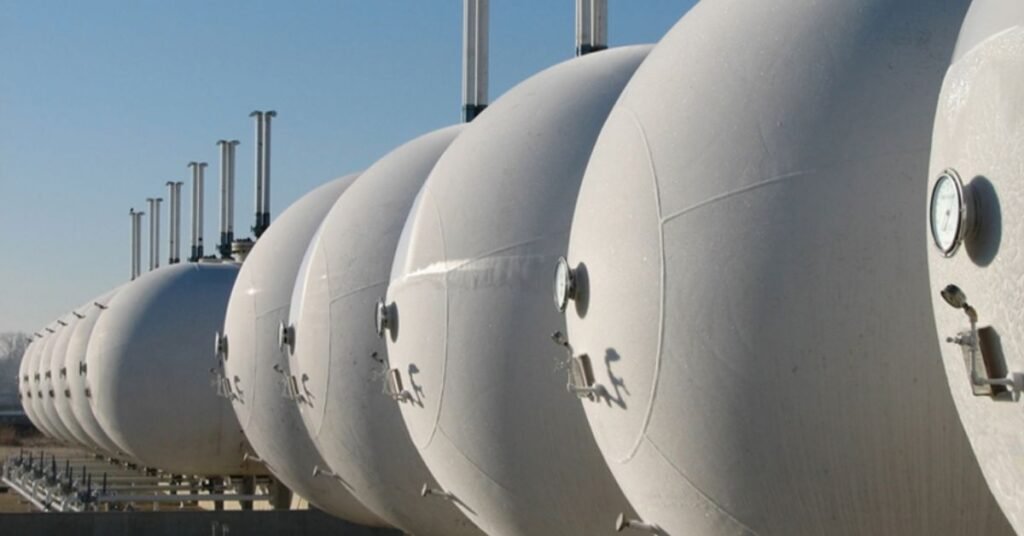
Older LNG vessels face mounting pressure as EU maritime carbon costs tighten
Wood Mackenzie has warned that tightening emissions regulations are creating a growing divide within the global LNG carrier fleet, with engine technology emerging as the key factor determining future compliance costs and commercial competitiveness.
According to new analysis from the consultancy, LNG carriers fitted with older propulsion systems such as steam turbines and dual-fuel diesel-electric (DFDE) engines are facing rising exposure to European carbon costs, while newer ME-GI-equipped vessels are positioned more favourably under evolving emissions frameworks.
EU maritime regulations reshape LNG shipping economics
The report highlights the combined impact of multiple emissions regulations now affecting global shipping, including:
- EU Emissions Trading System (EU ETS)
- FuelEU Maritime
- IMO Net-Zero Framework (NZF)
- Carbon Intensity Indicator (CII)
- Energy Efficiency Existing Ship Index (EEXI)
Wood Mackenzie said these frameworks are not affecting all LNG carrier types equally, creating what it described as a “fleet bifurcation” within the LNG shipping market.
The EU ETS reached full emissions coverage from January 2026, with methane (CH₄) and nitrous oxide (N₂O) now included alongside carbon dioxide emissions.
This has increased pressure on LNG carriers using low-pressure propulsion technologies such as DFDE engines, where methane slip — unburned methane released during combustion — has become a direct compliance cost rather than only an environmental concern.
Compliance costs could exceed fuel costs by 2030
Wood Mackenzie estimates that by 2030, combined compliance costs under EU ETS and FuelEU Maritime could reach approximately US$1,256 per tonne for vessels operating on very low sulphur fuel oil (VLSFO).
The consultancy said this compares with an estimated US$705 per tonne under the IMO framework alone.
FuelEU Maritime entered active enforcement in 2026 and requires ships to reduce lifecycle greenhouse gas intensity by 2% from 2025, tightening to 6% by 2030 and 80% by 2050 against a 2020 baseline.
Non-compliance penalties are currently set at around €645 per tonne of CO₂ equivalent.
Older LNG vessels increasingly exposed
The report suggests that older steam turbine LNG carriers remain the most exposed vessels under current regulations and continue to be primary candidates for scrapping.
However, Wood Mackenzie noted that sustained high charter rates have delayed expected scrapping activity.
The consultancy added that DFDE vessels are now beginning to face similar commercial pressures unless operators invest in upgrades or retrofits.
“Owners who invested in DFDE vessels expecting them to be their compliance answer are facing a more uncomfortable reality,” said Itzel Torruco, Research Analyst – LNG Freight at Wood Mackenzie.
She added:
“Under EU rules from 2030, a DFDE ship on a European route faces penalties that make it commercially unattractive to charterers.”
According to the report, floating storage and regasification unit (FSRU) conversions are emerging as a more likely pathway for older LNG vessels than outright scrapping.
IMO vote could reshape future compliance landscape
Wood Mackenzie identified the IMO’s upcoming MEPC 85 meeting in December 2026 as a critical milestone for LNG shipping regulation.
The meeting is expected to determine whether the IMO’s Net-Zero Framework moves toward formal adoption.
At MEPC 84 earlier this year, LNG combined with upstream carbon capture and storage (CCS) was formally recognised as a potential zero or near-zero emission fuel pathway.
Torruco said:
“December 2026 is the most consequential vote for LNG shipping in a decade.”
She added:
“If the IMO framework is adopted and the EU recognises it as Paris-aligned, the compliance architecture operators have spent two years building could be simplified considerably.”
Methane slip becomes central issue for LNG shipping
The report underscores how methane emissions are becoming a major commercial issue for LNG-fuelled shipping, particularly under European regulations.
While LNG remains widely viewed as a transitional marine fuel, increasing scrutiny around methane slip is influencing vessel economics, engine selection and long-term fleet strategies. Newer ME-GI engines, which operate with significantly lower methane slip compared to low-pressure engine systems, are increasingly viewed as more future-proof for European trading routes.
Recent Posts
HYBRID
GRSE Signs ₹1,032-Crore ONGC Contract for Four Hybrid Offshore Supply Vessels
EV
Energy In Motion Opens ₹500-Crore Electric Truck Plant in Pune
Fuels
Aegis Logistics Commissions 35,000-Tonne LPG Bottling Plant at JNPA