Egypt is moving forward with the development of a National Action Plan (NAP) to address greenhouse gas emissions from its maritime sector. The initiative is supported by the International Maritime Organization’s GreenVoyage2050 program, which offers technical assistance to developing countries in line with the 2023 IMO GHG Strategy.
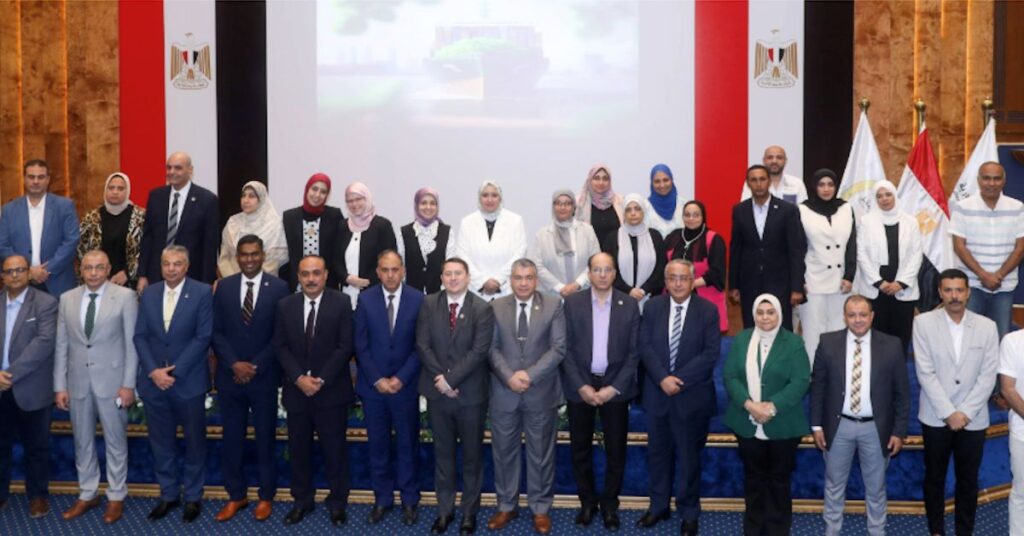
A recent meeting in Alexandria, co-organized with Egypt’s Maritime Transport and Logistics Sector, brought together representatives from maritime, energy, and regulatory sectors. Discussions focused on establishing a shared national vision, defining priority measures, exploring funding avenues, and strengthening institutional capacity for maritime decarbonisation.
Participants also engaged in breakout sessions on shipping, port operations, and energy, where sector-specific barriers and opportunities were discussed. Cross-cutting topics included regulatory implementation and coordination among agencies.
According to the IMO, stakeholders committed to maintaining inter-agency cooperation and broader engagement throughout the development of the NAP. A draft version of the plan is expected to be released for consultation later this year.
Subaskar Sitsabeshan, Programme Officer at GreenVoyage2050, remarked that Egypt’s role in green shipping, particularly given its control of the Suez Canal, could influence wider trade route sustainability. He noted that the country’s transition efforts could support economic resilience and attract further investment.
The GreenVoyage2050 program is funded by a group of European countries including Denmark, Finland, France, Germany, the Netherlands, and Norway. It is currently in its second phase, covering the 2024 to 2030 period. The program supports countries such as Egypt, Ghana, Kenya, Mexico, and Nigeria in developing national strategies, while also conducting pilot projects in Türkiye, India, Indonesia, and Vietnam.
Egypt has identified maritime decarbonisation as a key area of focus, aligning with its broader strategy for industrial transformation. The country is part of a group of emerging markets often referred to as the “new industrial sunbelt,” which are playing a growing role in global energy transitions.
According to recent data from the Mission Possible Partnership, countries such as Egypt, Brazil, Morocco, Indonesia, and India account for nearly 60 percent of the global pipeline of clean energy projects that have been announced but are not yet financed. In contrast, the United States accounts for 18 percent, the European Union 10 percent, and China 6 percent. The study also indicated that regulatory frameworks could be essential in supporting emission reductions of over 95 percent by mid-century in these regions.
Recent Posts
Biofuels
WinGD Ethanol-Fuelled Engine Completes First In-Service Voyage on Maersk Vessel
Power & Propulsion
Norsepower Rotor Sails Installed on Airbus Cargo Ship Spirit of Toulouse
EV
Estonia Electric Ferry to Combine Steerprop Propulsion with Battery Power