
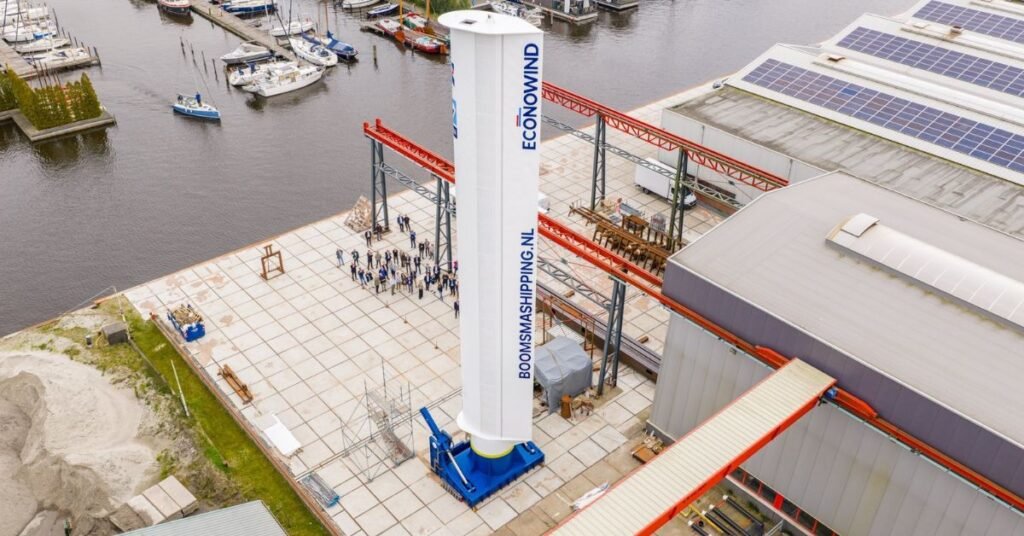
Dutch wind-assisted propulsion specialist Econowind has introduced a new large-scale suction wing system aimed at oceangoing vessels, marking its entry into the deepsea shipping segment.
The newly launched VentoFoil 5-series, unveiled in Heeg, is a 30-metre steel wind-assist unit based on the same operating principles as the company’s earlier 3-series design. The system is designed to help shipowners reduce fuel consumption and meet tightening environmental regulations.
Econowind has previously supplied more than 150 suction wing units across shortsea and regional shipping markets. With the 5-series, the company is targeting larger vessels operating on longer routes, where wind-assisted propulsion can offer greater efficiency gains.
The first commercial installation of the 5-series is scheduled for a vessel operated by Boomsma Shipping later this year, marking the system’s entry into active service.
“As a returning customer, we are pleased to use VentoFoils again on our vessels, now in the form of the 5-series,” said Johan Boomsma of Boomsma Shipping. “Wind propulsion has proven its value both economically and environmentally. With high fuel prices adding to the urgency, this is a logical next step for us. Energy efficiency is high on our agenda, which is why our eight newbuild vessels will be all delivered wind-ready. The first, Frisian Future, will enter service in May.”
To support deployment in the deepsea segment, Econowind is also expanding its manufacturing footprint in the Far East, closer to major shipbuilding centres. The move is intended to streamline integration of VentoFoil systems into newbuild vessels.
“The 3-series has shown that our technology works in daily operations,” said Chiel de Leeuw, Chief Commercial Officer of Econowind. “With the 5-series, we are bringing that proven concept into the deepsea market.”
The VentoFoil system uses boundary-layer suction technology to generate aerodynamic lift, producing additional thrust from wind and reducing the load on the main engine. The design allows for bridge-controlled operation and includes features such as tilting capability to accommodate cargo handling and air-draught restrictions.
Recent Posts
HYBRID
GRSE Signs ₹1,032-Crore ONGC Contract for Four Hybrid Offshore Supply Vessels
EV
Energy In Motion Opens ₹500-Crore Electric Truck Plant in Pune
Fuels
Aegis Logistics Commissions 35,000-Tonne LPG Bottling Plant at JNPA