

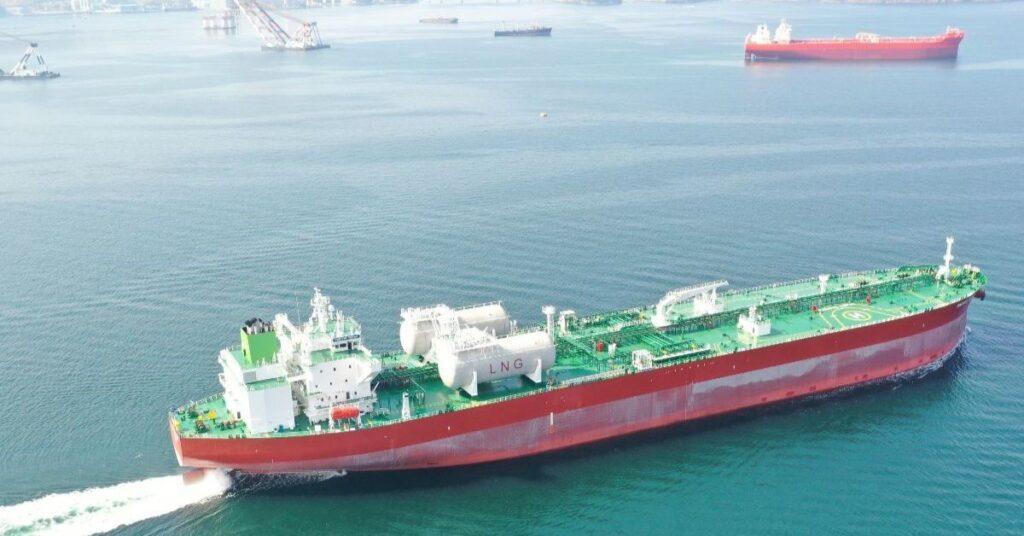
Columbia Group has forecast that dual-fuel vessels will define the next decade of shipping, with LNG-powered ships emerging as the most practical option in the absence of a scalable zero-carbon alternative.
By the end of 2025, dual-fuel ships are expected to represent around half of global new-build orders, with LNG propulsion systems accounting for nearly 70 percent of those vessels. The company said this trend reflects the sector’s response to regulatory pressures and uncertainty over future fuels.
“Owners and operators face increasing legislation, and LNG in particular has emerged as a bridging technology that allows compliance with today’s standards while providing confidence for the next decade,” said Duncan McLennan, Group Director, Technical at Columbia Shipmanagement. “Dual-fuel designs also give operators flexibility, reducing exposure to regulatory and commercial risks as markets evolve.”
Columbia noted that dual-fuel vessels bring both opportunities and challenges. They require more complex systems, higher capital investment, and careful fuel management.
“Balancing LNG with conventional fuels, such as VLSFO, requires careful planning and operational oversight,” McLennan said. “It is not just about building these ships, but about ensuring they are run safely, efficiently, and in full compliance.”
To address operational demands, Columbia has expanded training programmes for seafarers, including simulator-based courses covering fuel switching, cryogenic handling, and emergency procedures.
“Training must go beyond textbooks,” McLennan said. “Our experience managing dual-fuel tankers shows that practical preparation is essential to ensure safe and efficient operations.”
The group is also investing in digital optimisation. Platforms such as EngineLink and POCR are being used to support fuel mode optimisation, predictive maintenance, and emissions reporting. These systems provide real-time comparisons between LNG and conventional fuels, detect engine issues, and capture methane slip data for compliance reporting.
“Dual-fuel vessels are complex machines,” said Mark O’Neil, President and CEO of Columbia Group. “Technology alone cannot manage that complexity. It requires the right blend of human skill, operational expertise, and digital support. At Columbia, our mission is to ensure all three work together to deliver safe, sustainable, and commercially viable outcomes.”
O’Neil added that while dual-fuel ships are not a final solution, they provide an important transitional option. “With the right management, they give shipowners the opportunity to operate more safely, sustainably, and efficiently as the industry awaits a more widely accepted alternative fuel solution.”
Recent Posts
Fuels
Kuehne+Nagel expands SAF access for air cargo through Book & Claim model
Power & Propulsion
Kongsberg Maritime to extend range of Elegance Pods for large cruise vessels
LNG
Qatari, UAE LNG cargoes transferred via ship-to-ship outside Strait of Hormuz