

Mumbai, India — Rolls-Royce has announced its intent to collaborate with the Indian Navy to design and deploy the country’s first electric warship, signalling a potential milestone in India’s naval modernisation and energy transition efforts.
The British engineering company, known globally for its propulsion and power system expertise, said it is well-positioned to support India’s defence objectives through hybrid-electric and fully electric naval technologies.
Rolls-Royce Seeks Role in India’s Naval Modernisation
Abhishek Singh, Senior Vice President for Defence in India and Southeast Asia at Rolls-Royce, said the company’s experience in defence propulsion systems places it in a strong position to assist India’s evolving naval ambitions.
“Our long-standing experience in defence places us in a strong position to contribute to India’s growing naval ambitions,” Singh said.
He added that Rolls-Royce’s MT30 marine gas turbine has set benchmarks for power output, energy density, and reliability, and that the company is looking to collaborate closely with the Indian Navy to integrate advanced propulsion systems aligned with India’s self-reliance goals in defence manufacturing.
Carrier Strike Group Visit Highlights Technology Capabilities
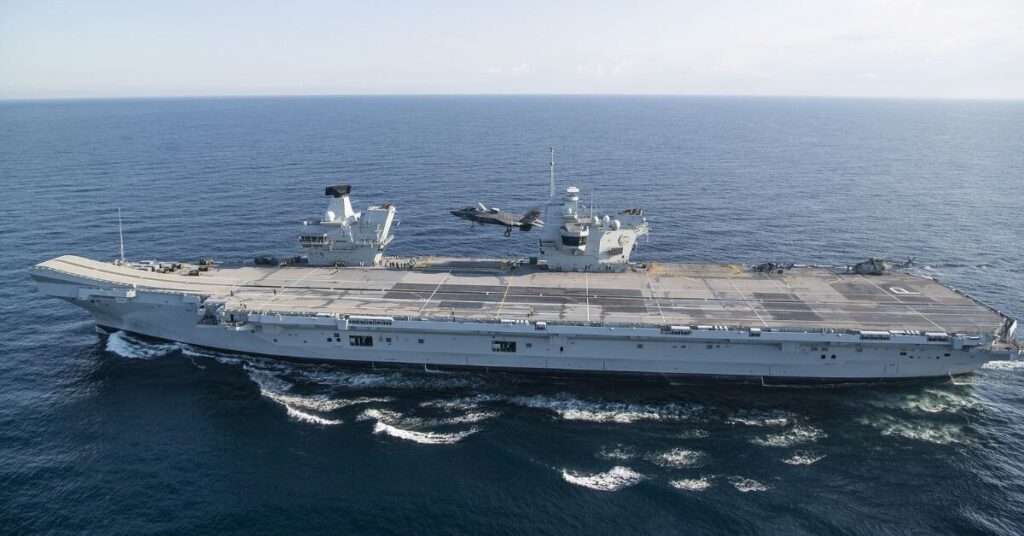
The announcement coincided with the arrival of the United Kingdom’s Carrier Strike Group (CSG), led by HMS Prince of Wales, in Mumbai as part of its Indo-Pacific deployment. The visit showcased the operational capabilities of Rolls-Royce’s naval propulsion systems currently powering the British fleet.
The Prince of Wales operates using an Integrated Full Electric Propulsion (IFEP) system powered by Rolls-Royce’s MT30 gas turbines. Each turbine alternator generates 36 megawatts of power, contributing to a total ship output of 109 megawatts when combined with four medium-speed diesel generators — sufficient to power a small town.
Technology Demonstration and Strategic Collaboration
Alex Zino, Director of Business Development and Future Programmes for Rolls-Royce in the UK and International markets, said the Carrier Strike Group’s visit presents a strategic opportunity for engagement with Indian defence stakeholders.
“The visit offers an ideal opportunity for Indian defence stakeholders to gain first-hand insight into Rolls-Royce’s naval propulsion technologies that could enhance operational capability and resilience for the Indian Navy,” Zino noted.
He added that Rolls-Royce continues to grow its presence in India through local manufacturing, supply chain partnerships, and defence engineering collaborations, strengthening its position as a long-term partner in India’s defence modernisation efforts.
Other vessels in the UK’s Carrier Strike Group, including HMS Richmond and an Astute-class submarine, are also equipped with Rolls-Royce propulsion technologies such as the Spey marine gas turbine and nuclear steam-raising plants.
Recent Posts
Marine
WinGD Orders Four Dual-Fuel Engines for Polaris Shipping’s Newcastlemax Fleet
EV
Jio-bp, DRIVN sign MoU to expand commercial EV charging infrastructure in India
Policy
DGMA discusses marine engine manufacturing partnership with WinGD in India