

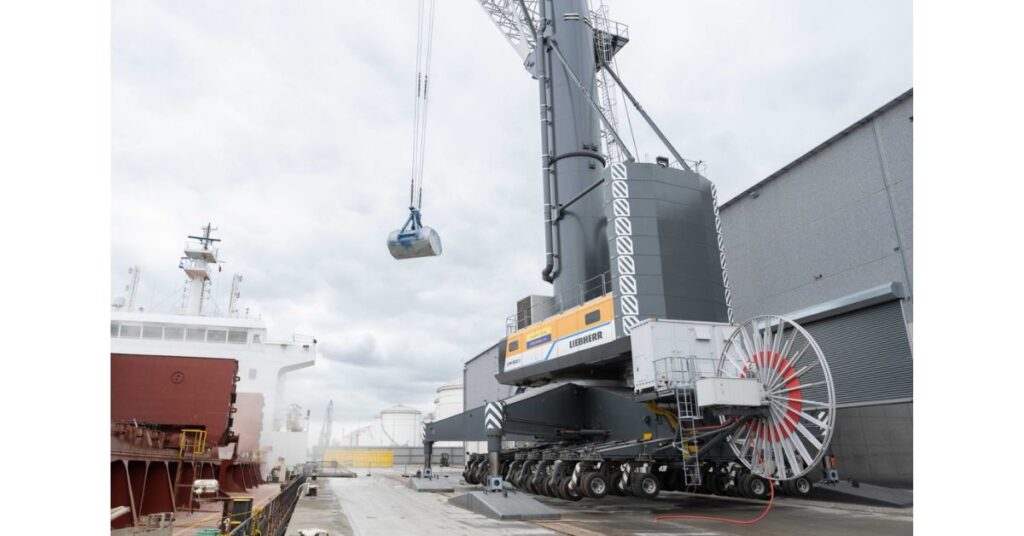
Liebherr, a global manufacturer of mobile harbour cranes, has reported a 400% increase in electrically driven mobile harbour cranes between 2019 and 2025, highlighting the maritime industry’s accelerating transition toward sustainable port operations.
With more than 2,000 mobile harbour cranes produced and around 1,600 currently in operation across over 100 countries, Liebherr continues to play a key role in advancing low-emission cargo handling technologies.
Global Shift Toward Electrified Port Equipment
According to Liebherr, demand for electric-drive cranes has grown across key global regions. India currently leads in adoption, followed by Türkiye, while European markets such as the Netherlands, France, and Poland also show strong uptake. The United States and the United Kingdom continue to record steady growth in deploying e-powered harbour cranes.
Franz Findel, Product Manager at Liebherr-Rostock GmbH, said:
“Our clients have benefitted from the integration of electric drives into our product range for over two decades. Beyond the considerable reduction in CO₂ emissions and noise levels, e-drives require minimal consumables and feature fewer moving parts – significantly reducing maintenance demands and associated costs. These advantages contribute directly to improved overall efficiency and operational reliability, without sacrificing speed or lifting capacity.”
Retrofitting for Sustainability
Liebherr’s product portfolio includes solutions for both newbuild and retrofit applications, enabling existing diesel-powered cranes to be converted to electric drives. This flexibility allows port operators to modernize equipment in line with evolving infrastructure, regulatory requirements, and state incentive programs supporting decarbonization.
The company’s retrofit offering is supported by its global service network, helping ports extend the operational life of their assets while aligning with sustainability goals.
Environmental and Economic Impact
Electrically powered harbour cranes offer clear advantages in both environmental performance and operational costs. Liebherr reports that during idle periods, diesel engines emit around 24 kilograms of CO₂ per hour, while electric systems consume no energy when not in motion. When powered by renewable electricity, e-driven cranes can reduce CO₂ emissions by up to 100 kilograms per hour compared to diesel-driven models.
In addition to emission reductions, electric drives eliminate the need for oil changes, filter replacements, and fluid checks—further reducing maintenance costs. Many governments also provide financial incentives to encourage the adoption of low-emission port equipment, strengthening the business case for e-powered cranes.
Industry Outlook
The significant increase in electric-drive mobile harbour cranes signals a broader industry shift toward cleaner, quieter, and more cost-efficient port operations. With global supply chains under pressure to reduce carbon footprints, port operators are increasingly adopting technologies that align with international climate goals while maintaining productivity and reliability.
Recent Posts
Marine
WinGD Orders Four Dual-Fuel Engines for Polaris Shipping’s Newcastlemax Fleet
EV
Jio-bp, DRIVN sign MoU to expand commercial EV charging infrastructure in India
Policy
DGMA discusses marine engine manufacturing partnership with WinGD in India