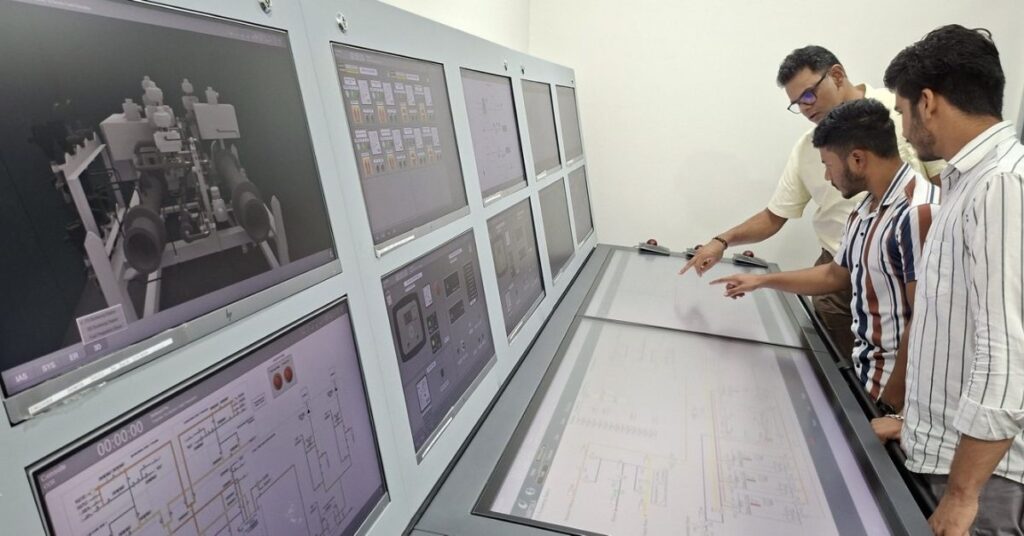
Anglo-Eastern Univan Group (Anglo-Eastern) has unveiled a methanol bunkering simulator developed in collaboration with Wärtsilä, aimed at advancing crew training in the handling of methanol as a marine fuel. Introduced in October, the simulator combines theoretical instruction and practical exercises aligned with the International Maritime Organization’s (IMO) guidelines for low-flashpoint fuels.
The initiative builds on Anglo-Eastern’s earlier milestone in February, when the company launched the world’s first functional LNG/ammonia bunkering station skid at the Anglo-Eastern Maritime Academy (AEMA) in Karjat, near Mumbai.
Comprehensive Training for Alternative Fuels
Complementing the simulator, Anglo-Eastern has rolled out a series of basic and advanced methanol bunkering courses to prepare seafarers for emerging operational requirements associated with methanol- and ethanol-fueled vessels. The training aims to equip maritime professionals with the knowledge and technical competence to manage alternative fuel systems safely and efficiently.
The three-day programme is structured into three one-day modules covering:
- Basic training for service on ships using methyl/ethyl alcohol as fuel
- Advanced training for senior crew operating such vessels
- Introductory familiarisation with the ME-LGIM engine and fuel gas supply systems
These modules are designed to meet the evolving needs of the industry as shipping companies increasingly explore methanol and other low-emission fuels to reduce their carbon footprint.
Building Skills for Low-Emission Operations
“Decarbonisation is not just about adopting new technologies; it’s also about preparing the people who will operate them,” said Capt. Aalok Sharma, Group Director of Training at Anglo-Eastern. “By investing in these advanced training facilities, we are ensuring our seafarers and industry partners have the skills to safely and efficiently handle alternative fuels and propulsion systems.”
Francis Akkara, Principal and Director of AEMTC, added: “As the maritime industry accelerates its shift toward alternative fuels, it is essential that our training evolves in tandem. These new offerings reflect Anglo-Eastern’s commitment to equipping seafarers with the operational readiness and safety mindset needed to navigate the complexities of methanol and ammonia fueled propulsion technologies.”
Expanding Dual-Fuel Expertise
Anglo-Eastern’s fuel-handling capabilities now encompass LNG, LPG, ammonia, methanol, hydrogen, and wind-assisted propulsion systems (WAPS). As of October, the company is involved with over 130 dual-fuel vessels and 130 newbuilding projects, reflecting a growing demand for expertise in alternative fuel operations.
By advancing specialised training for seafarers, Anglo-Eastern is contributing to the maritime sector’s broader efforts to transition toward low-emission and sustainable shipping solutions.
Recent Posts
Ammonia
Maersk Tankers Ammonia Retrofit Project Advances Towards EU Support
Policy
EU Maritime Innovation Projects Advance in €3.4-Billion Funding Selection
Policy
Shanghai–Melbourne Green Shipping Corridor Sets 2035 Vessel Deployment Goal