
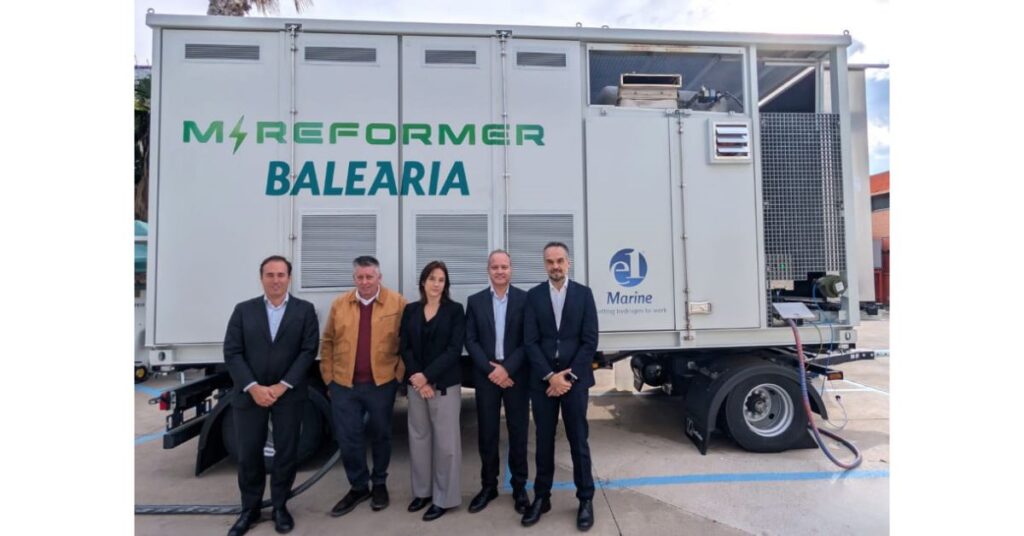
Baleària is set to install an autonomous methanol-powered electricity generation unit on its electric ferry Cap de Barbaria, marking the first deployment of such technology on a European vessel. The system, developed by Catalonia-based Methanol Reformer, is designed to produce renewable hydrogen from e-methanol to supply auxiliary onboard power.
Key points
- Europe’s first stand-alone e-methanol power generation container to be installed on a ferry
- System converts e-methanol into renewable hydrogen for auxiliary electricity
- Cap de Barbaria becomes a test bed for hydrogen operations in short-sea shipping
- Part of the BUCEMTO project funded by Next Generation EU
Turning the vessel into a hydrogen test platform
The eNomad unit from Methanol Reformer will be integrated into the ferry in the coming weeks. Baleària says this installation will effectively transform the Cap de Barbaria into a live hydrogen experimentation platform, representing a new development pathway for low-emission technologies in short-distance maritime transport.
The vessel, operating on the Ibiza–Formentera route since 2023, was originally built with space for a hydrogen system to provide part of its energy demand. The eNomad unit features a compact, modular design intended to function in both port and at-sea conditions while producing hydrogen via e-methanol reforming.
The hydrogen generated will supply a fuel cell that will produce auxiliary electricity for the ship. This power will support battery charging and reduce reliance on conventional generators, lowering fuel use and associated emissions. Baleària also plans to use the system to test various battery–fuel cell configurations within the vessel’s electric propulsion setup.
Testing methanol’s viability as an energy carrier
Through this pilot, the company aims to evaluate methanol as a flexible energy carrier that can be stored safely onboard and reformed into hydrogen when required. The project will also assess hydrogen’s contribution to energy efficiency, potential emission reductions and the suitability of scaling the technology to other ships and routes.
“This compact equipment enables us to run a small-scale green hydrogen experimental laboratory in a real operating environment and on a route as sensitive and iconic as the one linking Ibiza and Formentera,” said Javier Cervera, Corporate Director of Institutional Relations and the Energy Transition at Baleària. “Today, we are once again pioneers, testing the technologies that will make tomorrow’s zero-emission navigation possible.”
“We are proud to be collaborating with Baleària on this project, which demonstrates how technological innovation can transform maritime mobility and contribute to a more sustainable energy future,” added Javier Torres, CEO of Methanol Reformer.
Part of wider decarbonisation strategy
The Cap de Barbaria became Spain’s first electric passenger and cargo ferry operating with zero emissions during port approaches and stays, delivering a 33% CO₂ reduction compared with the previous vessel on the route. The methanol-to-hydrogen project forms part of the BUCEMTO initiative, supported by EU Next Generation funds.
Baleària’s broader decarbonisation pathway includes LNG, biofuels, electrification, hydrogen and methanol. The company operates 11 dual-fuel LNG vessels, three of which use bioLNG, and is advancing fully electric fast ferry concepts, including a planned green corridor between Tarifa and Tangier. According to the company, its carbon footprint per passenger fell by nearly 10% in 2024.
Recent Posts
Fuels
Golden Island and Qingdao Port Sign Agreement on Sustainable Marine Fuels
Hydrogen
J-ENG Completes Land-Based Testing of Hydrogen Engine for Large Commercial Vessels
Biofuels
PetroChina International Blends More Than 30,000 mt of Marine Biofuel