
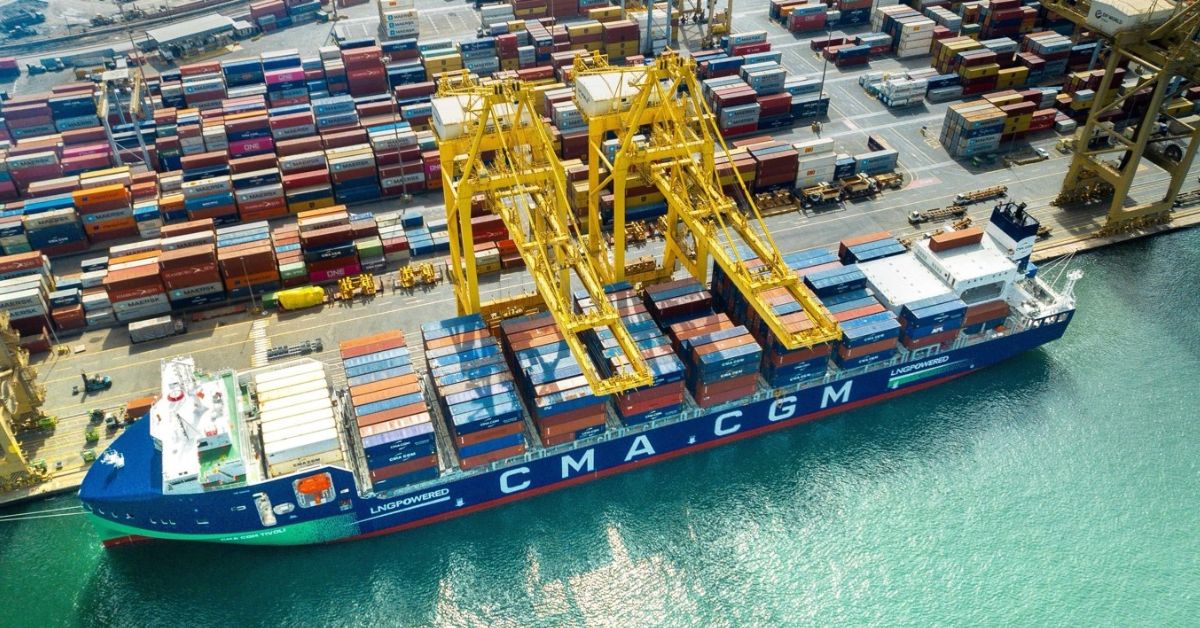
DHL Global Forwarding and CMA CGM have entered into a joint biofuel initiative aimed at reducing greenhouse gas emissions from containerised ocean freight. Under the agreement, the two companies will jointly use 8,990 metric tonnes of second-generation used cooking oil methyl ester (UCOME) biofuel, targeting an estimated reduction of around 25,000 metric tonnes of CO₂e on a well-to-wake basis.
The biofuel volumes will be applied to ocean freight shipments moved under DHL’s GoGreen Plus service.
Scope of the initiative
The arrangement allows DHL customers to lower the carbon intensity of their international supply chains by opting for transport supported by sustainable marine fuels. CMA CGM will physically bunker the UCOME biofuel across its fleet, while the resulting emission reductions will be allocated to DHL through a Book & Claim model.
According to the companies, this approach links the physical use of biofuel with certified emissions reductions, even when the fuel is not consumed on the specific vessel carrying a customer’s cargo.
Statements from the companies
“This collaboration marks another milestone in our mission towards low-carbon supply chains,” said Casper Ellerbaek, Head of Global Ocean Freight at DHL Global Forwarding. “By leveraging sustainable marine fuels, we help our customers achieve their climate goals and drive real progress toward decarbonization.”
Olivier Nivoix, Executive Vice President Shipping, CMA CGM Group, added: “Our partnership with DHL demonstrates how collaboration can accelerate the shift to low-carbon shipping. ACT+ offers reliable and scalable solutions backed by our fleet designed for alternative fuels. CMA CGM, committed to Net Zero Carbon by 2050, has already cut the carbon intensity of its shipping activities by 57% since 2008 and is investing heavily in alternative fuels and dual-fuel vessels.”
Low-carbon shipping offerings
The initiative combines DHL’s GoGreen Plus service with CMA CGM’s ACT+ low-carbon transport programme. Through these offerings, shippers can select sustainable maritime transport options designed to reduce well-to-wake emissions. DHL states that the use of sustainable marine fuels can lower greenhouse gas emissions by up to 80% compared with conventional marine fuels.
Longer-term decarbonisation goals
DHL has set a target to reach net-zero greenhouse gas emissions by 2050. CMA CGM has made a similar commitment and continues to invest in alternative fuels and vessels capable of operating on lower-carbon energy sources. Both companies indicated that they plan to explore further opportunities to expand the use of low-carbon fuels and deepen collaboration on decarbonising global supply chains.
Key facts
- Companies: DHL Global Forwarding and CMA CGM
- Fuel type: Second-generation UCOME biofuel
- Volume: 8,990 metric tonnes
- Estimated impact: ~25,000 metric tonnes CO₂e well-to-wake emission reduction
- Services involved: DHL GoGreen Plus, CMA CGM ACT+
Recent Posts
Ammonia
Maersk Tankers Ammonia Retrofit Project Advances Towards EU Support
Policy
EU Maritime Innovation Projects Advance in €3.4-Billion Funding Selection
Policy
Shanghai–Melbourne Green Shipping Corridor Sets 2035 Vessel Deployment Goal