
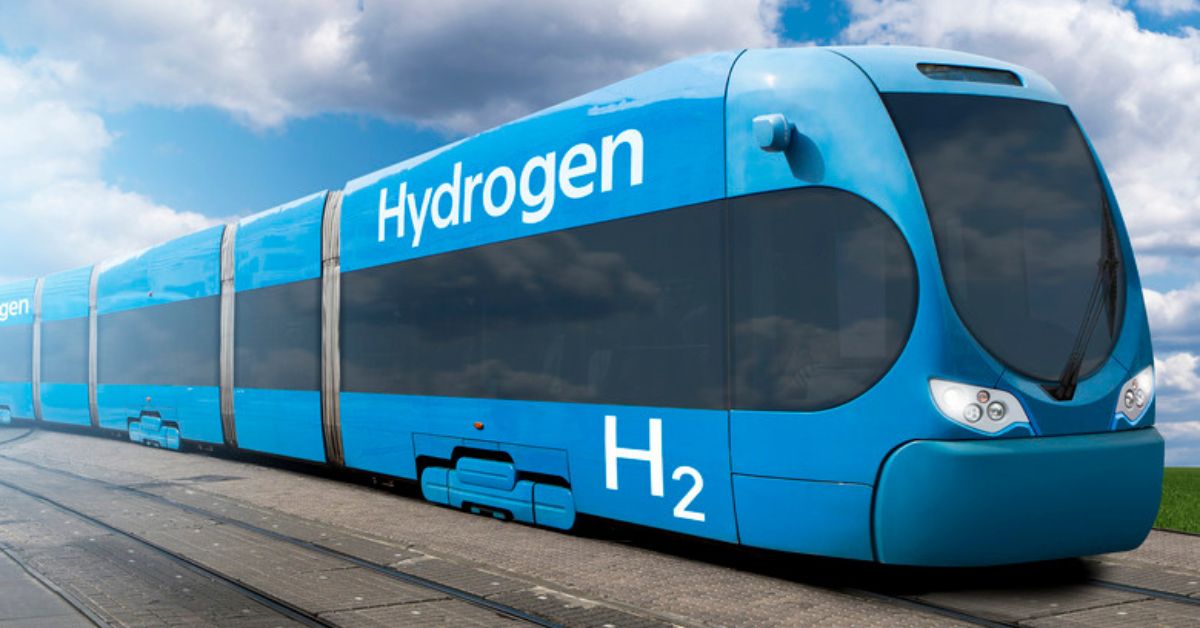
India is on the cusp of a major milestone in green mobility, with its first hydrogen-powered train expected to begin trial operations on the Jind–Sonepat route in Haryana later this month. The indigenously developed train is likely to be inaugurated by Prime Minister Narendra Modi, according to Dr Krishan Middha, Deputy Speaker of the Haryana Vidhan Sabha and MLA from Jind.
Coaches of the pioneering train have started arriving at Jind railway junction, where preparatory work and system installations are currently underway. Officials said trial runs will commence once the remaining equipment is fitted and safety checks are completed.
Central to the project is a dedicated hydrogen production and refuelling facility built at Jind junction at a cost of about Rs 120 crore. Spread across 2,000 square metres, the plant generates hydrogen through electrolysis and is designed to support what Indian Railways describes as the world’s longest and most powerful hydrogen train operating on broad gauge.
The 10-coach trainset features two driving power cars rated at 1,200 kW each, delivering a combined output of 2,400 kW, along with eight passenger coaches. Designed for speeds of 110 to 140 kmph, the train will operate over the roughly 90-kilometre Jind–Sonepat corridor.
Unlike conventional diesel locomotives, the hydrogen-powered train produces no carbon dioxide emissions, releasing only water vapour and steam as byproducts. Railways officials said one kilogram of hydrogen offers energy efficiency equivalent to about 4.5 litres of diesel. A full round trip of 180 kilometres is expected to consume approximately 360 kilograms of hydrogen.
To support operations, an underground hydrogen storage system with a capacity of around 3,000 kilograms has been installed at the plant. The facility will require about 40,000 litres of water per hour, with rainwater harvested from station rooftops to meet part of this demand.
The train uses a hybrid propulsion system that combines hydrogen fuel cells with renewable energy storage, such as lithium-ion batteries or supercapacitors. Electricity generated in the fuel cells is stored in the batteries and then used to power the train, resulting in quieter operation and potentially lower maintenance costs compared with conventional traction systems.
Union Railways Minister Ashwini Vaishnaw has previously told Parliament that the train has been fully designed and developed within the country, reflecting Indian Railways’ push towards self-reliance under the Atmanirbhar Bharat initiative. However, he noted that cost comparisons with established traction technologies would be premature, as both the train and its supporting infrastructure are being deployed on a pilot basis.
Dr Middha said the Prime Minister is also expected to inaugurate the redeveloped Jind railway junction during the launch, with plans to expand hydrogen train services to additional routes after initial operations.
Developed under specifications laid down by the Research, Design & Standards Organisation (RDSO), the project marks Indian Railways’ first foray into hydrogen traction technology and underscores its long-term commitment to cleaner, low-emission transport solutions.
Recent Posts
Biofuels
WinGD Ethanol-Fuelled Engine Completes First In-Service Voyage on Maersk Vessel
Power & Propulsion
Norsepower Rotor Sails Installed on Airbus Cargo Ship Spirit of Toulouse
EV
Estonia Electric Ferry to Combine Steerprop Propulsion with Battery Power