

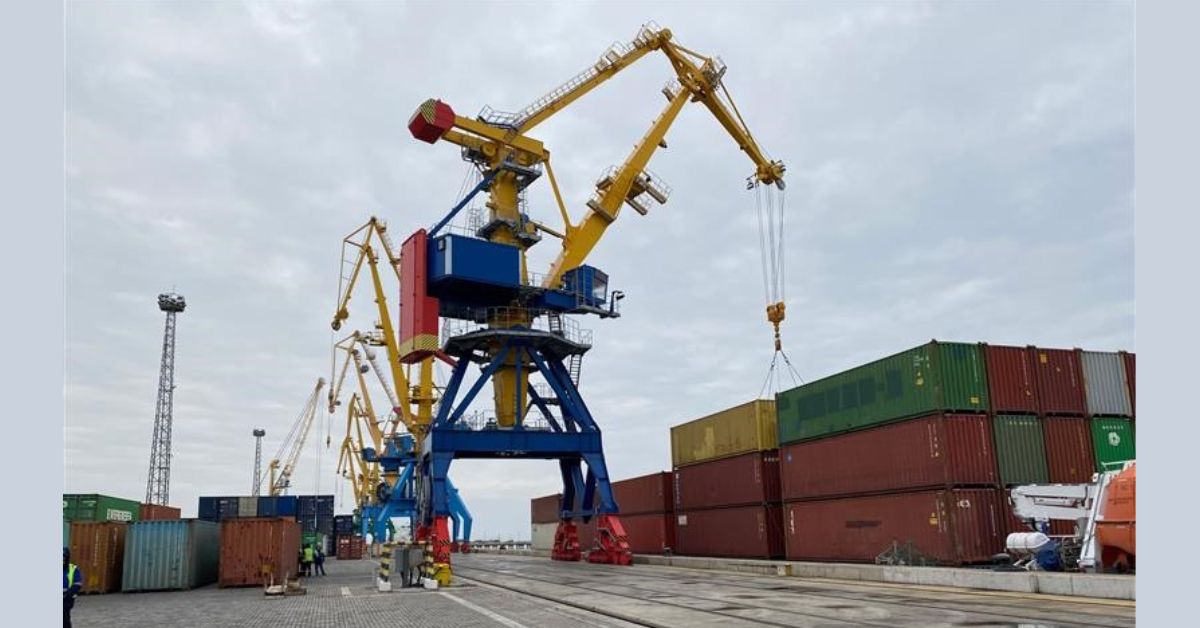
RINA and HPC Hamburg Port Consulting have been awarded a five-year contract under the Organization for Security and Co-operation in Europe (OSCE) to deliver the project titled “Promoting Green Ports and Connectivity in the Caspian Sea Region.”
The initiative aims to support the decarbonisation and digital transformation of selected ports in the Caspian and Black Sea regions, while strengthening regional cooperation and trade connectivity along the Middle Corridor linking Central Asia and Europe.
Ports covered under the programme
The project, launched by the Office of the Co-ordinator of OSCE Economic and Environmental Activities (OCEEA), will focus on ports in Baku (Azerbaijan), Aktau and Kuryk (Kazakhstan), Turkmenbashi (Turkmenistan), and Batumi (Georgia).
According to the OSCE, the programme is designed to help participating ports manage growing transit volumes while reducing the environmental footprint of transport operations through renewable energy adoption, energy efficiency improvements, digitalisation, and enhanced connectivity technologies. The project also includes a gender-equality component focused on strengthening women’s participation in port operations and governance.
Five-pillar framework for sustainable port development
The current phase of the programme introduces a five-pillar framework covering renewable energy integration, climate resilience, digital environmental monitoring systems, gender equality, and training, supported by regional cooperation mechanisms.
Over the five-year period, RINA and HPC will assist the OSCE in delivering tailored assessments and action plans for each participating port. These will address low-carbon operations, environmental performance monitoring, and institutional capacity building, alongside technical specifications for pilot investments.
Key workstreams include feasibility studies for renewable energy deployment and climate adaptation, the design of digital and environmental monitoring systems, the implementation of gender-responsive policies, and a structured training programme combining online learning with study visits to European ports.
Regional cooperation and connectivity
By coordinating activities across multiple countries, the project aims to strengthen cooperation between Azerbaijan, Kazakhstan, Turkmenistan and Georgia, and to align national port development strategies in support of resilient and sustainable transport corridors across the Caspian region and the Middle Corridor.
“The OSCE is committed to advancing sustainability, connectivity, and security in the Caspian region and beyond,” said Giulia Manconi, OSCE representative. “With this new phase, we are helping five key ports in securing the long-term sustainability, operability, and resilience of trade and transport connectivity between Central Asia and Europe, including by implementing tangible renewable-energy and climate-resilient solutions while advancing digital innovation and inclusion. Partnering with RINA and HPC facilitates cross-regional knowledge sharing, and helps us bring leading technical expertise and best international practices in support of sustainable connectivity.”
Cristina Migliaro, Head of Advisory & Consulting Engineering Project Management at RINA, said: “Supporting the OSCE’s Green Ports initiative is an opportunity to translate our engineering, certification, and sustainability expertise into tangible impact. By combining technical innovation with our experience in energy transition projects, we aim to help Caspian and Black Sea ports strengthen their environmental performance and prepare for the next generation of green maritime infrastructure.”
Frank Busse, Partner and Vice President Europe at HPC, added: “For HPC, this collaboration is about empowering local port authorities and stakeholders to make informed and sustainable decisions. Our focus is on practical digital and operational improvements that create real value for the ports and the people who depend on them. Working closely with RINA and the OSCE, we aim to translate global expertise into local impact across the Middle Corridor.”
Expected outcomes
By the conclusion of the programme, participating ports are expected to have access to climate and energy transition roadmaps, technical designs for pilot projects, and strengthened institutional capabilities to implement sustainable port management practices. The initiative will also establish a cross-border cooperation platform to enable continued knowledge exchange and coordination beyond the project’s duration.
Recent Posts
Fuels
Lloyd’s Register and MARIC unveil tri-fuel-ready tanker concept designed to navigate fuel uncertainty
Ammonia Power & Propulsion
Fraunhofer IMM develops system solution for ammonia propulsion in inland shipping
Ports & Harbours
V.O. Chidambaranar Port identified as potential green shipping corridor node on India-Europe route