
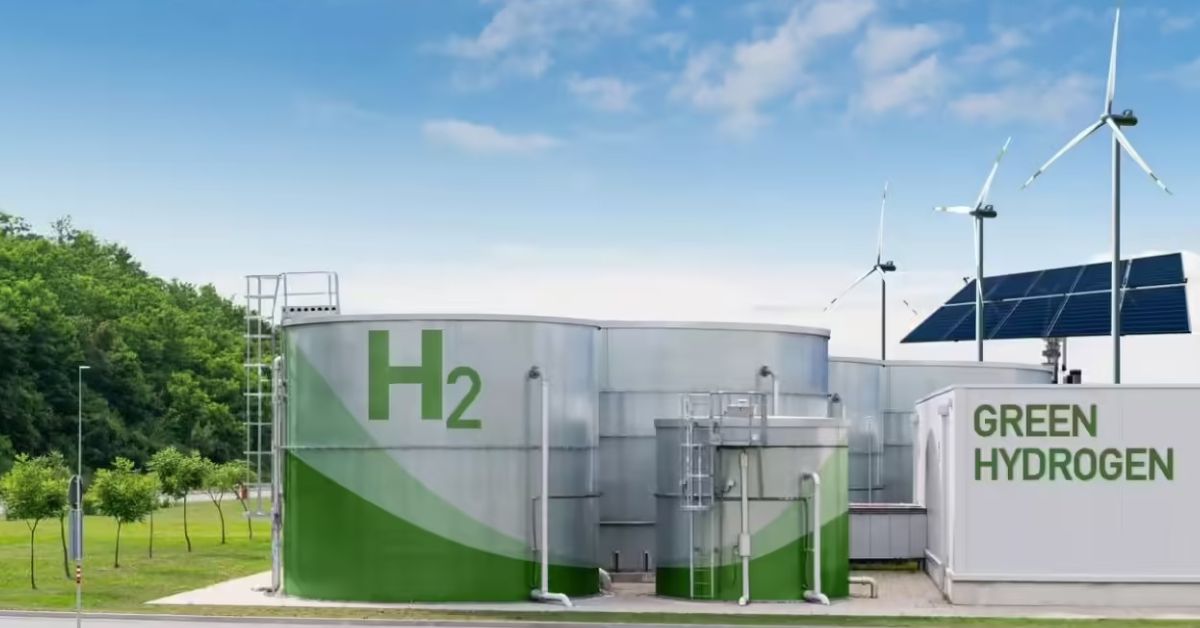
Confederation of Indian Industry (CII) has called on the government to introduce green hydrogen mandates supported by incentives, arguing that such measures are needed to stimulate demand and accelerate India’s clean energy transition.
According to CII, sectors that currently depend heavily on grey hydrogen—including refining, fertilisers and natural gas—are well positioned to adopt green hydrogen at scale if appropriate policy support is introduced.
The industry body highlighted the persistent cost gap between green and grey hydrogen as a key barrier to adoption. “Greening mandates backed by incentives would help overcome this economic barrier, providing certainty to producers and enabling faster cost declines through economies of scale,” CII said, as reported by Press Trust of India (PTI).
Phased mandates and cost-offset mechanisms
CII recommended the introduction of phased mandates combined with cost-offset mechanisms to support early adoption. Proposed measures include the allocation of carbon credits for emissions reductions, cross-subsidies in the fertiliser sector through lower-cost natural gas blended with green hydrogen, and viability gap funding to reduce costs for end users and industry.
The lobby group said these mechanisms could help bridge the price differential while demand and production capacity scale up.
Public procurement as a demand anchor
To create predictable demand, CII suggested using public infrastructure projects as an anchor market for green hydrogen-based products. Sectors identified include housing, railways, ports and bridge construction.
CII proposed mandating that 10–15 per cent of materials such as steel, cement and ammonia used in public projects be sourced from green hydrogen pathways. According to the industry body, such measures could lower costs through scale and reduce investment risks for producers.
Industrial clusters and export opportunities
CII also called for the development of industrial green hydrogen clusters with shared infrastructure. These clusters could help smaller users, including micro, small and medium enterprises (MSMEs) in ceramics, glass and chemicals, which currently face high costs for grey hydrogen.
On exports, the industry body recommended bilateral trade agreements with countries including Germany, Netherlands, Japan and South Korea. Additional suggestions included harmonising Indian standards with international norms, simplifying trade documentation and granting green hydrogen products ‘deemed export’ status to enable access to export incentives.
Financing and investment support
CII emphasised that mobilising private capital will be critical in the early stages of green hydrogen deployment. It called for the development of financial instruments that would improve the global competitiveness of Indian green hydrogen projects and help accelerate adoption across domestic and export markets.
Recent Posts
HYBRID
GRSE Signs ₹1,032-Crore ONGC Contract for Four Hybrid Offshore Supply Vessels
EV
Energy In Motion Opens ₹500-Crore Electric Truck Plant in Pune
Fuels
Aegis Logistics Commissions 35,000-Tonne LPG Bottling Plant at JNPA