
LBC Tank Terminals, Associated British Ports (ABP) and North Sea Port have signed a memorandum of understanding (MOU) to jointly explore the development of a carbon capture and storage (CCS) terminal and a dedicated CO₂ shipping corridor linking Northwest Europe with the UK.
The agreement aims to enable the transport of captured carbon dioxide from industrial regions to secure geological storage sites in the North Sea, supporting decarbonisation efforts in energy generation and hard-to-abate industrial sectors while laying the groundwork for a cross-border CO₂ transport market.
Developing CO₂ shipping infrastructure
Under the MOU, the three partners will collaborate on designing port infrastructure for CO₂ handling, storage and maritime transport, while building a value chain connecting industrial emitters in continental Europe with UK-based storage capacity.
LBC will contribute operational expertise and terminal infrastructure for the temporary storage and shipment of captured CO₂. ABP will provide access to UK storage capacity through its planned CCS terminal at the Port of Immingham, which is linked to the Viking CCS cluster. North Sea Port, which spans ports in the Netherlands and Belgium, will support the initiative through its industrial network and strategic access to maritime routes.
The collaboration will also focus on improving efficiency and innovation in carbon capture, utilisation and storage (CCUS)-related transportation.
Role of ports in the energy transition
Henrik Pedersen, Chief Executive Officer of ABP, said:
“Ports have always been gateways for energy. Today, they are at the forefront of the energy transition. This agreement is about building the infrastructure and partnerships needed to decarbonize industry and create new opportunities for sustainable growth. It paves the way for the UK to utilize its world leading geological assets to provide near-term options for emissions reductions across Europe and realize significant export potential for the UK. This is not just about reducing emissions – it’s about creating a new market for carbon shipping that will help Europe meet its climate goals and secure industrial competitiveness at pace.”
The North Sea is widely regarded as having significant geological capacity for permanent CO₂ storage, while shipping is increasingly seen as a flexible means of connecting emitters with offshore storage sites. Industry studies, including analysis by the Carbon Capture and Storage Association, suggest that a pan-European CO₂ transport market could reduce overall costs through economies of scale and proximity to storage locations.
Cross-border CO₂ corridor
Cas König, Chief Executive Officer of North Sea Port, said:
“Our sustainability ambition is clear: a net zero port by 2050. To this end, we are creating connecting infrastructure with our partners. Carbon shipping is an essential additional and flexible link in the chain of industrial decarbonization. By signing this MoU with ABP and LBC, we are taking a practical step to investigate a cross-border CO₂ corridor that connects emitters to certified storage in the North Sea. Leveraging our shared port infrastructure and maritime expertise, we aim to cut costs, accelerate deployment, and ensure the energy transition strengthens—not weakens—Europe’s industrial competitiveness.”
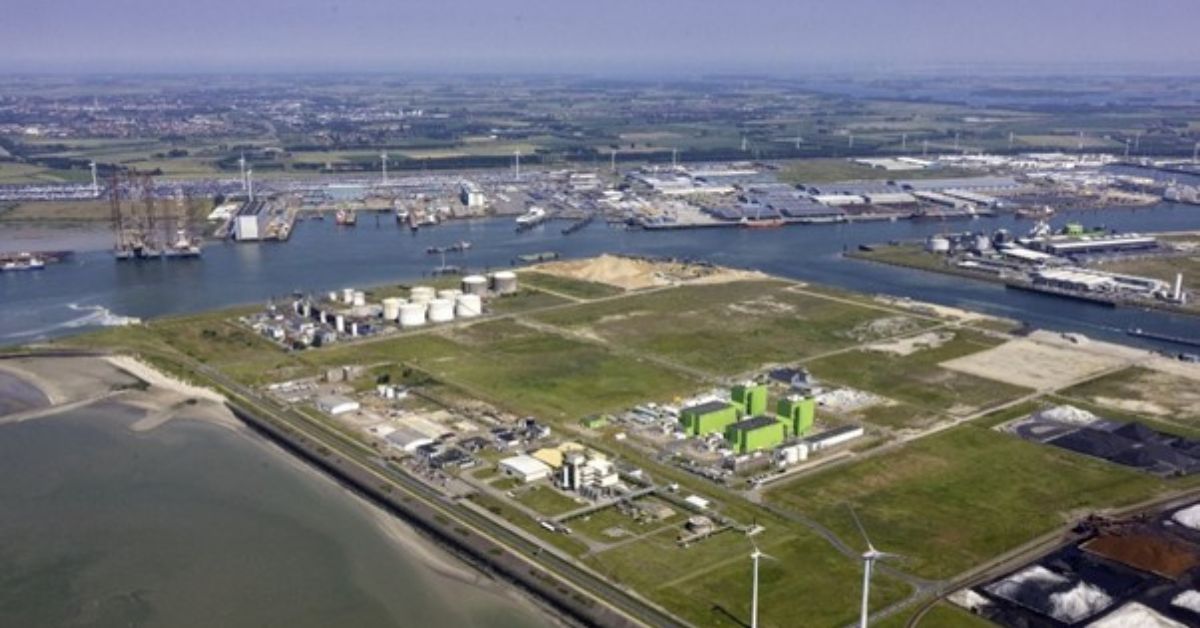
LBC’s terminal in Vlissingen is expected to play a central role in the proposed network. Located within North Sea Port, the terminal offers direct access to the North Sea and connectivity to industrial regions across Northwest Europe, positioning it as a hub for CO₂ aggregation and onward shipment.
Radboud Godron, Group Business Development Director New Energies at LBC Tank Terminals, said:
“Signing this MoU is about moving from vision to tangible progress. By combining LBC’s operational expertise in safe and sustainable storage with the port capabilities of ABP and North Sea Port, we can design an efficient, scalable shipping corridor that connects European emitters to UK storage at pace, supporting a competitive, cross-border CO₂ market.”
Wider CO₂ and ammonia network plans
The initiative builds on LBC’s broader strategy to expand its role in low-carbon infrastructure. The company recently signed a separate MOU with duisport to jointly develop an inland ammonia and CO₂ terminal in Duisburg, creating a strategic link between the Ruhr industrial region and Vlissingen.
Together, the Duisburg–Vlissingen corridor and the proposed UK shipping route are intended to support the efficient transport of captured emissions from inland industrial clusters to certified offshore storage sites in the North Sea.
Recent Posts
Ammonia
Maersk Tankers Ammonia Retrofit Project Advances Towards EU Support
Policy
EU Maritime Innovation Projects Advance in €3.4-Billion Funding Selection
Policy
Shanghai–Melbourne Green Shipping Corridor Sets 2035 Vessel Deployment Goal