

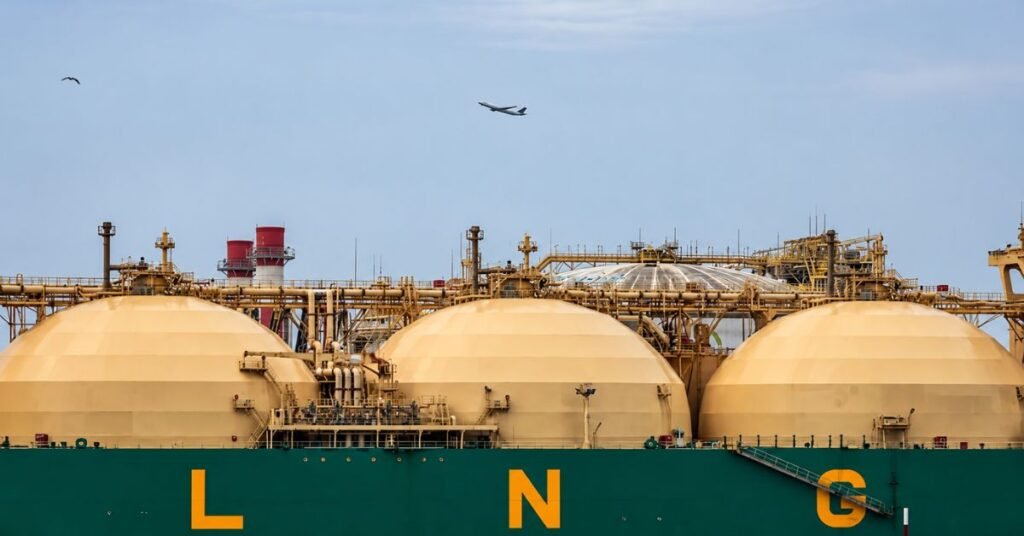
Qatar appears to be positioning LNG carriers for a possible increase in exports through the Strait of Hormuz, with multiple empty vessels linked to the country moving toward the Persian Gulf as shipping activity through the strategic waterway shows early signs of recovery.
Ship-tracking data indicated that six empty Qatar-linked LNG carriers were either in the Gulf of Oman or heading toward the Strait of Hormuz. The movements are being monitored by energy traders as Qatar remains one of the world’s largest LNG suppliers.
Qatari LNG cargo crosses Hormuz
An early indication of a possible restart emerged on September 8, when the Qatari LNG carrier Al Marrouna was reported to have passed through the Strait of Hormuz while carrying a cargo bound for Pakistan’s Port Qasim.
The voyage was reported to be the first Qatari LNG shipment to transit the waterway since July.
The development comes after disruptions to LNG shipments through the Gulf forced buyers in Asia and Europe to seek alternative sources. Reduced availability has contributed to tighter international gas markets and elevated prices.
LNG shipments disrupted by Hormuz security concerns
The Strait of Hormuz remains a critical transit route for global energy supplies, connecting the Persian Gulf with international markets. Security concerns in and around the waterway have significantly affected LNG movements from Qatar.
Qatari LNG exports have been operating well below levels recorded before the disruption, when multiple cargoes routinely departed the region each day.
A sustained recovery in exports will depend on security conditions around the strait and whether shipping companies can operate vessels through the waterway without unacceptable risks.
Qatar and UAE use ship-to-ship transfers
Qatar and the UAE have also relied on alternative logistics arrangements to keep LNG supplies moving during the disruption.
In recent weeks, Qatari and UAE LNG cargoes have been transferred between vessels outside the Strait of Hormuz. Some of these cargoes were ultimately destined for markets including India and Japan.
Ship-to-ship transfers are relatively uncommon in LNG transportation and indicate the logistical measures being used to maintain deliveries while direct passage through Hormuz remains constrained.
What could a Qatar LNG export recovery mean for Asia?
A sustained return of Qatari LNG shipments could increase available supplies in Asian markets and reduce competition among buyers for alternative cargoes.
Higher Qatari volumes could also put downward pressure on elevated spot LNG prices if the additional supply is maintained over an extended period.
India is among the Asian markets closely monitoring the situation because of its reliance on LNG imports from Gulf suppliers. Any improvement in Qatari export flows could affect India’s access to LNG and the availability and pricing of alternative cargoes.
Recent Posts
Power & Propulsion
bound4blue secures Bureau Veritas Design Assessment for Model 3-24 eSAIL
Marine
HMM signs $3.5 billion long-term shipping contract with Vale
Hydrogen
Japan Engine completes factory tests of Hydrogen-fuelled marine engine