
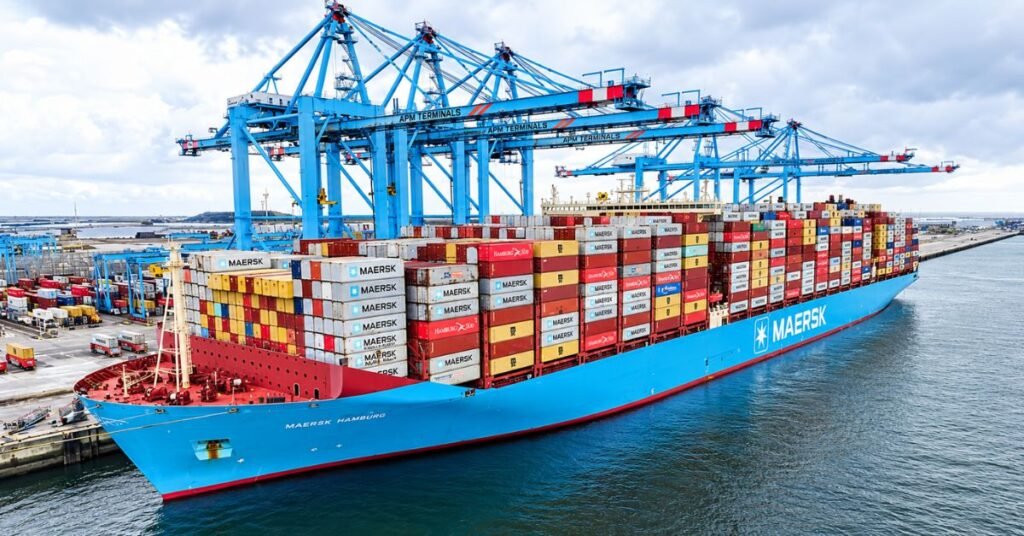
Hempel A/S has signed a three-year global hull coatings agreement with A.P. Moller-Maersk, covering a substantial share of the company’s 2026 to 2028 dry dock programme, strengthening a long-standing partnership between the two companies.
What does the agreement cover?
The agreement spans Maersk’s 2026 to 2028 dry dock programme, securing Hempel a significant share of dry dockings over the three-year period. It builds on more than a decade of collaboration between the two companies, with documented in-service performance of Hempel’s silicone coating technology supporting fuel-efficiency benefits, fouling defence and long-term hull protection.
What did Hempel say about the partnership?
Malgorzata Kolton, Executive Vice President and Head of Marine at Hempel A/S, said Maersk is widely recognised as a global leader in operational excellence and decarbonisation, setting the standard for the industry, and that Hempel is proud to work with a partner with such ambitious goals. She said Hempel believes trust is earned through proven performance, reliable service and long-term results, adding that Maersk’s confidence in the company’s solutions has led to this agreement, which further strengthens the long-standing partnership and builds on their successful collaboration in advancing hull-performance solutions.
Why does hull performance matter for fuel efficiency and emissions?
Hull coatings are an important factor for vessel efficiency, with hull condition directly influencing fuel consumption, emissions and operating costs. The agreement goes beyond hull coatings, with Maersk and Hempel set to strengthen their collaboration through joint initiatives spanning dry docking excellence and enhanced in-service performance.
What did Maersk say about the significance of this agreement?
Kristian Brauner, Head of Fleet Operations at Maersk, said hull performance is an important contributor to fuel efficiency and the company’s emission reduction ambitions. He said the new agreement ensures Maersk can continue to innovate and optimise vessel performance across its fleet.
What is the track record of Hempel’s Hempaguard technology?
For years, Hempel’s advanced hull coatings, including the industry-leading Hempaguard silicone range, have helped customers improve hull performance and reduce fuel consumption and associated CO2 emissions under defined operating conditions. Since its launch in 2013, Hempaguard has been applied more than 6,000 times. Based on Hempel’s performance calculations and DNV-validated methodology, these applications are estimated to have enabled marine customers to avoid approximately 43.4 million tonnes of CO2 compared with conventional coating benchmarks, though actual savings vary depending on vessel type, trading patterns, speed, hull condition, maintenance practices and service profile.
What does this mean for the broader hull coatings market?
The agreement reinforces sustained customer confidence in the proven performance of Hempaguard silicone technology and reflects continued demand for Hempel’s premium hull-performance solutions, positioning the partnership as a benchmark for how major container lines are approaching hull maintenance and fuel-efficiency optimisation as part of their broader decarbonisation strategies.
Recent Posts
Ammonia
Aegis Tristar acquisition to expand Indian group’s global energy logistics reach
Power & Propulsion
Everllence and MITSUI E&S Mark 100 Years of Two-Stroke Engine Partnership
Ammonia
NTPC Targets Japan, South Korea and Germany for Green Ammonia Exports from Andhra Pradesh Hub