
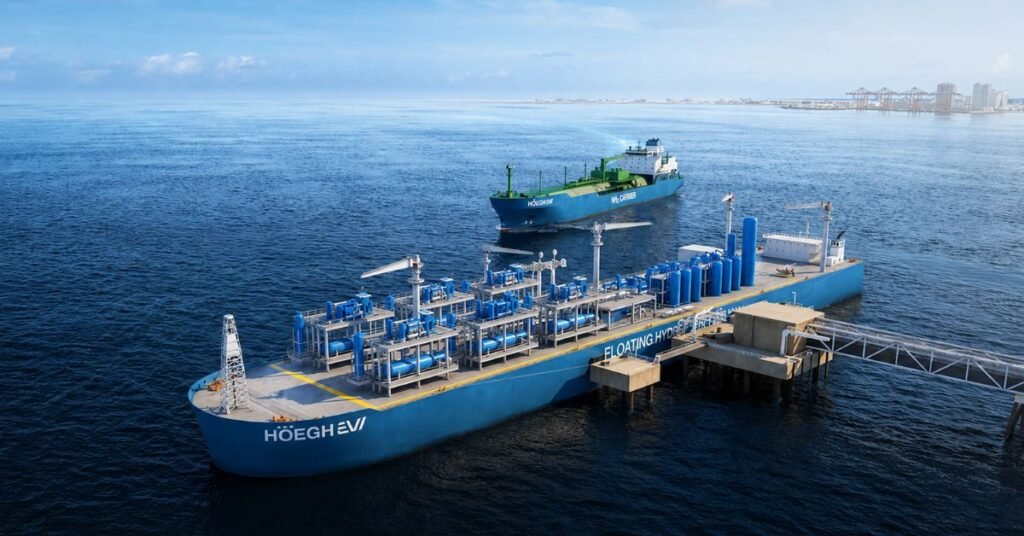
Höegh Evi and Nord Gas Solutions have completed performance testing of an ammonia-to-hydrogen cracking technology designed for floating hydrogen import terminals, marking another step in the development of hydrogen infrastructure for large-scale energy imports.
The testing was carried out at the Sustainable Energy pilot plant in Stord, Norway, with financial support from the Norwegian Green Platform programme.
Pilot Project Demonstrates Ammonia-to-Hydrogen Conversion
The project focuses on converting ammonia into hydrogen at floating import terminals, allowing ammonia to be transported using existing infrastructure before being cracked into hydrogen at the point of delivery.
According to the project partners, the pilot cracker demonstrated strong performance across several operational parameters, including ammonia conversion rate, hydrogen yield, energy efficiency and operational flexibility.
The consortium behind the project includes Höegh Evi, Nord Gas Solutions, BASF, which supplied catalyst technology, the University of South-Eastern Norway, Sustainable Energy, and the Norwegian Institute for Energy Technology (IFE).
Floating Hydrogen Terminals Target Large-Scale Imports
The ammonia cracking technology is being developed to support floating hydrogen terminals that can receive imported ammonia cargoes and convert them into hydrogen for industrial users and energy markets without requiring extensive onshore infrastructure.
Floating import terminals are being explored as a way to accelerate hydrogen deployment by leveraging existing LNG and floating terminal expertise while reducing development timelines.
Nils Jakob Hasle, Executive Vice President of Clean Energy at Höegh Evi, said:
“Höegh Evi is very pleased with the testing results of our ammonia-to-hydrogen cracker, which has demonstrated high performance, stability and efficient conversion from ammonia to hydrogen.”
He added:
“This milestone further confirms the case for floating terminals as a fast and competitive path to implementing hydrogen at scale. We look forward to validating these results further in long-term testing.”
Recent Posts
HYBRID
GRSE Signs ₹1,032-Crore ONGC Contract for Four Hybrid Offshore Supply Vessels
EV
Energy In Motion Opens ₹500-Crore Electric Truck Plant in Pune
Fuels
Aegis Logistics Commissions 35,000-Tonne LPG Bottling Plant at JNPA