
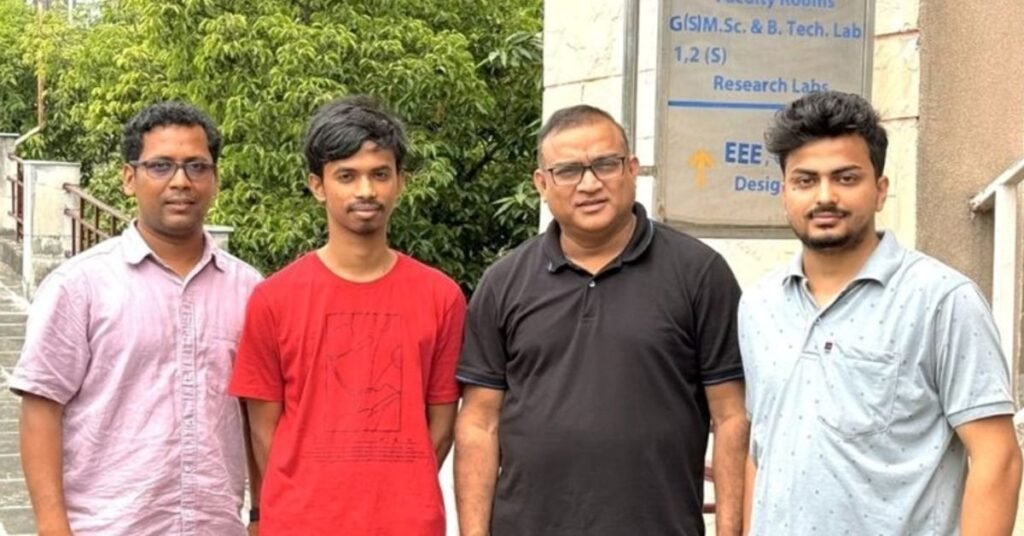
Researchers at Indian Institute of Technology Guwahati (IIT Guwahati) have developed a new electrode coating technology aimed at improving the efficiency and durability of solar-powered green hydrogen production systems.
The research, published in the journal Small, focuses on photo-assisted electrochemical (PAEC) water splitting, a process that uses sunlight to separate water into hydrogen and oxygen. The method is being explored as a pathway for producing green hydrogen for sectors such as steelmaking, fertilisers, refining and heavy transport.
Addressing durability and gas bubble challenges
According to the researchers, one of the main limitations in existing solar water-splitting systems is the degradation of catalyst coatings on electrodes, which can peel over time and reduce efficiency. Another issue is the formation of gas bubbles during electrochemical reactions, which can adhere to electrode surfaces and block active reaction sites.
To address these challenges, the IIT Guwahati team developed a composite coating that combines graphitic carbon nitride — a two-dimensional photocatalyst — with a bubble-repellent hydrogel layer applied to porous nickel foam.
Unlike conventional systems where photocatalysts are coated only on the surface, the new design embeds the catalyst directly within the coating structure. According to the institute, this approach improved coating adhesion and facilitated faster detachment of gas bubbles during operation.
Improved hydrogen and oxygen production
The researchers reported that the modified electrode delivered a 51% increase in hydrogen production and a 44% increase in oxygen production compared with conventional systems.
The study highlights ongoing efforts to improve the efficiency and reliability of green hydrogen technologies as countries and industries look to scale low-carbon hydrogen production to support decarbonisation targets.
Recent Posts
HYBRID
GRSE Signs ₹1,032-Crore ONGC Contract for Four Hybrid Offshore Supply Vessels
EV
Energy In Motion Opens ₹500-Crore Electric Truck Plant in Pune
Fuels
Aegis Logistics Commissions 35,000-Tonne LPG Bottling Plant at JNPA