
Summary
Six Pacific island nations have urged the International Maritime Organization to retain a dedicated Net-Zero Fund, arguing that accounting multipliers cannot replace direct financial rewards for cleaner fuels. Their proposal links investment certainty with support for developing economies, ahead of further negotiations on the shipping industry’s global emissions framework.
Pacific states defend direct financial incentives
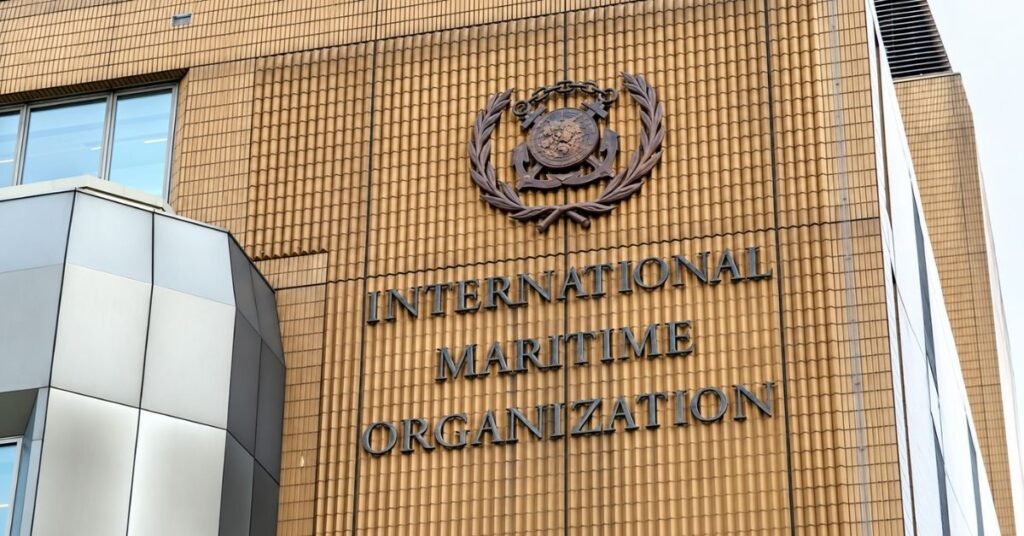
The IMO Net-Zero Fund should remain central to shipping decarbonisation, according to a submission from Fiji, Nauru, Palau, Solomon Islands, Tuvalu and Vanuatu.
Submitted on 12 October 2026 to the IMO’s greenhouse gas working group, their position challenges the use of fuel-accounting multipliers as a substitute for monetary rewards.
The countries argue that direct payments for ships using zero- and near-zero-emission fuels and technologies would provide clearer investment signals. They also want the fund to begin operating alongside the framework’s technical and economic measures, rather than being introduced later.
Their proposal emphasises support for developing economies, including investment in port infrastructure and technology.
The intervention places two objectives together: encouraging cleaner-fuel adoption and ensuring that countries with fewer resources can participate in the transition.
Multipliers offer a different incentive
China has proposed multipliers that would give eligible zero- and near-zero-emission energy greater weight when calculating a vessel’s greenhouse gas fuel intensity.
The approach would improve the compliance value of qualifying fuel use through an accounting adjustment. The Pacific countries contend that this would not adequately replace financial rewards.
For shipowners, the distinction affects how an incentive enters the business case. A payment provides revenue linked to eligible activity, while an accounting benefit changes compliance performance and potentially the value of associated credits.
Both can influence operating decisions, but their financial effects depend on policy design. Eligibility criteria, reward levels, credit-market conditions and the duration of support will shape the value available to individual projects.
Proposed fund serves several purposes
The framework approved in draft form in April 2025 combines a global marine-fuel standard with an emissions-pricing mechanism.
Under that design, the proposed Net-Zero Fund would receive and distribute greenhouse gas pricing contributions. Its functions include rewarding low-emission ships, supporting research and infrastructure, and financing training, technology transfer and capacity building.
It would also help address adverse impacts on vulnerable countries, including small island developing states and least developed countries.
This explains why the debate extends beyond ship-level incentives. A compliance multiplier can affect a vessel’s regulatory position, but a fund provides a mechanism for collecting and directing resources towards wider transition requirements.
The Pacific submission seeks to preserve that broader role.
Investment certainty remains commercially important
The dispute comes as governments consider changes to the proposed framework.
Analysis by the Mærsk Mc-Kinney Møller Center for Zero Carbon Shipping identifies unresolved questions concerning emissions targets, compliance options, financial mechanisms and rewards for zero- and near-zero-emission energy.
Its review of September’s negotiations found continuing debate over whether revenue collection and a just transition could be delivered through alternative arrangements.
For fuel producers and infrastructure developers, these choices influence expectations about demand and customer willingness to pay.
A production project may require long-term purchase commitments, while a shipowner needs confidence that the resulting fuel costs can be supported commercially. Uncertainty over incentives complicates both decisions, particularly where investments have long construction and repayment periods.
Framework remains under negotiation
The Net-Zero Framework has not completed the IMO adoption process.
Draft amendments were approved in April 2025, but the extraordinary meeting convened to consider adoption in October 2025 was adjourned. Approval of draft text and adoption as binding international requirements are separate stages.
At MEPC 84 in April–May 2026, member states agreed to continue work towards greater convergence and permitted new amendments and adjustments to the previously approved draft.
The next greenhouse gas working-group meeting is scheduled for 23–27 November, followed by MEPC 85 from 30 November to 3 December. Resumption of the extraordinary session is scheduled for 4 December, subject to confirmation.
Those meetings will determine how far governments can reconcile incentives, revenue collection and transition support. The Pacific nations’ position makes clear that, for them, the fund is an essential part of that settlement.
FAQs
Which countries submitted the proposal?
Fiji, Nauru, Palau, Solomon Islands, Tuvalu and Vanuatu.
What do they want retained?
A dedicated Net-Zero Fund providing financial rewards and support for an equitable transition.
What are fuel multipliers?
Proposed accounting adjustments giving eligible energy greater weight in greenhouse gas fuel-intensity calculations.
Is the Net-Zero Framework already binding?
No. It remains subject to the IMO’s adoption process.
When are the next negotiations?
The working group meets on 23–27 November 2026, followed by MEPC 85 and a possible resumed extraordinary session on 4 December.
Recent Posts
Power & Propulsion
WinGD Signs First Engine Licensing Agreement with HD Hyundai Marine Engine
LNG
LNG Carrier Surplus Forecast Raises Questions Over New Ship Orders
Policy
UK ETS Site Visits: DNV Urges Early Action Before First Reporting Deadline