
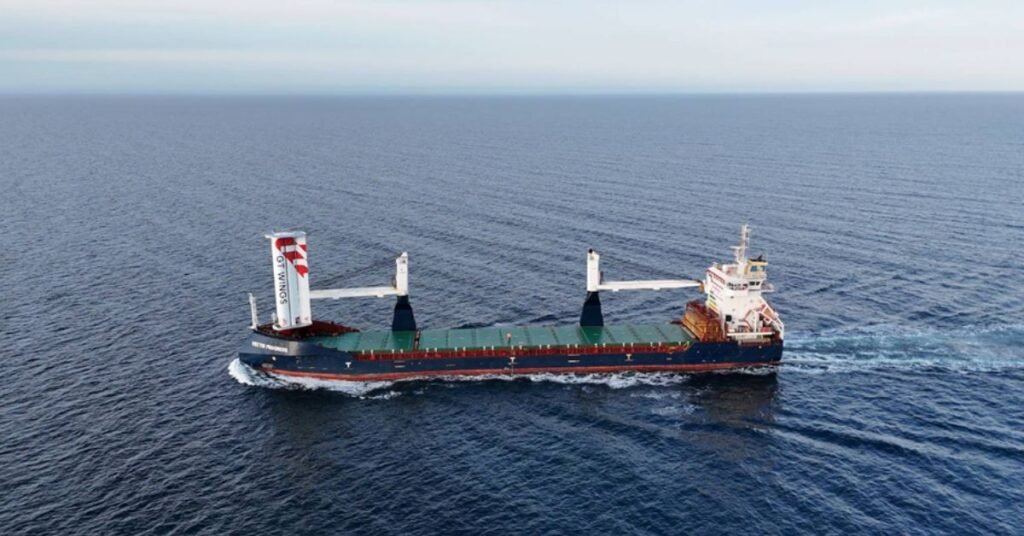
GT Wings has introduced a new ship performance assessment tool designed to support early-stage evaluation of its AirWing™ wind-assisted propulsion technology for commercial vessels.
The tool was developed in collaboration with independent wind propulsion specialists Blue Wasp Marine using the company’s Pelican Suite™ web-based simulation platform.
Tool designed to support early-stage investment decisions
According to GT Wings, the assessment platform is intended to provide shipowners with structured estimates of potential fuel savings, emissions reductions and regulatory compliance benefits linked to the installation of AirWing™ systems.
The company said the tool enables route-based simulations across different vessel types, operational profiles and AirWing™ configurations.
Using a four-degrees-of-freedom (4DOF) modelling methodology, the system generates physics-based performance projections aimed at supporting preliminary technical and commercial assessments.
GT Wings stated that the tool has been developed following more than 80 early-stage performance assessments completed by the company to date.
RINA verifies modelling framework
RINA reviewed and verified the modelling methodology and performance framework used in the Pelican Suite™ platform.
According to the companies, the review confirmed alignment with recognised industry guidance, including:
- IMO MEPC circular 896
- ITTC Guidelines for Wind Powered Ships (2024)
The Approval in Principle (AiP) issued by RINA is intended to provide shipowners with additional confidence in the methodology for preliminary evaluations of wind-assisted propulsion systems.
AirWing™ technology and industry adoption
GT Wings’ AirWing™ system is a jet sail wind propulsion technology that uses controlled suction and blowing to enhance aerodynamic performance while maintaining a relatively small deck footprint.
The company said the technology has already been installed on Carisbrooke Shipping vessel MV Vectis Progress, with additional orders secured from Grieg Maritime Group.
Jonny Gambell, Sales and Strategy Director at GT Wings, said:
“Our Jet Sail technology represents a fundamentally new approach to wind propulsion.”
He added:
“This tool gives shipowners a trustworthy first view of potential savings, helping them to understand the return on investment and the reduced emissions that our technology brings.”
Giovanni Bordogna, CEO and R&D Lead at Blue Wasp Marine, said:
“This approval from RINA for our Pelican Suite™ software is an important recognition of our work and confirms that we are progressing in the right direction.”
Patrizio Di Francesco, Special Projects North Europe Business Development Manager at RINA, said:
“RINA is pleased to collaborate with GT Wings in addressing the challenges related to wind propulsion performance prediction.”
Growing focus on wind-assisted propulsion
The launch reflects increasing industry interest in wind-assisted propulsion systems as shipowners seek technologies capable of reducing fuel consumption and supporting compliance with tightening emissions regulations. Performance modelling and verification tools are becoming increasingly important as operators evaluate the commercial viability of different wind propulsion technologies across vessel segments and trading routes.
Recent Posts
HYBRID
GRSE Signs ₹1,032-Crore ONGC Contract for Four Hybrid Offshore Supply Vessels
EV
Energy In Motion Opens ₹500-Crore Electric Truck Plant in Pune
Fuels
Aegis Logistics Commissions 35,000-Tonne LPG Bottling Plant at JNPA