
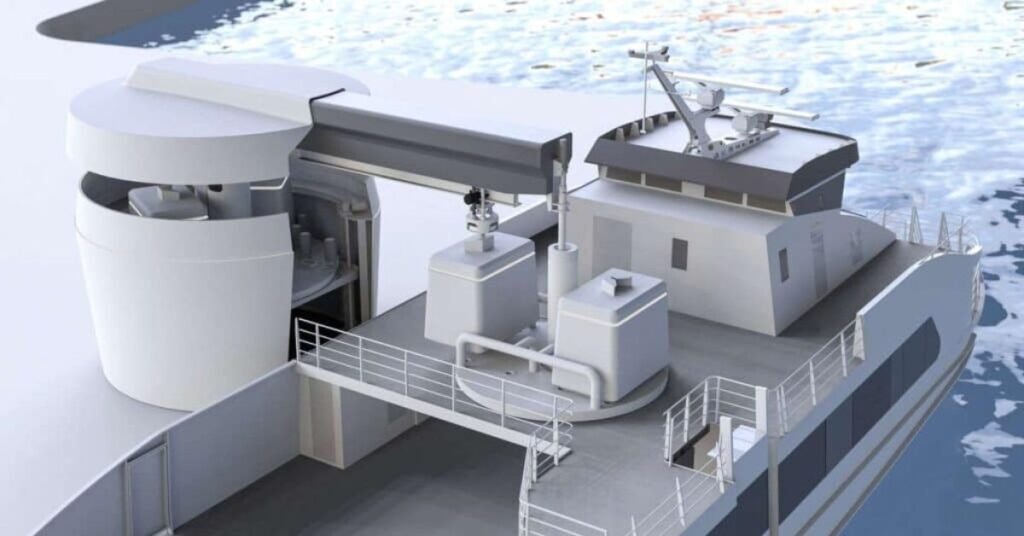
Norled has unveiled an autonomous battery-swapping system designed to accelerate the electrification of high-speed passenger ferries by replacing depleted batteries in just three minutes, eliminating lengthy charging times while maintaining vessel speed and service frequency.
The company believes the technology could help overcome one of the biggest barriers to electrifying express boats, which continue to rely largely on diesel propulsion despite the rapid electrification of Norway’s ferry fleet.
Three-Minute Autonomous Battery Swapping
The Autonomous Battery Swap system uses a robotic mechanism to automatically remove and replace a vessel’s battery when it arrives at the quay.
Instead of requiring fast charging between voyages, batteries are exchanged in approximately three minutes before being recharged gradually inside a dedicated battery exchange station.
According to Norled, the approach reduces pressure on local electricity grids, as batteries can be charged steadily rather than drawing large amounts of power during short port calls.
The battery-swapping robot is designed to operate under challenging Norwegian conditions, including tides, waves, wind and ice, and can be installed on either fixed quays or floating pontoons. The technology is currently patent pending.
Supporting High-Speed Zero-Emission Operations
Norled said battery swapping enables vessels to operate with smaller, lighter battery packs, reducing overall vessel weight and energy consumption.
The lower battery weight allows express boats to maintain their typical operating speeds of 30 to 35 knots while supporting frequent departures.
The technology is intended for routes where maintaining timetable reliability is critical and could be deployed on existing express boat corridors or future passenger services, including potential operations across the Oslofjord.
Retrofit and Battery Sharing Capabilities
The company said the system can be installed on both newbuild vessels and existing high-speed ferries, allowing relatively modern diesel-powered craft to be converted to battery-electric propulsion.
Multiple vessels operating on the same route or using the same terminal could also share battery inventories, reducing the total number of batteries required and improving asset utilisation.
Norled believes the approach supports a more circular use of battery assets while extending the operational life of existing vessels.
Ready for Commercial Deployment
Norled said it is prepared to deploy the technology once customers begin requesting low- and zero-emission solutions for express boat services.
The company previously indicated the first battery-swapping vessels could enter operation as early as 2024, subject to customer demand.
Development of the technology was supported through PILOT-E, a Norwegian funding programme jointly managed by the Research Council of Norway, Innovation Norway and Enova to accelerate commercialisation of clean energy technologies.
Recent Posts
Marine
Singapore Unveils Ammonia Bunkering Standard, First Ethanol Bunkering and LNG Storage Plans
Ammonia
Singapore Launches TR 148 Ammonia Bunkering Standard and Model Contract to Prepare for Ammonia-Fuelled Ships
Policy
China Targets Doubling New Energy Inland Vessels by 2028 Under 2026-2030 Action Plan