
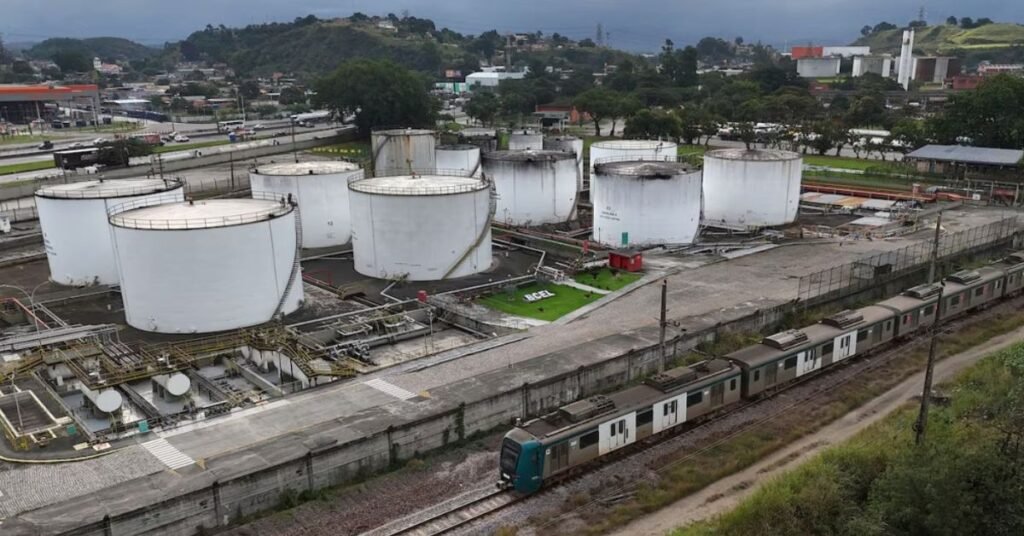
Summary Demand for lower-carbon marine fuels is weakening as shipowners await clarity on global emissions rules and weigh alternative compliance options. Singapore’s marine biofuel sales fell sharply during January–September 2026, while industry executives say regulatory uncertainty is limiting uptake despite the availability of cleaner fuels and investments in dual-fuel ships. Biofuel demand reveals an uneven

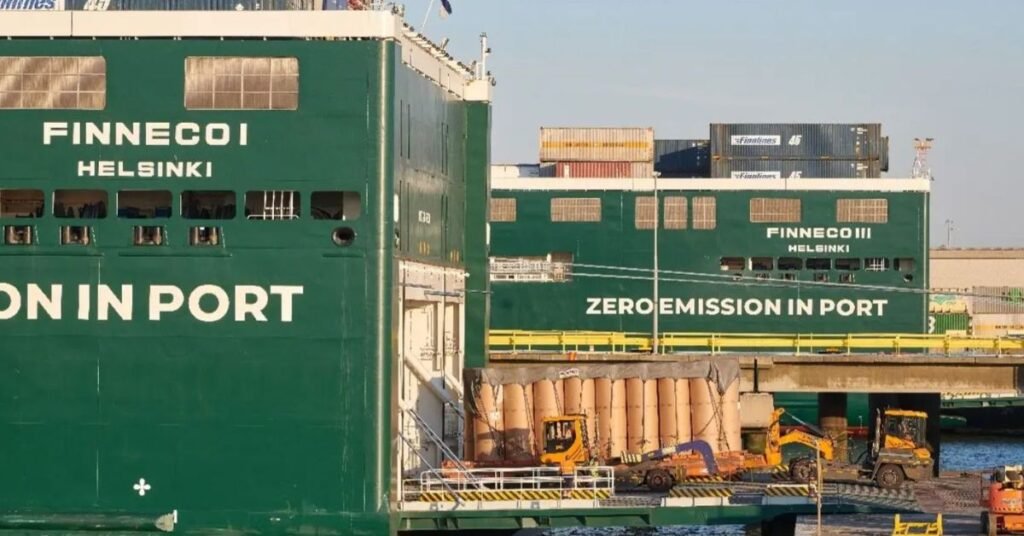
Summary Finnlines and Stora Enso have expanded their cooperation to reduce emissions from transporting packaging board and wood-based products. Stora Enso will use the Finnlines Green Lane service, which replaces an equivalent amount of fossil-fuel energy with renewable alternatives within the shipping company’s network and provides verified emissions-reduction documentation. Industrial cargo partnership adopts lower-carbon transport
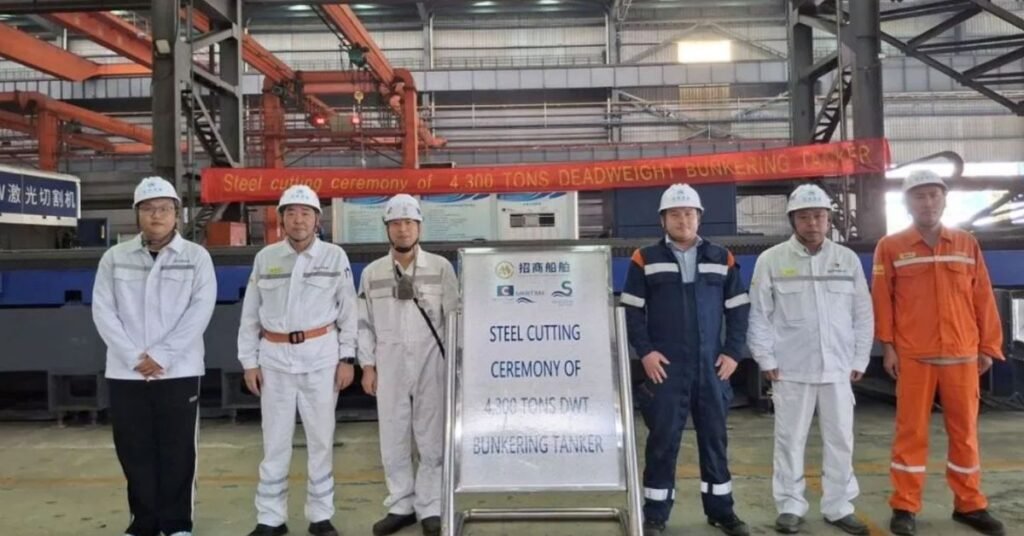
Summary Construction has begun on Cap Morgiou, the first of two Sogestran bunker vessels intended to serve Petroineos in southern France. The ships will handle conventional fuels, biofuels and e-methanol, expanding delivery flexibility across the Marseille, Fos and Toulon areas. The first vessel is expected to arrive in early 2028. First vessel moves into construction
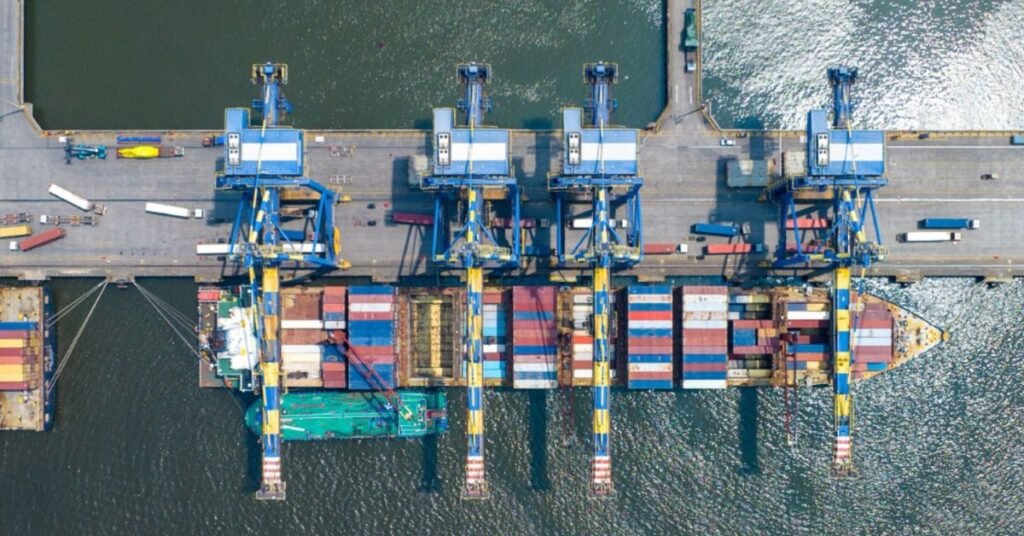
Summary Shipowners are changing bunker buying strategies as the Middle East conflict disrupts routes and keeps fuel prices elevated. Suppliers report more spot purchases, shorter contracts and greater use of alternative refuelling ports. The changes are spreading demand across a wider network while increasing the complexity of marine-fuel procurement. Buyers shorten commitments and spread purchases
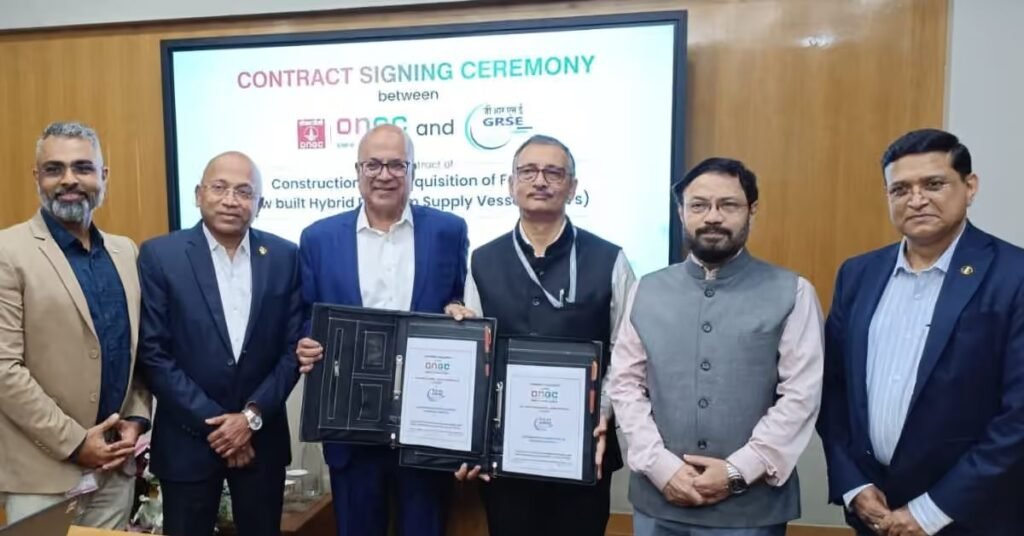
Summary Garden Reach Shipbuilders & Engineers (GRSE) has signed a contract with Oil and Natural Gas Corporation (ONGC) to build four hybrid platform supply vessels under a ₹1,032.07-crore order awarded in July 2026. The vessels will feature electrically driven azimuth thrusters and lithium-ion battery energy storage for offshore exploration and production support. The programme, scheduled
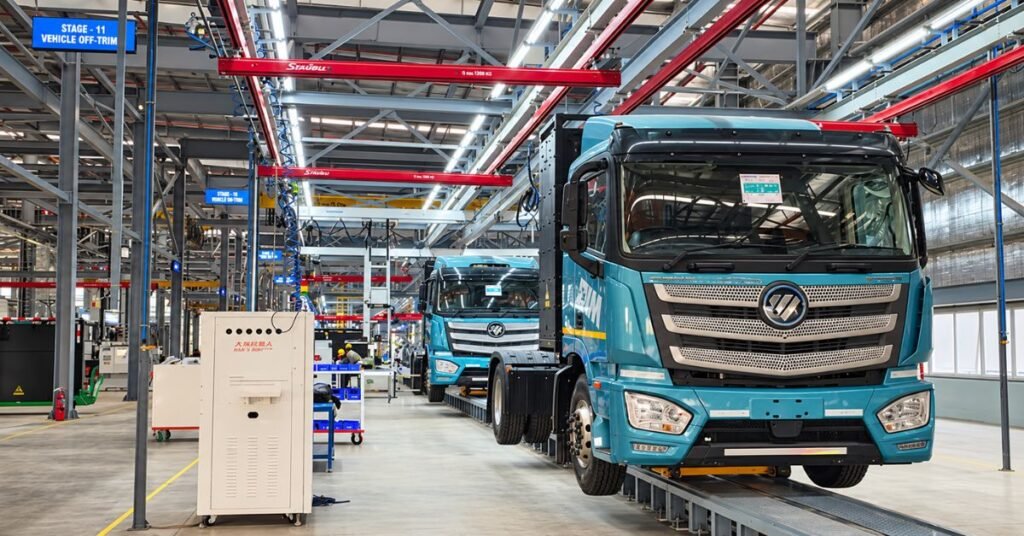
Summary Energy In Motion (EIM) has inaugurated a ₹500-crore electric heavy commercial vehicle manufacturing complex at Ambi in Talegaon, Pune, Maharashtra. The facility integrates vehicle assembly, lithium-ion battery-pack production and battery testing, with an initial annual assembly capacity of 5,000 vehicles per shift. The project marks the first phase of a planned ₹1,000-crore investment in
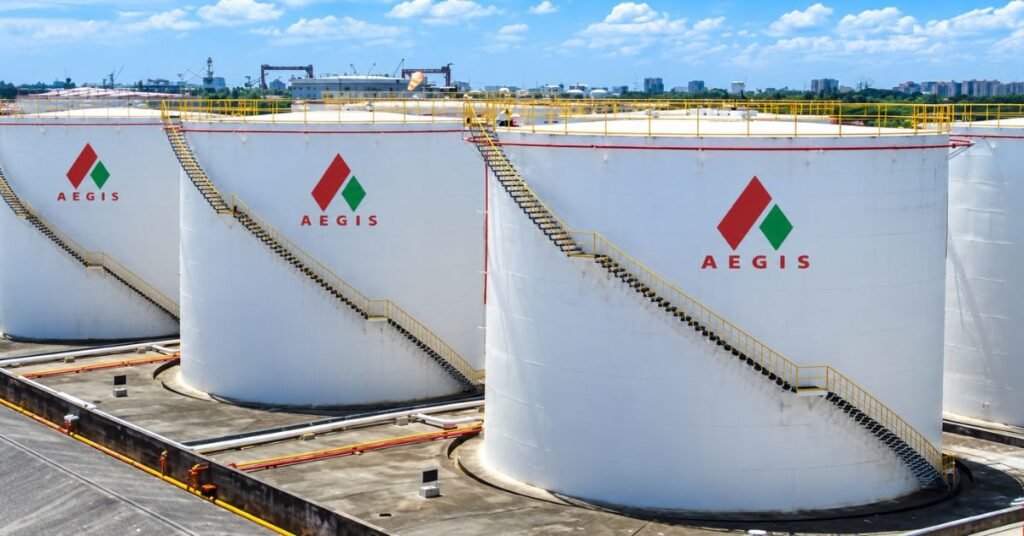
Summary Aegis Logistics has commissioned a liquefied petroleum gas (LPG) bottling plant at Jawaharlal Nehru Port Authority (JNPA), with an annual capacity of 35,000 tonnes. Operational since October 15, 2026, the facility forms part of the company’s wider J2 terminal development, which includes LPG and liquid-product storage infrastructure. Aegis has indicated that the bottling plant
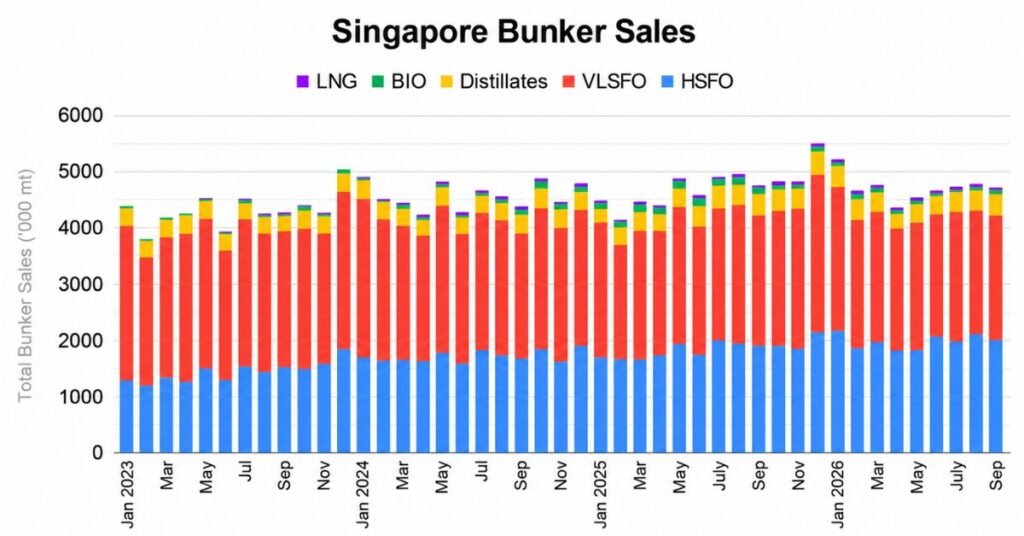
Summary Singapore’s conventional and biofuel bunker sales reached 41.97 million tonnes in January–September 2026, exceeding the previous year’s nine-month record despite a September decline. High-sulphur fuel oil drove the increase, while LNG expanded from a smaller base and biofuel blends recorded a substantial contraction, revealing diverging demand across fuel categories. Nine-month growth withstands September decline
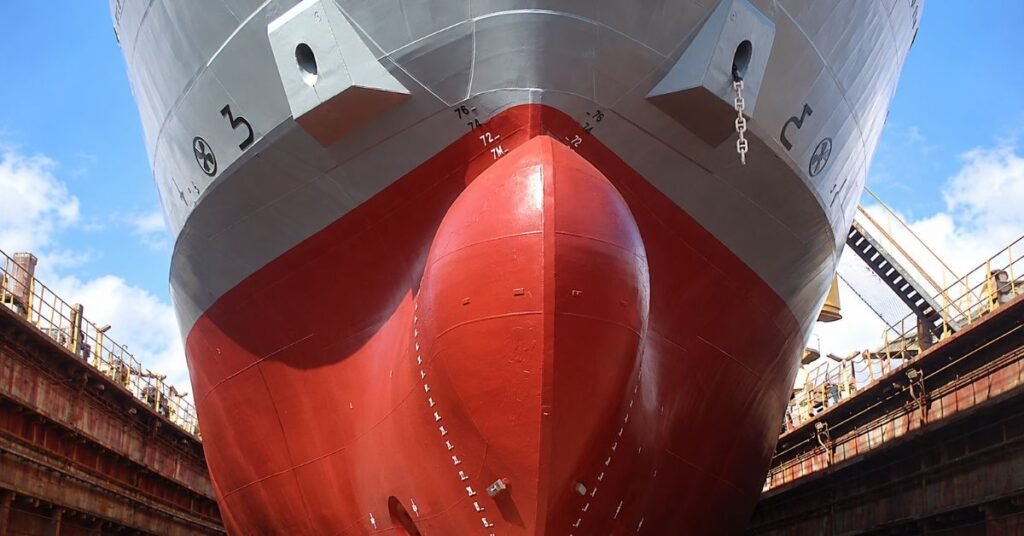
Summary Lloyd’s Register has published new Guidance Notes for Retrofit of Alternative Fuels and Energy Saving Devices. The single framework covers conversions to LNG, methanol, ethanol, ammonia, hydrogen and LPG, alongside wind-assisted propulsion and air lubrication systems. It stresses early decision-making, cross-industry collaboration and crew training as regulatory pressure drives more owners to retrofit existing
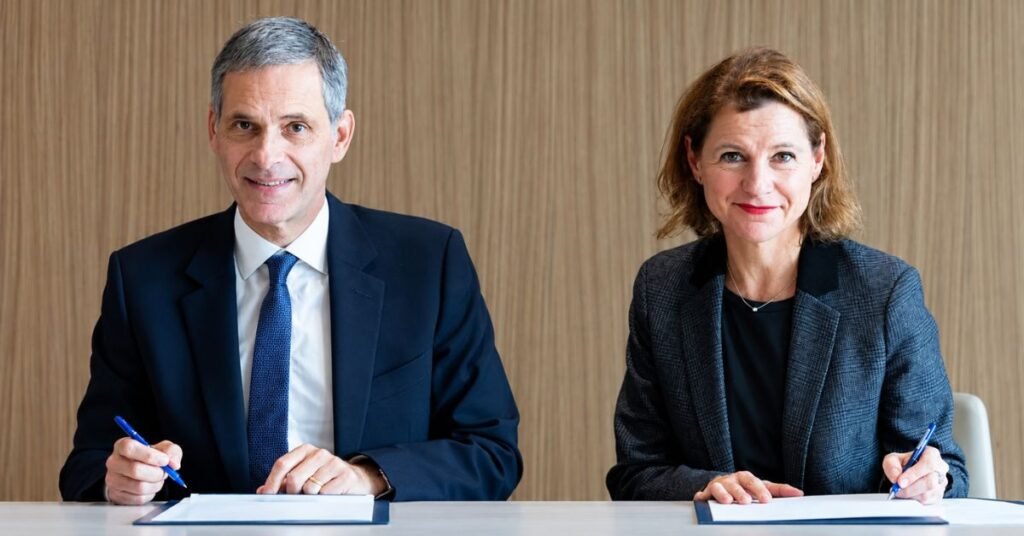
Summary ENGIE and CMA CGM have signed a framework agreement for a biomethane production facility in Le Havre’s industrial-port zone. The project targets annual supplies of 7,000 tonnes for the shipping group from 2029–2030, subject to a final investment decision, strengthening efforts to secure renewable fuel for LNG-powered vessels. Framework agreement advances renewable fuel supply