
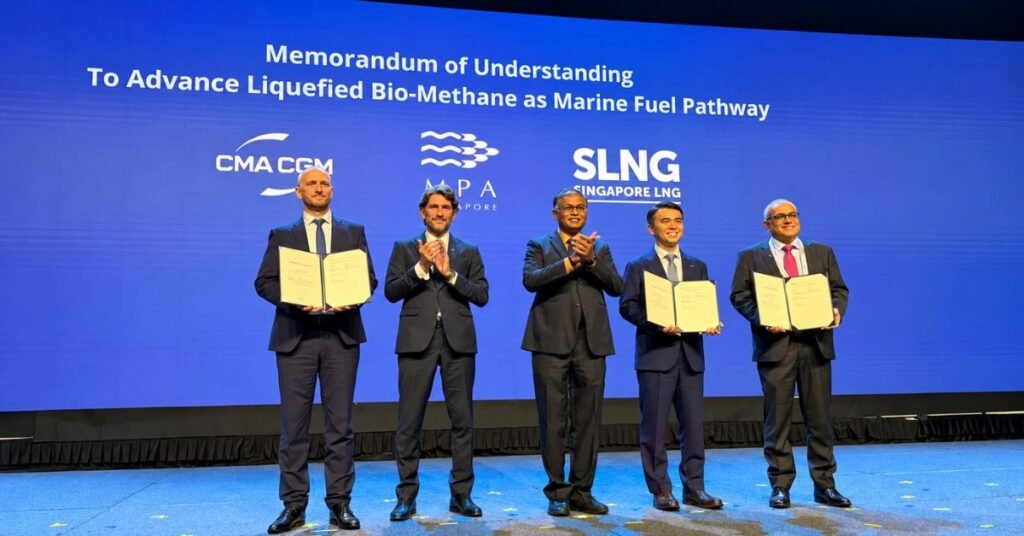
MoU to Develop Liquefied Bio-Methane Bunkering in Singapore

MPA, CMA CGM and SLNG Sign MoU to Develop Liquefied Bio-Methane Bunkering in Singapore

Summary The Maritime and Port Authority of Singapore, CMA CGM and Singapore LNG Corporation have signed an MoU at SIBCON 2026 to explore the supply and use of liquefied bio-methane as a marine fuel. The partners will study how existing gas infrastructure can deliver bio-methane, how its emissions savings are accounted for when blended with

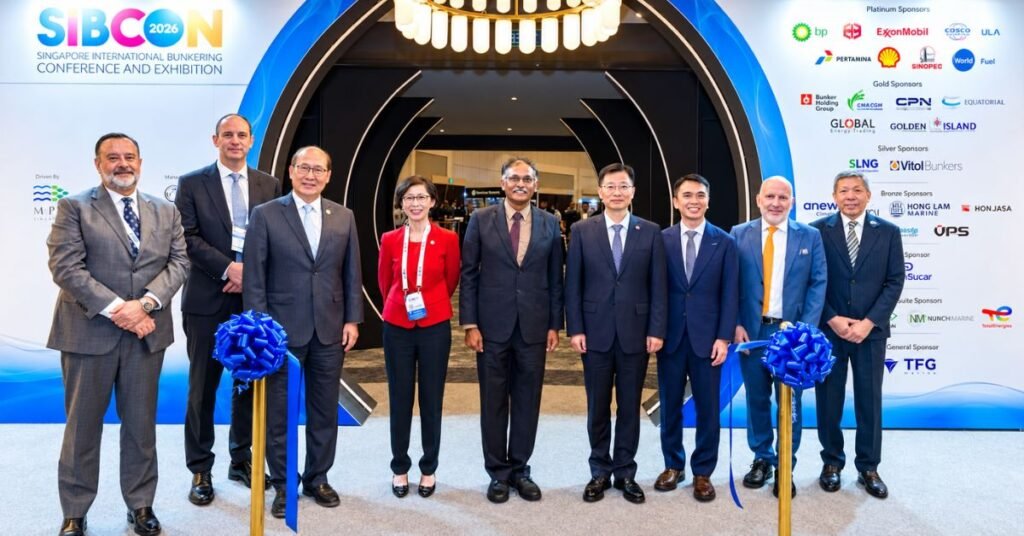
Singapore Launches Phase 2 of Digital Bunkering

Singapore Introduces Bunker Sampling and Polymer Testing Standards, Launches Phase 2 of Digital Bunkering

Summary Singapore has introduced two new standards to strengthen bunker fuel quality assurance: SS 730:2026 for bunker sampling and TR 155:2026 for testing polymers in residual marine fuels. MPA also unveiled Phase 2 of its digital bunkering initiative, with a grant call in November 2026, and will launch Bunker Supplier Management System 2.0 in the
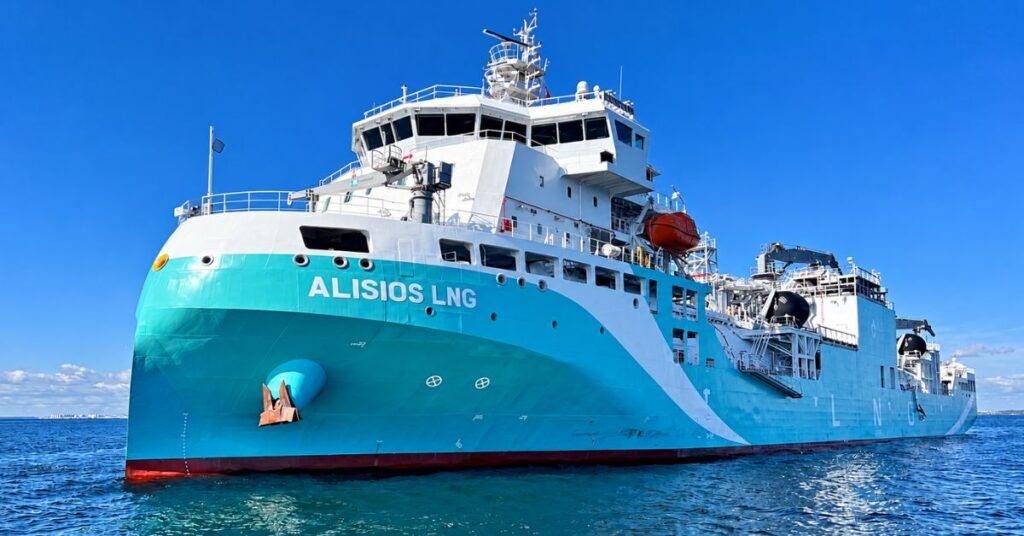
Axpo Completes First LNG Bunkering in Valencia

Axpo Completes First LNG Bunkering in Valencia, Supplying Over 50% Bio-LNG

Summary Swiss energy company Axpo has completed its first LNG bunkering operation at the Port of Valencia, Spain, with its 12,500 m³ bunker vessel Alisios refuelling a container ship for a global logistics company. More than half of the fuel delivered was bio-LNG, extending Axpo’s growing LNG and bio-LNG bunkering network across Spanish, Portuguese and
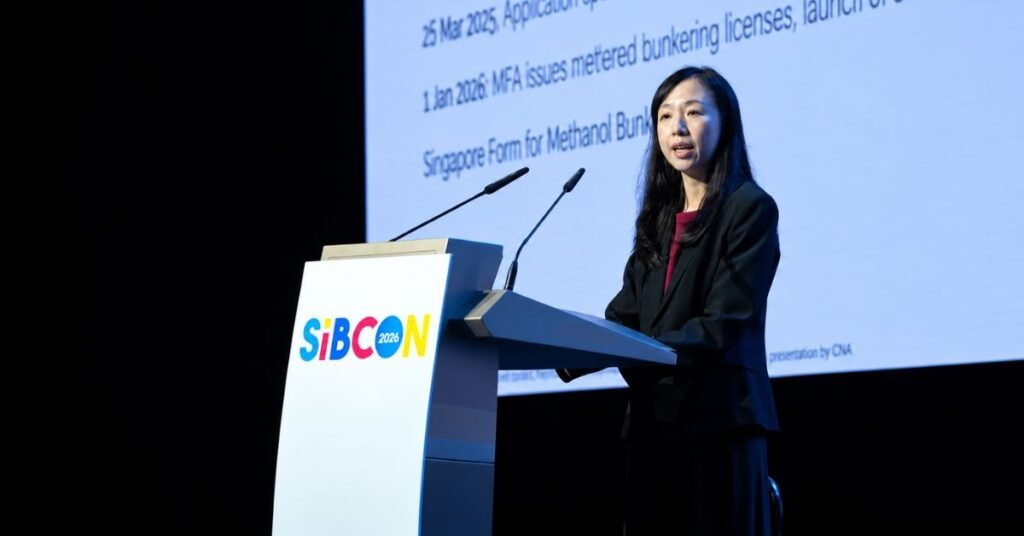
Singapore Form for Methanol Bunkering

SCMA Launches Singapore Form for Methanol Bunkering, Filling Legal Gap for Alternative Fuel Contracts

Summary The Singapore Chamber of Maritime Arbitration has launched the Singapore Form for Methanol Bunkering at SIBCON 2026, the first standard contract designed for methanol bunker transactions in Singapore. Developed with shipowners, bunker suppliers, lawyers and regulators, it covers TR 129 compliance, fuel quality and sustainability, closed-system sampling, electronic delivery notes and SCMA arbitration. Article
Aegis Tristar acquisition

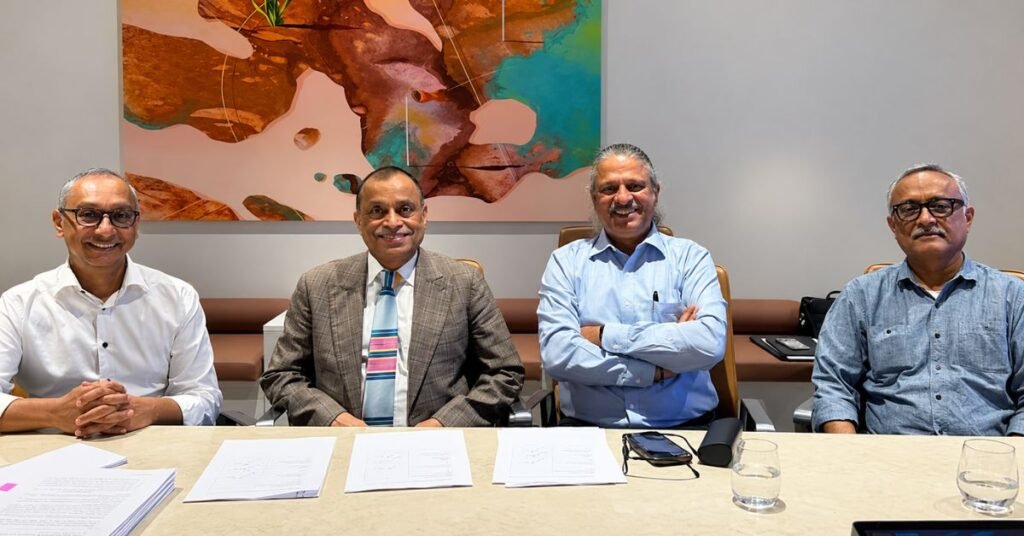
Aegis Tristar acquisition to expand Indian group’s global energy logistics reach

Summary Agility Global has agreed to sell its entire holding in Tristar as part of Aegis Logistics’ proposed acquisition of an 89.8% stake in the energy logistics group. The transaction values Tristar at US$1.5 billion on an enterprise basis and is expected to close by March 2027, subject to approvals. Agreement brings international expansion within
Everllence and MITSUI E&S Mark 100 Years

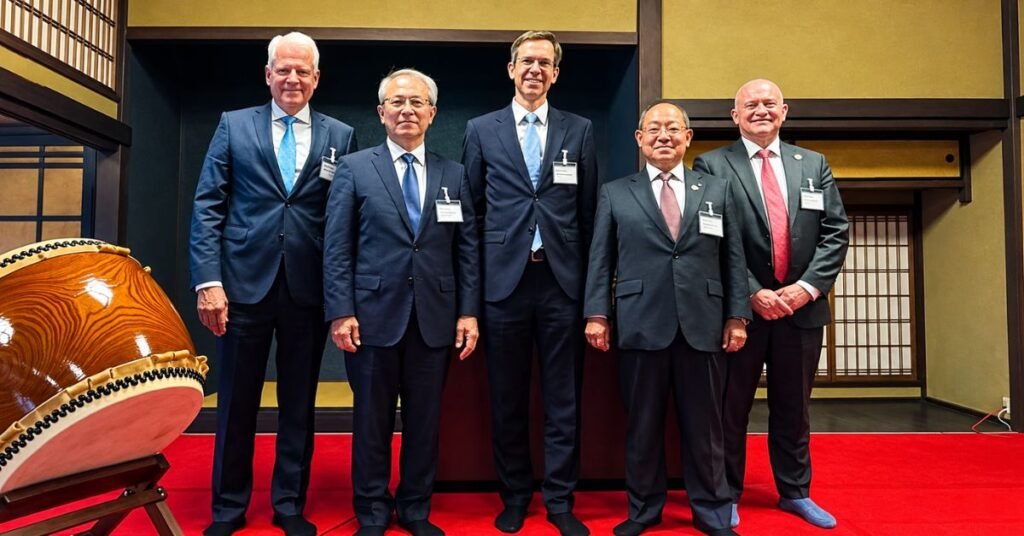
Everllence and MITSUI E&S Mark 100 Years of Two-Stroke Engine Partnership

Summary Everllence and MITSUI E&S have marked 100 years of collaboration in two-stroke marine engine manufacturing at a ceremony held in Okayama, Japan, on 2 October 2026. MITSUI E&S, Everllence’s oldest two-stroke engine licensee, has manufactured more than 7,500 B&W engines, with cumulative production exceeding 120 million horsepower. The milestone comes as the maritime industry
Green Ammonia Exports from Andhra Pradesh Hub

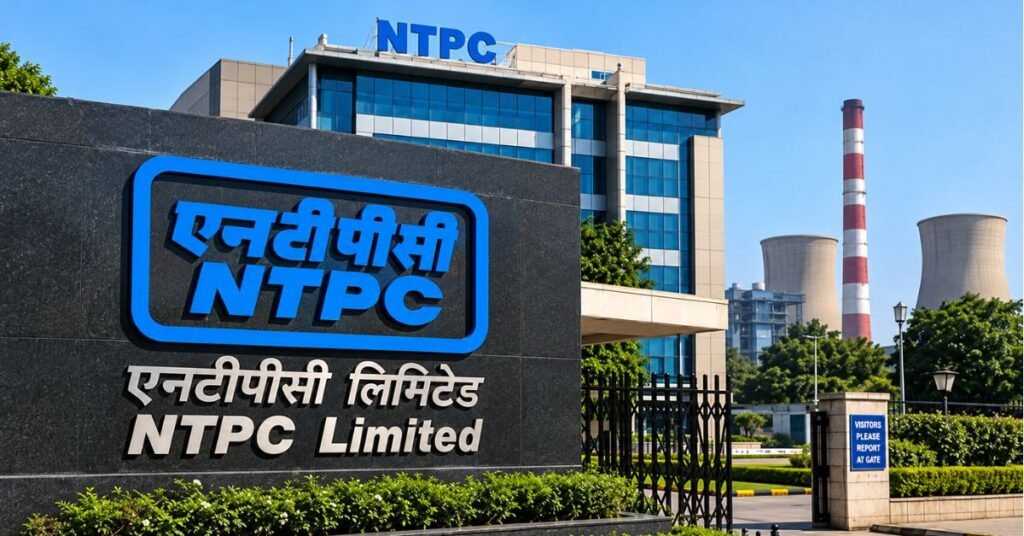
NTPC Targets Japan, South Korea and Germany for Green Ammonia Exports from Andhra Pradesh Hub

Summary NTPC is in discussions with prospective buyers in Japan, South Korea and Germany for green ammonia and other low-carbon fuels from its planned green hydrogen hub at Pudimadaka in Andhra Pradesh, Chairman Gurdeep Singh confirmed on October 13, 2026. Developed by NTPC Green Energy Ltd (NGEL), the project carries an estimated investment of ₹1.85
Starnav Elektra Delivered to ABS Class

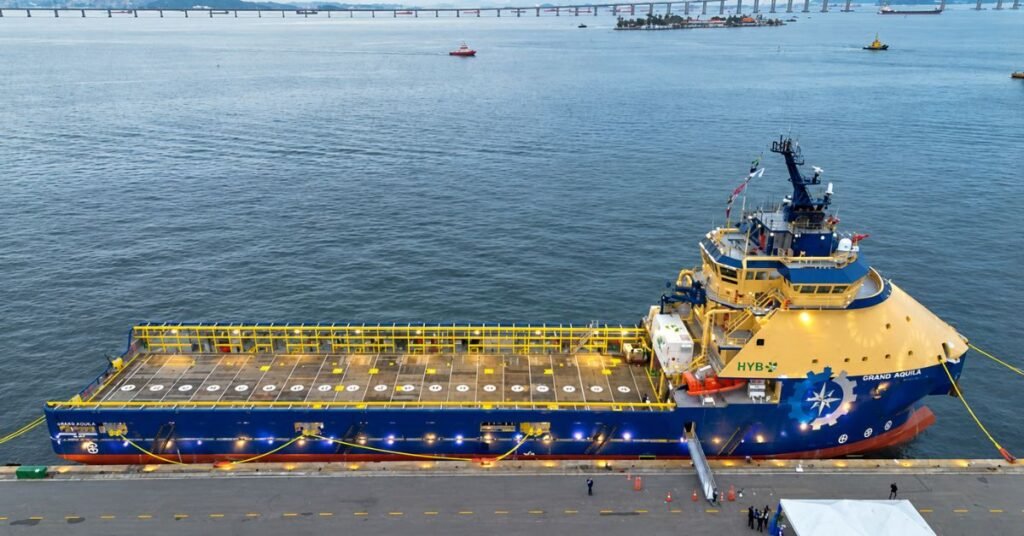
Brazil’s First Hybrid Platform Supply Vessel, Starnav Elektra, Delivered to ABS Class

Summary Starnav Elektra, the first hybrid platform supply vessel (PSV) designed and built in Brazil, has been delivered to ABS class. Built by Detroit Brasil for Starnav Serviços Marítimos, the 92.1-metre vessel has a deadweight capacity of 5,500 tonnes and a 1,322 kWh lithium iron phosphate battery system designed to meet dynamic positioning class 2
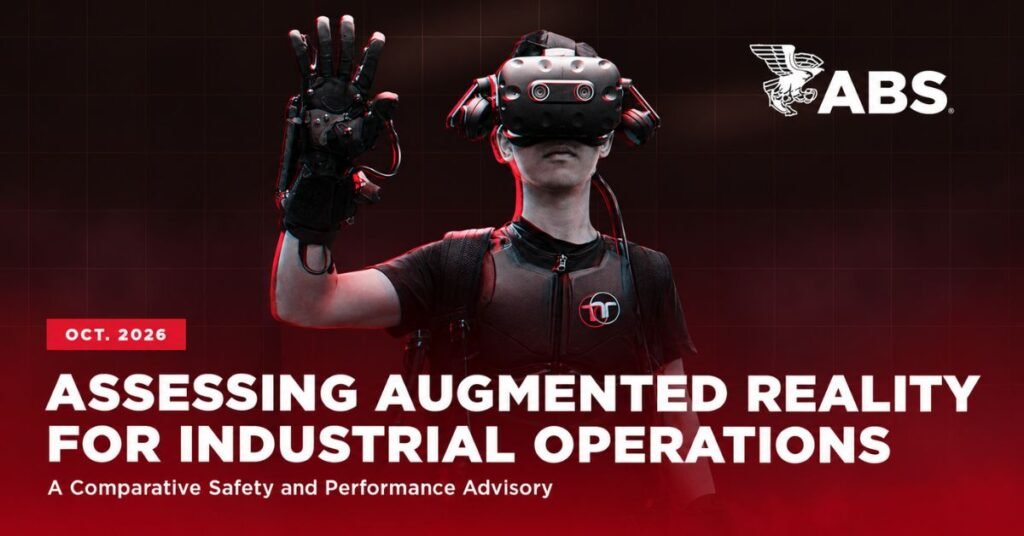
Augmented Reality in Marine and Offshore Operations

ABS Issues Guidance for Evaluating Augmented Reality in Marine and Offshore Operations

Summary The American Bureau of Shipping (ABS) has published new guidance to help marine and offshore operators assess the safety and performance implications of augmented reality (AR) in industrial operations. The Advisory on Assessing Augmented Reality for Industrial Operations, developed with support from the ABS Laboratory for Ocean Innovation at Texas A&M University, provides a
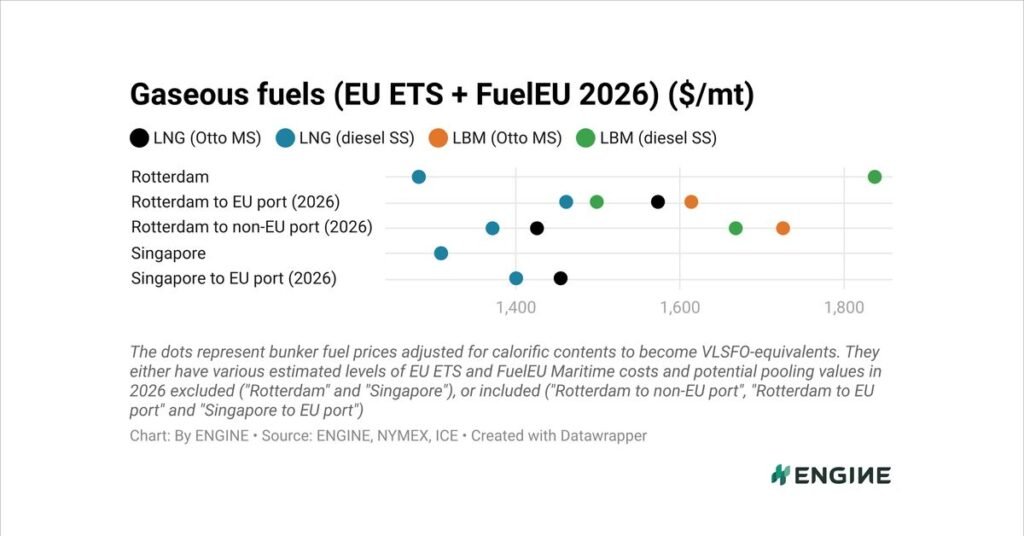
# FuelEU Pooling Prices Drop $25, Eroding Bio-LNG's Compliance Advantage in Rotterdam ## Summary FuelEU Maritime pooling values fell by about $25/mtCO2e in a week to roughly $97/mtCO2e, according to bunker intelligence platform ENGINE, sharply reducing the compliance value of liquefied biomethane and B100. Combined with a surge in LBM prices, Rotterdam's bio-LNG swung from a discount to a premium over fossil LNG, while Dutch renewable fuel tickets jumped. ## Article Singapore: A sharp fall in FuelEU pooling prices has weakened the economic case for biofuels and bio-LNG on European voyages, according to ENGINE's weekly fuel switch snapshot for October 12, 2026. ENGINE-assessed FuelEU Maritime pooling values fell by €21.70/mtCO2e ($25) over the week to €86.90/mtCO2e ($97). Some suppliers were still offering compliance surplus at €100-130/mtCO2e ($112-146), well above ENGINE's assessment. ## Why are pooling prices falling? Under FuelEU Maritime, ships that beat the regulation's greenhouse gas intensity limits can generate a compliance surplus and sell it to non-compliant ships through pooling. The value of that surplus is a key part of the economics of low-carbon fuels such as liquefied biomethane (LBM) and B100. The latest drop continues a downtrend flagged by OceanScore in September. Sellers cut their prices after the summer as more of them, including new entrants, competed for buyers. Surplus supply has outpaced demand, and low costs of generating surplus have allowed aggressive pricing. OceanScore noted that some deals closed below the cost of generating the surplus, a sign of market overshooting. ## How has this affected bio-LNG? LBM's potential pooling value for EU-EU voyages fell by $74-87/mt depending on engine type, while LBM prices in Rotterdam rose by $205-214/mt over the week. As a result, Rotterdam LBM swung from a $47-51/mt discount to fossil LNG to a $38-42/mt premium. LBM's premium over VLSFO widened to $400-516/mt, and its premium over B100 widened to $484-600/mt. By contrast, LNG's potential pooling value for diesel slow-speed engines fell by just $13/mt. ## What happened to B100? B100's potential pooling value for EU-EU voyages fell by $72/mt. In Rotterdam, B100 prices dropped by $45/mt, flipping from a $90/mt premium over HSFO to a $24/mt discount. Its discount to LSMGO widened to $720/mt, boosting demand. Availability is tight in the ARA region, with lead times of around five to seven days recommended. In Singapore, a smaller $36/mt drop in B100's pooling value for non-EU to EU voyages pushed B100 prices up by $30/mt, widening its premium over VLSFO to $337/mt. ## What else moved? Dutch ZRE A renewable fuel tickets surged by €67.50/mtCO2e ($75) to €240/mtCO2e ($269), following higher-priced trades and stronger bids late in the week, according to Prima Markets. Rotterdam's conventional fuels firmed, with VLSFO up $38/mt, HSFO up $69/mt and LSMGO up $102/mt. LNG prices rose by $115-125/mt. In Singapore, conventional fuel prices gained $1-54/mt, led by HSFO, while LNG rose $25-30/mt. Singapore's VLSFO and HSFO markets are tight, with recommended lead times of 10 to 15 days. ## Why does it matter? The FuelEU pooling market is becoming a critical, and volatile, factor in fuel choice. When surplus is plentiful and cheap, shipowners may find it cheaper to buy compliance than to burn premium-priced biofuels or bio-LNG, slowing actual fuel switching. For suppliers of low-carbon fuels, falling pooling values reduce a revenue stream that helps offset higher fuel costs, a dynamic that could weigh on investment in alternative bunker supply. ## FAQs ### How much did FuelEU pooling prices fall? ENGINE-assessed pooling values fell by €21.70/mtCO2e ($25) over the week to €86.90/mtCO2e ($97). ### Why are FuelEU pooling prices declining? Surplus supply has outpaced demand, more sellers have entered the market and low generation costs have allowed aggressive pricing, according to OceanScore. ### How has bio-LNG pricing changed in Rotterdam? Rotterdam LBM swung from a $47-51/mt discount to fossil LNG to a $38-42/mt premium. ### What happened to Dutch ZRE A tickets? They rose by €67.50/mtCO2e to €240/mtCO2e ($269) over the week. ### Why does the pooling market matter for alternative fuels? Cheap compliance surplus can make buying compliance more attractive than burning costlier biofuels or bio-LNG, slowing the shift to low-carbon fuels.

FuelEU Pooling Prices Drop $25, Eroding Bio-LNG’s Compliance Advantage in Rotterdam

Summary FuelEU Maritime pooling values fell by about $25/mtCO2e in a week to roughly $97/mtCO2e, according to bunker intelligence platform ENGINE, sharply reducing the compliance value of liquefied biomethane and B100. Combined with a surge in LBM prices, Rotterdam’s bio-LNG swung from a discount to a premium over fossil LNG, while Dutch renewable fuel tickets

казино олимп non gamstop casino uk chicken road aviator non gamstop casino